What is a Cloud Proxy? Types, Benefits, and More

Specialist in Anti-Bot Strategies
Boost your automation and scraping with Scrapeless Proxies — fast, reliable, and affordable.
Explore how cloud proxies serve as crucial intermediaries in modern distributed applications, enhancing security, reliability, and performance.
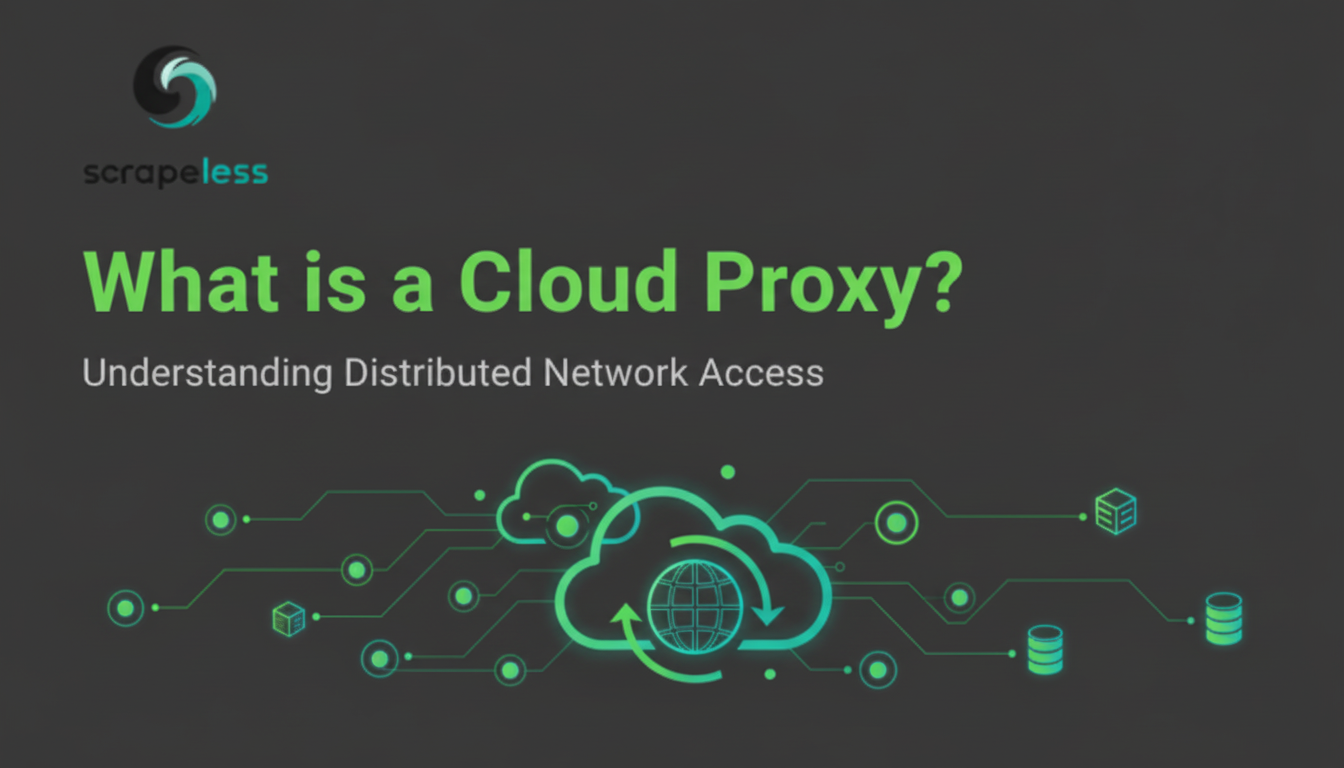
Modern applications tend to have many distributed parts, such as serverless functions, databases, and message queues. To ensure a standard and secure way to access these components, a middleware is often required. This is where Cloud Proxies come into the picture.
A typical cloud proxy functions like this:
- A client request flows through the cloud proxy to a resource (internet address/server).
- The reply from the resource returns through the proxy on its way back to the client.
In essence, a cloud proxy acts as a "middleware" between your computer and the resource you are trying to access. A common example in cloud architecture is the API Gateway, which offers a central point of communication between the client and the backend resources.
This ensures that the client and server never communicate directly but through the cloud proxy. The client’s requests are routed to the cloud proxy, then through any applicable firewall, and finally to the content server before returning to the client.
Here’s a summary of how the cloud proxy works:
- The client sends a request, which the cloud proxy intercepts.
- The cloud proxy forwards the incoming request to a firewall if applicable.
- The firewall either blocks the request or forwards it to the server.
- The server sends a response through the firewall to the proxy.
- The cloud proxy sends the response to the client.
This process is similar to how a traditional proxy operates, but the key difference is that it is running in the cloud. This means it is not confined to on-premise data center hardware, allowing it to handle high traffic volumes in near-real time. Additionally, by acting as a middleman, a cloud proxy can protect sensitive data by adding layers of security, such as authorization checks.
What are the different types of cloud proxies?
There are three main types of cloud proxies, each serving a distinct purpose:
1. Forward Cloud Proxy
A forward proxy is an intermediary between one or more user devices and the Internet. It acts on behalf of the client, routing the request to the destination and then forwarding the response back to the originating client.
Benefits of a Forward Cloud Proxy:
- Anonymity and Privacy: The forward proxy masks the client’s IP address with its own, protecting the user’s identity from external servers.
- Request Filtering: It can enforce company policies by blocking access to certain sites or content based on predefined rules.
- Caching: It can cache frequently accessed resources, reducing latency and improving overall performance.
- Bypassing Restrictions: It helps overcome issues with geo-restrictions, allowing users to access content that would otherwise be blocked in their region or network 1.
2. Reverse Cloud Proxy
A reverse proxy always sits in front of web servers to prevent clients and web servers from communicating directly. All client requests are sent to the reverse proxy, which then forwards the request to the appropriate server. The response is then sent back to the client through the reverse proxy.
Benefits of a Reverse Cloud Proxy:
- Load Balancing: A reverse proxy can distribute client requests across several servers, spreading the load evenly and enhancing scalability and overall performance.
- Security: It can perform additional operations before sending the request to the web server, such as validating the payload and authorizing the request, ensuring that only legitimate requests reach the server.
3. Transparent Cloud Proxy
A transparent proxy (also known as an inline proxy) intercepts traffic flowing between the client and the Internet without requiring any configuration on the client side. It is "transparent" because the user is unaware of its operation.
Benefits of a Transparent Cloud Proxy:
- Content Filtering: Organizations and ISPs (Internet Service Providers) use transparent proxies to block access to inappropriate or harmful websites.
- Monitoring and Logging: They allow network administrators to monitor user behavior, log Internet usage, and compile reports on web traffic for analysis.
What are the benefits of cloud proxies?
Using cloud proxies offers significant advantages for modern organizations:
Scalability and Flexibility
Since cloud proxies are deployed in the cloud, they can leverage the benefits of on-demand scalability. They can easily scale up and down based on traffic demand, seamlessly accommodating spikes without manual intervention. Furthermore, they can utilize a global cloud network to be available worldwide, minimizing round-trip times and reducing latency for users globally.
Cost-Effective
Cloud proxies eliminate the need for upfront investment in physical infrastructure. This significantly reduces capital expenditure and operational costs, as there is no need to maintain server rooms, power backups, or cooling mechanisms.
Enhanced Security
Cloud proxy providers continually update their services with the latest security features to combat emerging threats. They can also decrypt and inspect SSL/TLS encrypted traffic at scale, ensuring that only validated requests are sent to the server. Many cloud proxies are designed with a Zero Trust approach, verifying every request as if it originates from an open network 2.
Improved Caching
Cloud proxies can cache content closer to the user (in a Point of Presence or PoP location), which reduces load times and improves the user experience. They can also use advanced routing techniques, such as geo-location or latency-based routing, to minimize round-trip times and improve overall performance.
Simplified Management
Cloud proxies simplify management in two key ways:
- Centralized Management: They can be managed from a central platform, simplifying administration and policy enforcement across the organization.
- No Physical Maintenance: Since they are entirely cloud-based, organizations do not have to manage any on-site physical infrastructure.
What are the use cases of cloud proxies?
Cloud proxies are utilized across various domains:
Security
Cloud proxies act as a security layer, eliminating direct client-to-server interaction. They can inspect and filter incoming and outgoing traffic, blocking potentially malicious content, malware, or phishing attempts. They also allow organizations to employ restriction rules to define who should gain access to a resource.
Load Balancing
For applications leveraging server replicas, a reverse cloud proxy is essential for distributing the load evenly, which is crucial for better scalability and performance. This is commonly achieved through services like Application Load Balancers.
Web Scraping
Cloud proxies are highly beneficial for web scraping solutions. When you leverage a forward cloud proxy, your IP addresses can be rotated or replaced with the proxy’s IP address, making you unidentifiable to the target server and allowing you to scrape content easily 3.
For high-quality, reliable, and scalable proxy solutions for web scraping, consider Scrapeless. Scrapeless offers a comprehensive proxy network, including Residential, Static ISP, Datacenter, and IPv6 proxies, with access to over 90 million IPs and success rates of up to 99.98%. Their proxies are designed to handle the demands of modern web scraping, ensuring you can mitigate issues with restrictions and maintain high data collection efficiency.
Concluding Thoughts
Understanding cloud proxies and their role in modern application architecture is crucial. Leveraging cloud proxies can significantly improve your server resources’ performance, reliability, availability, scalability, and security with minimal effort. For your proxy needs, choosing a high-quality provider like Scrapeless ensures you have access to a robust and scalable solution.
References
1 Cloudflare - What is a Proxy Server?
2 CISA - Zero Trust
3 ScrapingBee - Web Scraping Best Practices
4 TechTarget - Internet Service Provider (ISP) Definition
5 GeeksforGeeks - Types of Proxies
At Scrapeless, we only access publicly available data while strictly complying with applicable laws, regulations, and website privacy policies. The content in this blog is for demonstration purposes only and does not involve any illegal or infringing activities. We make no guarantees and disclaim all liability for the use of information from this blog or third-party links. Before engaging in any scraping activities, consult your legal advisor and review the target website's terms of service or obtain the necessary permissions.