How to Handle Bot Detection When Scraping AI Chatbots

Specialist in Anti-Bot Strategies
TL;DR:
- AI chat platforms validate traffic before they answer, so collecting their responses fails at the network and browser layer long before any parsing starts. ChatGPT, Perplexity, Gemini, Grok, and Copilot gate answers behind login, residential-IP checks, fingerprint inspection, and behavioral signals.
- Most collection failures map to one of four causes: IP reputation, transport and browser fingerprint, session state, or surface-specific gating. Naming the cause is what tells you which handling actually fixes it.
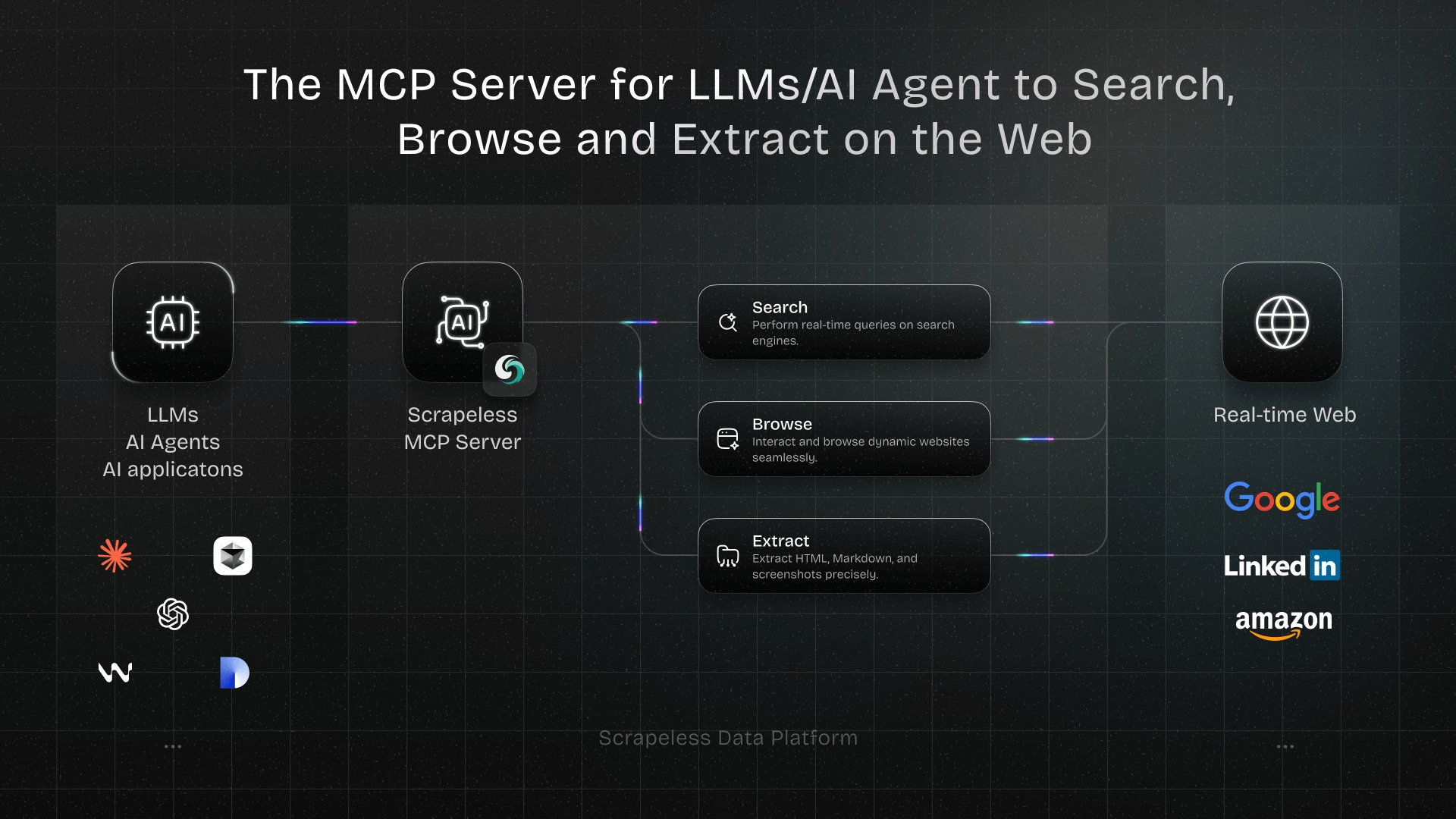
- A managed path renders the chat surface cloud-side and returns the answer as JSON, so the validation work happens server-side on residential egress. The Scrapeless LLM Chat Scraper, part of the Universal Scraping API line, takes one HTTP request and returns a
{status, task_id, task_result}envelope. - Pin residential egress to a country and warm the session before the target prompt. Country pinning controls which answer you get, and loading the platform first establishes the session state the validator expects.
- When a managed actor is disabled for a surface, render that surface directly in a cloud browser instead. The two paths trade convenience for control; the decision guide below matches each to a scenario.
- Free to start. New Scrapeless accounts include free Universal Scraping API credits — sign up at app.scrapeless.com.
Introduction: the answer is the data, and the answer is guarded
LLM answer engines now sit between users and the open web. A buyer asks ChatGPT or Perplexity which tool to pick and reads a synthesized recommendation with a short citation list, never a results page. Teams that need to measure what those engines say — share of citation, brand mentions, how a category gets described — have to capture the answers themselves, on a schedule, as structured data.
That capture runs into the same wall any modern collection hits, plus a few specific to chat surfaces. The platforms are JavaScript-rendered and usually login-gated, answers stream in over time, responses differ by country, and several add their own controls — Grok exposes a reasoning mode, Perplexity a web-search flag. Before a single field is parsed, the request has to look like a real session to the platform's traffic validation.
This guide is best-practices, not step-by-step: it maps the validation signals AI chatbots use, pairs each challenge with its cause and the handling that clears it, and compares the two ways to run that handling — a managed actor that renders cloud-side, or a cloud browser you drive yourself. It closes on a decision guide. For the category background, the companion entry on what an LLM scraper is covers the why; this post covers the how-it-holds-up.
How AI chatbots tell a real session from automated traffic
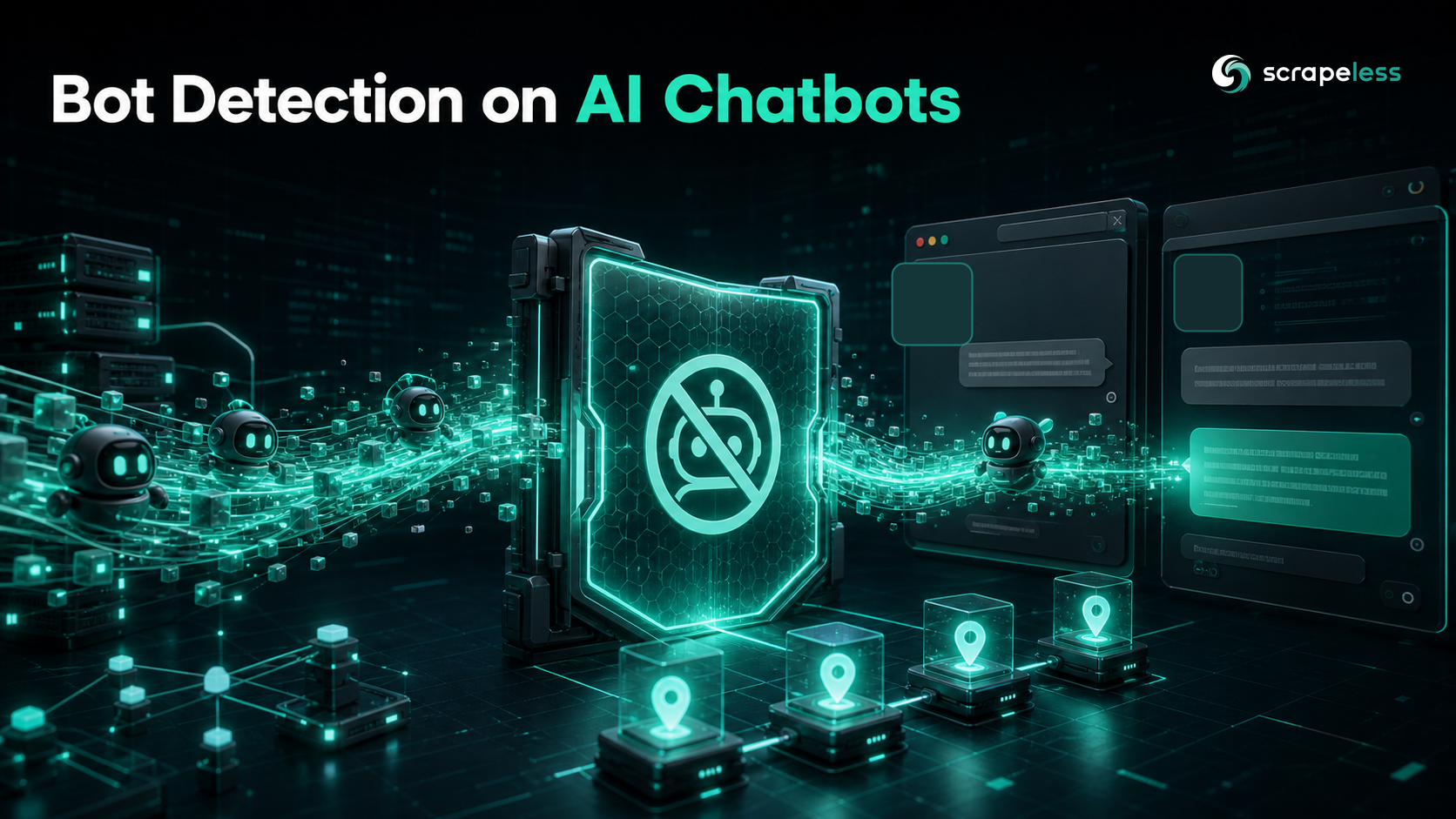
Traffic validation on a chat surface is the same layered inspection cataloged in the OWASP automated-threats taxonomy: each layer adds a signal, and a request that looks automated on any one of them gets a challenge instead of an answer. Four signal families do most of the work.
- IP reputation. Datacenter address ranges are widely catalogued, so traffic from them draws challenges first. Residential and mobile addresses, assigned by an ISP to a real connection, read as ordinary users.
- Transport and browser fingerprint. The TLS handshake — negotiated under the TLS 1.3 specification — plus HTTP/2 frame ordering and the JavaScript-visible browser surface (canvas, WebGL, fonts, navigator fields) form a fingerprint. A headless automation stack with default settings produces a fingerprint that does not match any shipping browser.
- Session state. Cookies carry the session, as defined by the HTTP State Management spec, and a chat platform expects the cookies, tokens, and request history of an account that already loaded the app. A first request with an empty cookie jar looks like the start of automation, not a continuing session.
- Behavioral and surface gating. Login walls, regional answer routing, and per-platform modes sit on top. A request that skips the homepage and posts straight to the answer endpoint trips the behavioral check even when the first three signals pass.
State what the platform does and the handling follows: each signal has a specific cause, and matching the cause is the whole job. The general request semantics these layers build on are set in the HTTP semantics standard.
The challenge to cause to handling matrix
The failure you see on a chat surface points at exactly one cause, and the cause points at one handling. This is the core of the comparison: read the symptom, name the cause, apply the fix.
| Challenge you observe | Underlying cause | How collection handles it |
|---|---|---|
| Challenge interstitial or access-denied page | Datacenter IP reputation | Route through residential egress pinned to a country |
| Empty or truncated answer body | JavaScript render never attached | Render the page in a real browser and let the answer stream settle |
| Immediate block before any render | Mismatched TLS / browser fingerprint | Use a shipping-browser fingerprint, not a default headless stack |
| Redirect to a login wall | No established session state | Warm the session: load the platform first, carry cookies forward |
| Wrong-region or unexpected answer | Regional answer routing | Pin egress to the country whose answer you need |
| Missing reasoning panel or web sources | Surface-specific mode not requested | Set the platform's mode field (reasoning, web search) in the request |
Two columns matter most. The cause column is the part most guides skip — they jump from symptom to a grab-bag of fixes. The handling column is deliberately the same set of primitives reused: residential egress, real rendering, session continuity, and the right request fields. A clean session either validates or it does not, and the fix is to change the session, never to repeat the same request.
Two ways to run the handling: managed actor vs. cloud browser
The matrix above is signal-handling regardless of who runs it. The practical choice is where it runs. Two surfaces cover almost every case.
Managed actor (cloud-side render to JSON). The LLM Chat Scraper hides every signal behind one request. A single endpoint takes {actor, input}, where the actor names the platform — scraper.chatgpt, scraper.grok, scraper.gemini, scraper.perplexity, scraper.copilot — and the input carries the prompt plus a country to pin residential egress. Rendering, fingerprint, sessions, and proxy routing all happen server-side. This request runs live against scraper.chatgpt:
bash
# POST one prompt to the LLM Chat Scraper; the country field pins residential egress.
curl -s -X POST "https://api.scrapeless.com/api/v2/scraper/execute" \
  -H "Content-Type: application/json" \
  -H "x-api-token: ${SCRAPELESS_API_KEY}" \
  -d '{
        "actor": "scraper.chatgpt",
        "input": { "prompt": "What is a residential proxy?", "country": "US" }
      }'
The call returns the same envelope every actor uses — a status, a task_id for audit trails, and a task_result holding the platform payload:
json
{
  "status": "success",
  "task_id": "ac4a138f-ab90-452a-98a2-1ff36f087d72",
  "task_result": {
    "model": "gpt-5-3-mini",
    "prompt": "What is a residential proxy?",
    "result_text": "A **residential proxy** is a type of proxy server that routes your traffic through an IP address assigned by an ISP to a real home or mobile device...",
    "content_references": [],
    "links": [],
    "search_result": [],
    "web_search": []
  }
}
The schema is exactly what the actor emits; result_text carries the full answer, and content_references and links carry the citations when the platform attaches them. Values shown are illustrative samples of a real run.
Cloud browser (drive the surface yourself). Actor availability is per-account, and a scraper.* actor can return code 14002 "disabled actor" on a given plan. When that happens — or when a surface needs interaction the actor does not expose — render the platform directly in the Scrapeless Universal Scraping API and read the answer from the rendered DOM. You give up the clean JSON envelope and take on the navigation, but you control the session step by step. The signal handling is identical underneath; only the surface differs.
Get your API key on the free plan: app.scrapeless.com
Two best practices that carry both paths
Whichever surface runs the handling, two habits decide whether a session validates.
Pin the country, every call. AI chatbots route answers by region, so an unpinned request returns whatever the egress IP's location resolves to — and the answer text changes with it. Set the country field on the managed actor, or pin residential egress on the browser session, and the answer becomes reproducible. The country is a data parameter here, not only an access one: it decides which answer you capture.
Warm the session before the prompt. The session-state signal is the one a first request fails most often. Load the platform's own page first in the same session so the cookies, tokens, and request history exist before the answer request goes out. On the managed actor this is handled server-side; on a cloud browser, navigate to the platform homepage and let it settle before issuing the prompt. A warmed session reads as continuing traffic, which is what the validator expects.
Pricing for both surfaces shares one meter — see the Scrapeless pricing page — and the request shapes are documented at docs.scrapeless.com.
Handling AI answers responsibly
Capturing AI answers stays on public, prompt-driven output: send a prompt, read the response the platform returns to any user. Keep collection to publicly reachable surfaces, respect each platform's terms of service, store only the prompt-answer-citation data the program needs, and pin a fixed prompt set so runs stay comparable rather than sprawling. The goal is a measurable record of public answers, not access to anything an ordinary session could not reach.
Conclusion: pick the surface, reuse the handling
Handling traffic validation on AI chatbots reduces to a short loop: read the challenge, name the cause from the four signal families, and apply one of four primitives — residential egress, real rendering, session warming, the right request fields. The signal handling never changes; only the surface that runs it does.
Pick the managed LLM Chat Scraper when you want the answer as a clean JSON envelope and want the validation handled server-side. Drop to a cloud browser render when an actor is disabled for your account or the surface needs interaction the actor does not expose. Either way, pin the country and warm the session. For a ranked view of the tools in this category, the companion roundup of the best LLM scrapers in 2026 walks the field.
Ready to Build Your AI-Answer Monitoring Pipeline?
Join our community to claim a free plan and connect with developers building AI-answer monitoring pipelines: Discord · Telegram.
Sign up at app.scrapeless.com for free Universal Scraping API credits and adapt the patterns above to the platforms, prompts, and regions your program needs.
FAQ
Q: Is it legal to scrape answers from AI chatbots?
Capturing publicly returned answers to your own prompts is generally treated like collecting other public web data, but the rules vary by jurisdiction and each platform's terms of service govern your use. Review the platform's terms, keep to public prompt-driven output, and consult counsel for your specific case.
Q: Why does the same prompt return different answers?
AI chat platforms route answers by region and re-rank their sources frequently, so the country your request egresses from and the day you run it both move the answer. Pin residential egress to a fixed country and run on a schedule so the deltas you measure are real, not artifacts of routing.
Q: Do I need residential proxies to collect AI answers?
Yes for most surfaces. Datacenter IP ranges are widely catalogued and draw a challenge first, while residential egress reads as an ordinary connection. A managed actor pins residential egress for you through the country field.
Q: What does a clean handling look like when a session is challenged?
Change the session, not the request count. Route through residential egress, present a shipping-browser fingerprint, and warm the session by loading the platform first so cookies and tokens exist before the prompt. A session that validates on those three needs no special handling beyond the right request fields.
Q: Can I collect AI answers without running my own browser?
Yes. The managed LLM Chat Scraper renders the surface cloud-side and returns a {status, task_id, task_result} JSON envelope from one HTTP request, so the rendering and session work happens server-side. Drive a cloud browser yourself only when an actor is disabled for your account or the surface needs interaction the actor does not expose.
At Scrapeless, we only access publicly available data while strictly complying with applicable laws, regulations, and website privacy policies. The content in this blog is for demonstration purposes only and does not involve any illegal or infringing activities. We make no guarantees and disclaim all liability for the use of information from this blog or third-party links. Before engaging in any scraping activities, consult your legal advisor and review the target website's terms of service or obtain the necessary permissions.