IPv6 Loopback Address – The Ultimate Guide

Expert Network Defense Engineer
Today, you’ll learn about an important aspect of IPv6 – the IPv6 loopback address. Let’s find out what it is, how to use it, its use cases, and much more!
1. What is the IPv6 Loopback Address?
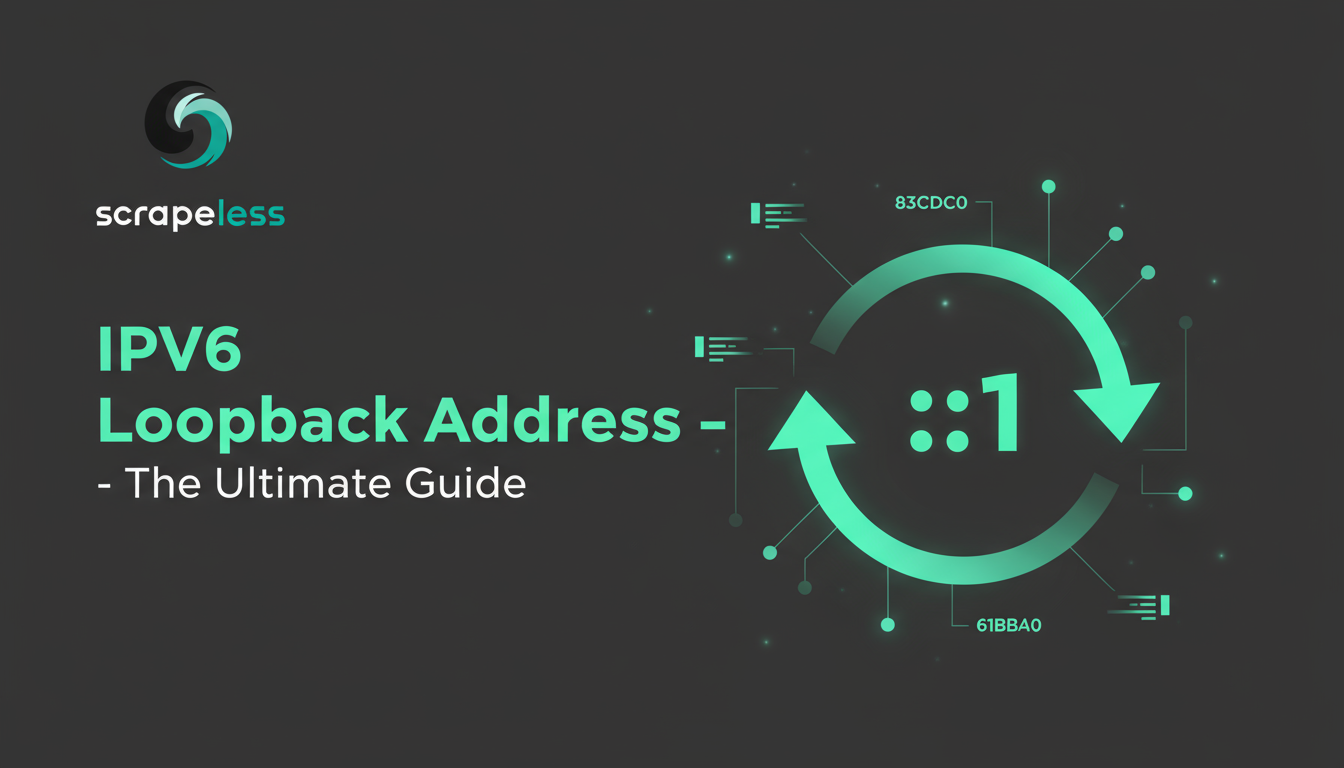
The IPv6 loopback address plays an important role. It’s a specific address that devices use to send messages back to themselves for testing and diagnostic purposes. Unlike IPv4, which uses 127.0.0.1 as its loopback address, IPv6 simplifies this to a single, succinct notation: ::1.
2. What is a Loopback Interface?
A loopback interface is not a physical interface like the Ethernet or Wi-Fi connections on a device. Instead, it’s a virtual one created within the operating system or networking device software.
This interface is always up and operational as long as the device is on, independent of the status of physical network interfaces.
Key Benefits
- Reliability: Since the loopback interface is not tied to a physical port, it remains active regardless of hardware failures or disconnections.
- Testing and diagnostics: You can check the TCP/IP stack’s functionality without using the actual network interfaces.
- Network routing and management: In complex network architectures, the loopback interface is used as a consistent endpoint for routing protocols.
- Simplified local communication: Applications on the same device often use the loopback interface for inter-process communication.
The loopback interface supports a variety of networking procedures, from security measures to routing protocols. Anyone wishing to learn more about networking should understand the loopback interface.
3. Why is the IPv6 Loopback Address Important?
Reasons include:
- Testing network interfaces: Verifying your device’s stack by pinging
::1. - Developing applications: Developers test network apps locally with loopback.
- Network troubleshooting: First step to ensure TCP/IP stack is not the cause.
4. How to Use the Loopback Address for IPv4 and IPv6
The loopback address helps devices send messages to themselves for testing.
a. How to use the IPv4 loopback address
IPv4 loopback address: 127.0.0.1
Use cases:
- Testing connectivity:
bash
ping 127.0.0.1
- Local development: Web servers can bind to 127.0.0.1.
- Secure service configuration: Bind sensitive services only to localhost.
b. How to use the IPv6 loopback address
IPv6 loopback address: ::1
Use cases:
-
Test IPv6 stack:
bashping ::1 -
IPv6 app development and testing
-
Securing services by binding to
::1
Struggling with IPv6 loopback address challenges?
Boost your network’s reliability by mastering the IPv6 loopback address with RapidSeedbox. Protect your systems with our top-tier services.
Get your IPv6 addresses from RapidSeedbox today!
5. How To Check Your IPv6 Loopback Address
a. On Windows
-
Open Command Prompt.
-
Run:
netsh interface ipv6 show address -
Look for Loopback Pseudo-Interface 1 and find
::1.
b. On Linux
-
Open Terminal.
-
Run:
ifconfigor
ip addr -
Find interface lo or lo0, look for
inet6 ::1/128.
c. Why check your loopback?
To confirm your device is configured correctly and ready for IPv6.
6. How to Check if the Loopback Addresses are Working
a. IPv4
Run:
ping 127.0.0.1Success = operational TCP/IP stack.
b. IPv6
Run:
ping ::1Success = working IPv6 stack.
7. What to Do If Loopback Addresses Are Not Working
-
Check network interface configuration
-
Verify TCP/IP stack
-
Windows:
netsh int ip reset -
Linux:
sudo service network-manager restart -
macOS: Renew DHCP Lease under Network settings
-
-
Check firewall/security software
-
Check system logs
8. How to Configure the Loopback Address
a. IPv4 configuration
- Ensure loopback exists (127.0.0.1).
- Bind services to 127.0.0.1.
- Adjust firewall rules.
b. IPv6 configuration
-
Verify loopback by:
ping ::1 -
Bind services to
::1. -
Ensure firewall allows IPv6 localhost traffic.
9. IPv6 Loopback Address Use Cases and Applications
a. Localhost Testing and Development
Developers test local apps by binding servers to ::1.
b. Network Troubleshooting
Pinging ::1 verifies IPv6 stack functionality.
c. Service Segmentation and Security
Bind sensitive services to localhost only.
d. API and Microservices Testing
Simulate internal communication without real network dependencies.
e. Education
Students can safely learn networking basics using the loopback system.
Supercharge Your Web Scraping with Scrapeless IPv6 Proxies
Get verified, high-anonymity IPv6 proxies built for fast, secure, and scalable scraping. Scrapeless delivers automatic IPv6 rotation, dedicated IPs, and full support for HTTP/HTTPS/SOCKS5—powered by a massive 50M+ premium proxy pool. Fully CCPA & GDPR compliant, and billed simply by traffic (Pay-Per-GB), it’s the easiest way to scrape the modern web without interruptions.
Start using Scrapeless IPv6 Proxies today and unlock truly limitless data access.
10. Final Words
The IPv6 loopback address has various applications beyond simple testing. As IPv6 adoption continues to grow, understanding how to use ::1 will become increasingly important.
At Scrapeless, we only access publicly available data while strictly complying with applicable laws, regulations, and website privacy policies. The content in this blog is for demonstration purposes only and does not involve any illegal or infringing activities. We make no guarantees and disclaim all liability for the use of information from this blog or third-party links. Before engaging in any scraping activities, consult your legal advisor and review the target website's terms of service or obtain the necessary permissions.