How to Solve the BeautifulSoup 403 Forbidden Error in Python (6 Proven Methods)

Specialist in Anti-Bot Strategies
Encountering a 403 Client Error: Forbidden while running a Python web scraper is one of the most common—and frustrating—issues developers face.
A 403 error means the server received your request but deliberately refused to serve it, usually because it suspects the request is automated.
It’s important to clarify one thing upfront:
BeautifulSoup itself is not the problem.
BeautifulSoup is only an HTML parsing library. The 403 error is triggered by the HTTP request layer (typically the requests library) after the target website’s anti-bot system flags your request.
This guide walks through six proven solutions to fix the BeautifulSoup 403 Forbidden error and keep your scraper running reliably.
What Causes a 403 Forbidden Error When Scraping?
Most websites block scrapers based on a combination of signals rather than a single factor. Common causes include:
-
Missing or default User-Agent
Requests usingpython-requests/x.x.xare immediately suspicious. -
IP ban or soft rate limiting
Too many requests from the same IP can trigger temporary or permanent blocks. -
Incomplete HTTP headers
Missing headers likeAccept-LanguageorReferermake requests look non-human. -
Advanced bot detection
Checks for JavaScript execution, cookies, TLS fingerprints, and browser behavior.
Identifying which signal is triggering the block helps determine the right fix.
6 Effective Solutions to Fix the 403 Forbidden Error
1. Customize the User-Agent Header
The fastest fix is to send a realistic browser User-Agent.
python
import requests
from bs4 import BeautifulSoup

url = "https://www.example.com"
headers = {
    "User-Agent": (
        "Mozilla/5.0 (Windows NT 10.0; Win64; x64) "
        "AppleWebKit/537.36 (KHTML, like Gecko) "
        "Chrome/120.0.0.0 Safari/537.36"
    )
}

response = requests.get(url, headers=headers)

if response.status_code == 200:
    soup = BeautifulSoup(response.content, "html.parser")
else:
    print(f"Error: {response.status_code}")
⚠️ Important:
For repeated or large-scale scraping, rotate User-Agents instead of using a single static string.
2. Add Realistic Browser Headers
User-Agent alone is often not enough. Modern anti-bot systems analyze header completeness and consistency.
python
headers = {
    "User-Agent": "...",
    "Accept-Language": "en-US,en;q=0.9",
    "Accept-Encoding": "gzip, deflate, br",
    "Referer": "https://www.google.com/"
}
These headers make your request closely resemble a real browser session.
3. Use Proxy Rotation to Avoid IP-Based Blocks
If your IP has already been flagged, header fixes won’t help—you need a new IP.
Using proxies allows you to route requests through different IP addresses, preventing IP-based bans.
Best practices:
- Avoid free proxies (unstable, already banned)
- Use rotating residential proxies for high-protection sites
- Rotate IPs automatically rather than manually
Residential IPs appear as real household users and are far less likely to be blocked.
4. Slow Down Your Requests
A 403 error is often an early warning before a full 429 Too Many Requests block.
Use randomized delays to mimic human behavior:
python
import time
import random

time.sleep(random.uniform(2, 6))
Avoid fixed intervals—they create predictable patterns that are easy to detect.
5. Use a Headless Browser for JavaScript-Heavy Sites
If the site relies on JavaScript to load content or fingerprint browsers, requests alone will fail.
In these cases:
- Use Playwright, Selenium, or Puppeteer
- Render the page
- Pass the rendered HTML to BeautifulSoup for parsing
This approach is essential for sites protected by Cloudflare, Akamai, or custom WAFs.
6. Handle CAPTCHA Challenges (Last Resort)
For aggressive anti-bot systems that present CAPTCHAs, you may need:
- Third-party CAPTCHA solving services
- Or a scraping platform that handles CAPTCHAs automatically
CAPTCHAs usually indicate you’re scraping at scale or triggering strong detection rules.
The Scrapeless Approach: Solving 403 Errors at Scale
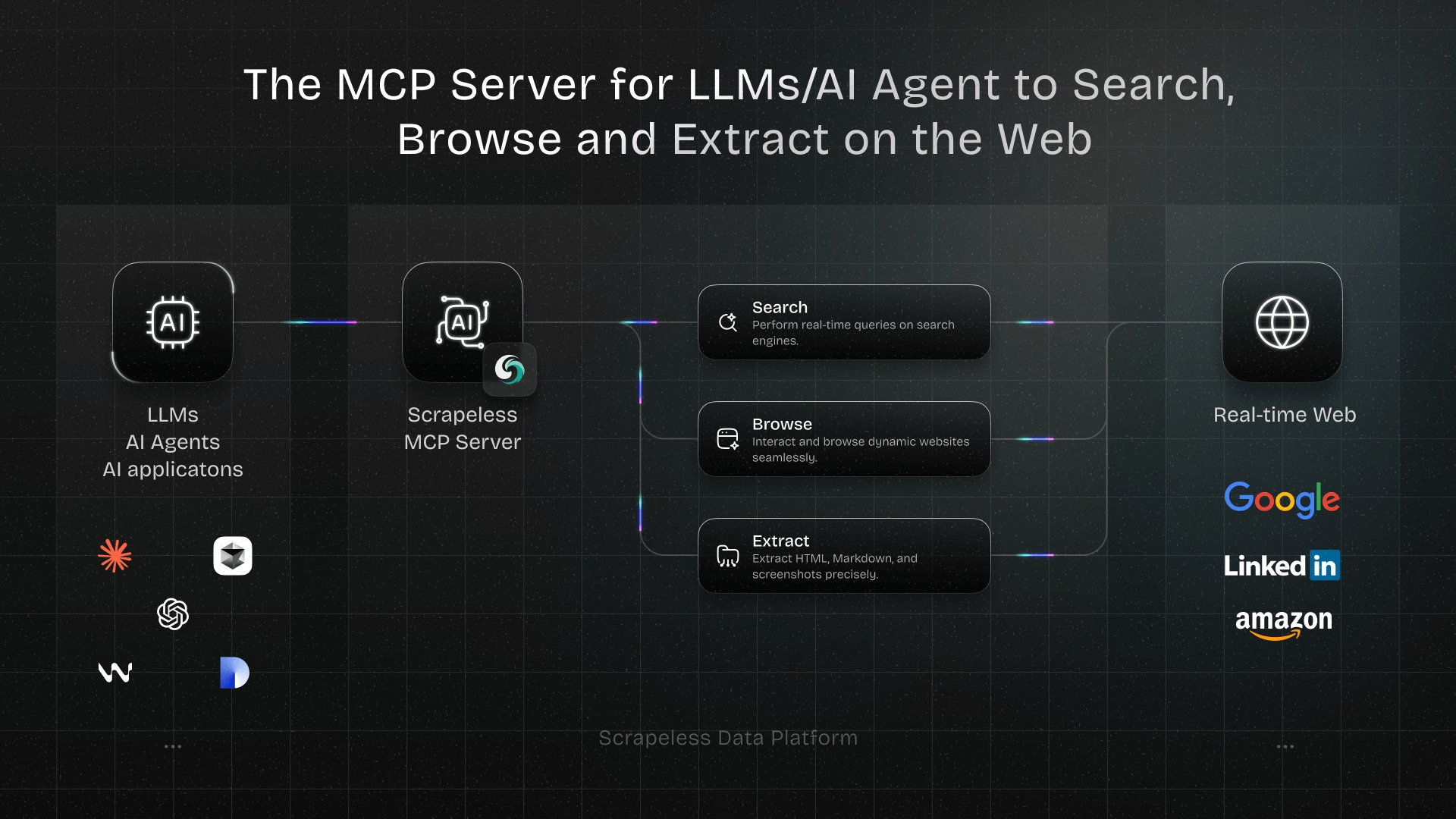
Managing User-Agent rotation, headers, proxies, browser rendering, and retries quickly becomes complex.
Scrapeless simplifies this entire process with a managed scraping infrastructure.
What Scrapeless Handles for You
-
Automatic IP Rotation
Requests are routed through a massive pool of clean residential IPs. -
Browser Fingerprint Emulation
Headers, cookies, TLS signatures, and behavior match real browsers. -
JavaScript Rendering
Built-in headless browser support when needed.
With Scrapeless, you can keep your Python code simple and let the platform handle anti-bot bypass behind the scenes.
Conclusion
A BeautifulSoup 403 Forbidden error means your scraper has been detected—it’s not a bug, but a defense mechanism.
Solving it requires a holistic strategy, including:
- Header and User-Agent customization
- Request pacing
- IP rotation
- JavaScript rendering when necessary
For long-term stability and scalability, a managed scraping solution like Scrapeless is the most efficient way to keep your data pipelines running without constant maintenance.
FAQ: BeautifulSoup 403 Forbidden Error
Q: Why am I still blocked after changing the User-Agent?
A:
Modern anti-bot systems analyze the entire browser fingerprint, not just the User-Agent. Headers, header order, cookies, TLS behavior, and JavaScript execution all matter.
Q: Can BeautifulSoup scrape dynamic content?
A:
No. BeautifulSoup cannot execute JavaScript. You must render the page first using Selenium, Playwright, or a scraping browser before parsing the HTML.
Q: What’s the best proxy type to fix 403 errors?
A:
Residential proxies are the most effective. They use real ISP-assigned IPs and are far less likely to be blocked than datacenter or VPN IPs.
At Scrapeless, we only access publicly available data while strictly complying with applicable laws, regulations, and website privacy policies. The content in this blog is for demonstration purposes only and does not involve any illegal or infringing activities. We make no guarantees and disclaim all liability for the use of information from this blog or third-party links. Before engaging in any scraping activities, consult your legal advisor and review the target website's terms of service or obtain the necessary permissions.