What is an ETL Pipeline? A Comprehensive Guide to Data Extraction, Transformation, and Loading

Expert Network Defense Engineer
Need reliable data for your ETL pipeline? Boost your extraction phase with Scrapeless Proxies — fast, reliable, and affordable solutions for every need.
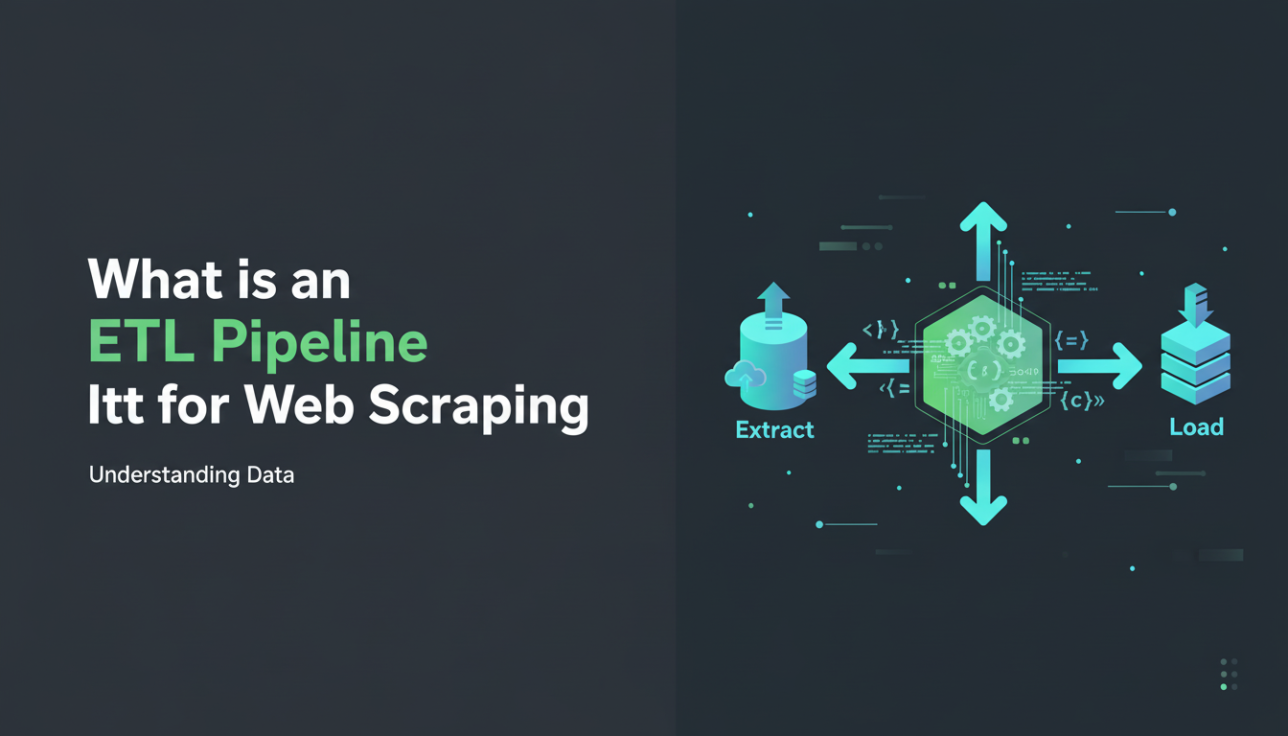
In the world of data analytics and business intelligence, the ability to efficiently move and process information is paramount. The ETL pipeline is a foundational concept in this domain, representing a systematic process used to move data from one or more sources to a destination where it can be analyzed. ETL stands for Extract, Transform, and Load, and it is a specific type of data pipeline that is crucial for maintaining data quality and consistency across an organization [1].
This guide will walk you through the three stages of a typical business's ETL data extraction pipeline, explore its benefits, and illustrate how high-quality proxy solutions are essential for the successful execution of the initial extraction phase.
1. ETL Pipeline Explained
An ETL pipeline is an ordered set of processes used to move data from one system to another, streamlining data processing and efficiency [2].
a. Extract
This is the initial stage where raw data is collected from a source or data pool. Sources can range from internal databases (like NoSQL) to external, open-source targets such as social media platforms or competitor websites. The process of Data Extraction can involve various techniques, including full extraction, incremental extraction, or API-based extraction [3]. When extracting data from the public web, the use of robust proxies is often necessary to manage connection requests and avoid IP blocking.
b. Transform
Extracted data is rarely in a uniform state; it is often collected in multiple formats (e.g., JSON, CSV, HTML, SQL). The Transform stage refers to the process of structuring, cleaning, and validating this data so that it conforms to a uniform format suitable for the target system. This may include data cleaning, deduplication, standardization, and aggregation. Companies often spend a significant amount of time on data cleaning, a process that solid ETL pipelines aim to automate.
c. Load
Load is the final stage, which involves the actual transfer or upload of the transformed data to a final destination, such as a data warehouse, CRM, or database. This destination allows the data to be analyzed to generate actionable output. Common destinations include Amazon S3, Google Cloud, Microsoft Azure, SFTP, or internal APIs. The main types of loads include initial loads, incremental loads, and full refreshes.
| Feature | ETL Pipeline | Data Pipeline |
|---|---|---|
| Scope | Specific process (Extract, Transform, Load) | Broader term for full-cycle data collection architecture |
| Focus | Data transformation and structuring | Data movement and flow |
| Transformation | Occurs before loading (T then L) | Can occur before or after loading (T then L, or L then T - ELT) |
| Best For | Smaller, complex datasets; structured data | Large, unstructured datasets; real-time data |
2. Benefits of ETL Pipelines
Implementing a strong ETL pipeline architecture offers several key benefits for businesses looking to leverage data for growth and competitive advantage.
a. Aggregation of Raw Data from Multiple Sources
A well-designed ETL flow enables companies to efficiently collect raw data in various formats from multiple sources and input it into their systems for analysis. This broadened scope of view ensures that decision-making is more closely aligned with current consumer and competitor trends.
b. Decreased 'Time to Insight'
By automating the process from initial collection to final loading, the time required to derive actionable insights is considerably reduced. Instead of manual review and conversion, the streamlined process allows for quicker analysis and response.
c. Freeing Up Company Resources
Solid ETL pipelines automate data formatting and cleaning, which are often time-consuming tasks. By automating these steps, companies can free up personnel and resources to focus on higher-value activities, such as advanced analysis and strategic planning.
3. The Critical Role of Proxies in the Extraction Phase
When the extraction phase involves collecting data from the public web (web scraping), the reliability and quality of the proxy infrastructure become the most critical factor. Without high-performance proxies, the extraction process can be severely hampered by IP blocks, CAPTCHAs, and slow response times.
Scrapeless Proxies: Powering Reliable Data Extraction
For businesses that rely on external data for their ETL pipelines, Scrapeless Proxies offer the robust, scalable solution needed for the extraction phase. Scrapeless provides access to real residential, datacenter, IPv6, and static ISP IPs, ensuring high success rates and low latency for demanding data collection tasks.
With over 90 million residential IPs in 195+ countries, Scrapeless delivers unmatched coverage, speed, and reliability. This massive, diverse pool of IPs is essential for maintaining anonymity and avoiding detection during large-scale extraction, a key component of Web Scraping Best Practices.
🌍 Residential Proxies
- 90M+ real IPs in 195+ countries
- Automatic rotation & 99.98% success rate
- Geo-targeting support
- HTTP/HTTPS/SOCKS5 protocols
- <0.5s response time
- High durability and fast download speeds
⚡ Datacenter Proxies
- 99.99% uptime & ultra-fast response
- Unlimited session duration
- Easy API integration
- High bandwidth, low latency
- HTTP/HTTPS/SOCKS5 support
🔐 IPv6 Proxies
- 50M+ verified IPv6 IPs
- Automatic rotation
- High anonymity, dedicated IPs
- GDPR & CCPA compliant
- Pay-per-GB billing
🏠 Static ISP Proxies
- Dedicated static residential IPs, offering the stability of a datacenter IP with the trust of a residential IP.
- 99.99% uptime and low latency
- Ideal for long-term sessions on platforms requiring high trust.
- Geo-targeting support
- HTTP/HTTPS/SOCKS5 protocols
Scrapeless also offers solutions that can automate the entire data collection and transformation process, such as Scrapeless Integration with Make and the MCP Integration Guide, which can significantly speed up the "time to data insight" by providing clean, ready-to-use data. For businesses focused on competitive intelligence, leveraging a Best Price Tracking Tool is often a direct result of a successful ETL pipeline.
4. Automating the ETL Pipeline
Many companies choose to automate their data collection and ETL pipeline flow using specialized tools. This approach allows businesses to focus on their core operations while leveraging autonomous ETL architectures developed and operated by a third party.
The main benefits of automation include:
- Web data extraction with zero infrastructure or code requirements.
- No additional technical manpower needed.
- Data is automatically cleaned, parsed, and synthesized, and delivered in a uniform format of your choice (JSON, CSV, HTML, or Microsoft Excel). This effectively replaces the manual Transform stage.
- The data is delivered directly to the company's target destination (e.g., Amazon S3, API).
5. Frequently Asked Questions (FAQ)
Q: What is the difference between an ETL pipeline and a Data Pipeline?
A: An ETL pipeline is a specific type of data pipeline where the transformation (T) happens before the loading (L). A Data Pipeline is a broader term that encompasses the entire architecture for moving data, which can include ETL, ELT (Extract, Load, Transform), or simple data movement processes [4].
Q: Why are proxies necessary for the ETL Extraction phase?
A: When the extraction involves collecting data from public websites (web scraping), proxies are necessary to rotate IP addresses, distribute requests, and prevent the scraper's IP from being blocked by anti-bot systems. High-quality proxies, like those from Scrapeless, ensure the extraction is reliable and scalable.
Q: Can I build an ETL pipeline using Python?
A: Yes, Python is a popular choice for building ETL pipelines. Libraries like Pandas are used for data processing and transformation, while tools like Apache Airflow or Luigi can be used to manage the workflow and scheduling of the pipeline.
Q: What is the main challenge in the ETL process?
A: The most significant challenge is often the Transform stage, as it involves cleaning, standardizing, and reconciling data from disparate sources into a consistent format. The quality of the data extracted is also a major challenge, which is why reliable extraction methods, often powered by robust proxies, are essential.
Q: What is an ELT pipeline?
A: ELT stands for Extract, Load, Transform. In this model, data is first extracted and loaded directly into a data warehouse (L), and then the transformation (T) is performed within the warehouse. This approach is often preferred for cloud-based data warehouses and large datasets.
References
[1] What is an ETL Pipeline? Compare Data - Qlik
[2] What Is An ETL Pipeline? - Informatica
[3] Data Extraction Techniques in ETL: How it Works - Rivery
[4] Data Pipeline vs. ETL: What They Do and When to Use Each - Fivetran
At Scrapeless, we only access publicly available data while strictly complying with applicable laws, regulations, and website privacy policies. The content in this blog is for demonstration purposes only and does not involve any illegal or infringing activities. We make no guarantees and disclaim all liability for the use of information from this blog or third-party links. Before engaging in any scraping activities, consult your legal advisor and review the target website's terms of service or obtain the necessary permissions.