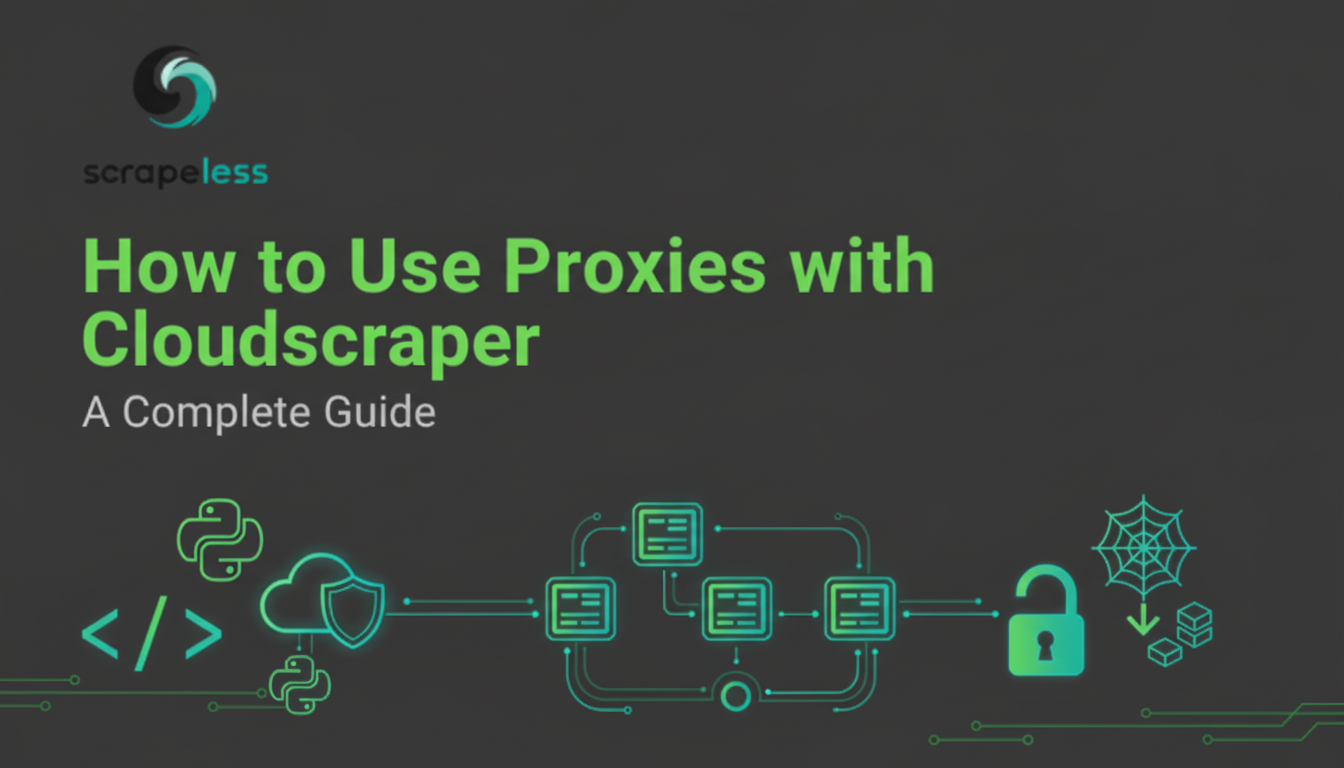
How to Use Proxies with Cloudscraper: A Complete Guide

Expert Network Defense Engineer
Master Cloudscraper proxy integration to bypass Cloudflare and other anti-bot systems for seamless, large-scale web scraping with high-quality proxies.
Cloudscraper is a popular Python library designed to bypass the anti-bot protection mechanisms of services like Cloudflare, which often present a CAPTCHA or a JavaScript challenge to automated clients. While Cloudscraper is effective at solving these challenges, it still relies on a clean, unblocked IP address to make the initial request.
For any serious, large-scale web scraping operation, integrating high-quality proxies with Cloudscraper is essential to prevent IP bans, manage geo-targeting, and ensure continuous data flow. This guide will walk you through the process of setting up, rotating, and authenticating proxies within your Cloudscraper workflow.
What is Cloudscraper and Why Integrate Proxies?
Cloudscraper works by mimicking a real browser's behavior, solving the JavaScript challenges that Cloudflare presents to verify that the client is human. However, if the IP address you are using is already flagged as malicious or has made too many requests, Cloudflare will simply block the IP before the challenge is even presented.
Integrating proxies with Cloudscraper allows you to:
- Bypass IP Bans: Distribute your requests across a massive pool of clean IP addresses.
- Geo-Targeting: Access content that is restricted to specific countries or regions, critical for market research [1].
- Maintain Anonymity: Protect your local IP address from being exposed and blocked.
Set Up a Proxy With Cloudscraper: Step-By-Step Guide
Since Cloudscraper is built on top of the widely used Python requests library, proxy integration is straightforward and follows the same pattern.
Step 1: Create a Cloudscraper Instance
First, you need to import the library and create a scraper instance.
python
import cloudscraper
scraper = cloudscraper.create_scraper()
Step 2: Define the Proxy Dictionary
Proxies are passed to Cloudscraper using a dictionary that maps the protocol (http or https) to the proxy URL.
python
proxies = {
   "http": "http://<YOUR_PROXY_IP>:<PORT>",
   "https": "http://<YOUR_PROXY_IP>:<PORT>"
}
Step 3: Make a Request Through the Proxy
You pass the proxies dictionary to the get() or post() method of the scraper instance.
python
response = scraper.get("https://httpbin.org/ip", proxies=proxies)
print(response.text)
If successful, the response from the /ip endpoint will show the IP address of the proxy server, confirming the integration.
How to Implement Proxy Rotation
Using a single proxy IP, even with Cloudscraper, will eventually lead to a block. To prevent this, you must implement proxy rotation.
Manual Rotation with a List
The simplest way to rotate is to maintain a list of proxies and randomly select one for each request.
python
import cloudscraper
import random

# Create a Cloudscraper instance
scraper = cloudscraper.create_scraper()

# List of proxy dictionaries (replace with actual proxy URLs)
proxy_list = [
    {"http": "http://ip1:port", "https": "http://ip1:port"},
    {"http": "http://ip2:port", "https": "http://ip2:port"},
    {"http": "http://ip3:port", "https": "http://ip3:port"},
]

# Randomly select a proxy from the list
random_proxy = random.choice(proxy_list)

# Make a request using the randomly selected proxy
response = scraper.get("<YOUR_TARGET_URL>", proxies=random_proxy)
Use Authenticated Proxies in Cloudscraper
Most premium proxy providers require authentication. To use an authenticated proxy with Cloudscraper, you must embed the username and password directly into the proxy URL using the following format:
<PROTOCOL>://<USERNAME>:<PASSWORD>@<IP_ADDRESS>:<PORT>Example of Authenticated Proxy Dictionary:
python
authenticated_proxies = {
   "http": "http://user123:pass456@proxy.scrapeless.com:8000",
   "https": "http://user123:pass456@proxy.scrapeless.com:8000"
}

response = scraper.get("<YOUR_TARGET_URL>", proxies=authenticated_proxies)
Recommended Solution: Scrapeless Proxies
While manual rotation is possible, it is inefficient and prone to errors. For seamless, large-scale operations with Cloudscraper, a fully managed, rotating proxy service is the only reliable solution.
Scrapeless Proxies offers a superior, high-performance network that is perfectly suited for the demands of anti-bot bypass libraries like Cloudscraper.
Scrapeless offers a worldwide proxy network that includes Residential, Static ISP, Datacenter, and IPv6 proxies, with access to over 90 million IPs and success rates of up to 99.98%. It supports a wide range of use cases — from web scraping and market research to price monitoring, SEO tracking [2], ad verification, and brand protection — making it ideal for both business and professional data workflows.
Residential Proxies: The Ultimate Cloudflare Bypass
Scrapeless Residential Proxies are the most effective solution for Cloudscraper, as they provide the clean, high-reputation IPs necessary to pass the initial anti-bot checks.
Key Features:
- Automatic proxy rotation (managed server-side)
- 99.98% average success rate
- Precise geo-targeting (country/city)
- HTTP/HTTPS/SOCKS5 protocols
- <0.5s response time
- Only $1.80/GB
Scrapeless Proxies provides global coverage, transparency, and highly stable performance, making it a stronger and more trustworthy choice than other alternatives — especially for business-critical and professional data applications that require seamless universal scraping [3] and product solutions [4] against anti-bot systems.
Conclusion
Integrating proxies with Cloudscraper is a vital step in building a resilient web scraping solution. By leveraging the simple dictionary format of the requests library and choosing a high-quality, automatically rotating service like Scrapeless Proxies, you can ensure your scripts successfully bypass anti-bot measures and maintain a consistent, high-volume data flow.
References
[1] Cloudscraper PyPI Project Page
[2] Python Requests Documentation: Proxies
[3] Cloudflare: What is Cloudflare?
[4] W3C: HTTP/1.1 Method Definitions (GET)
[5] IETF: Hypertext Transfer Protocol (HTTP/1.1): Message Syntax and Routing
At Scrapeless, we only access publicly available data while strictly complying with applicable laws, regulations, and website privacy policies. The content in this blog is for demonstration purposes only and does not involve any illegal or infringing activities. We make no guarantees and disclaim all liability for the use of information from this blog or third-party links. Before engaging in any scraping activities, consult your legal advisor and review the target website's terms of service or obtain the necessary permissions.