What is a Proxy Browser? A Comprehensive Guide to Anonymity and Web Scraping

Expert in Web Scraping Technologies
Boost your automation and scraping with Scrapeless Proxies — fast, reliable, and affordable.
Key Takeaways
- A Proxy Browser is a browser configured to route its internet traffic through a proxy server, masking the user's real IP address.
- The primary benefits include enhanced privacy, the ability to bypass geo-restrictions, and optimized performance for web scraping.
- Proxies are categorized by their level of anonymity: Transparent, Anonymous, and High Anonymity.
- While proxies offer significant advantages, users must choose a reputable provider to mitigate security risks.
- For professional data collection, a proxy browser is a key component in a strategy that includes web scraping best practices.
In the digital age, every time you browse the internet, your IP address is exposed, revealing your location, device information, and online activities. For individuals and businesses alike, protecting this information and maintaining a secure online presence is paramount. This is where the concept of a proxy browser becomes essential.
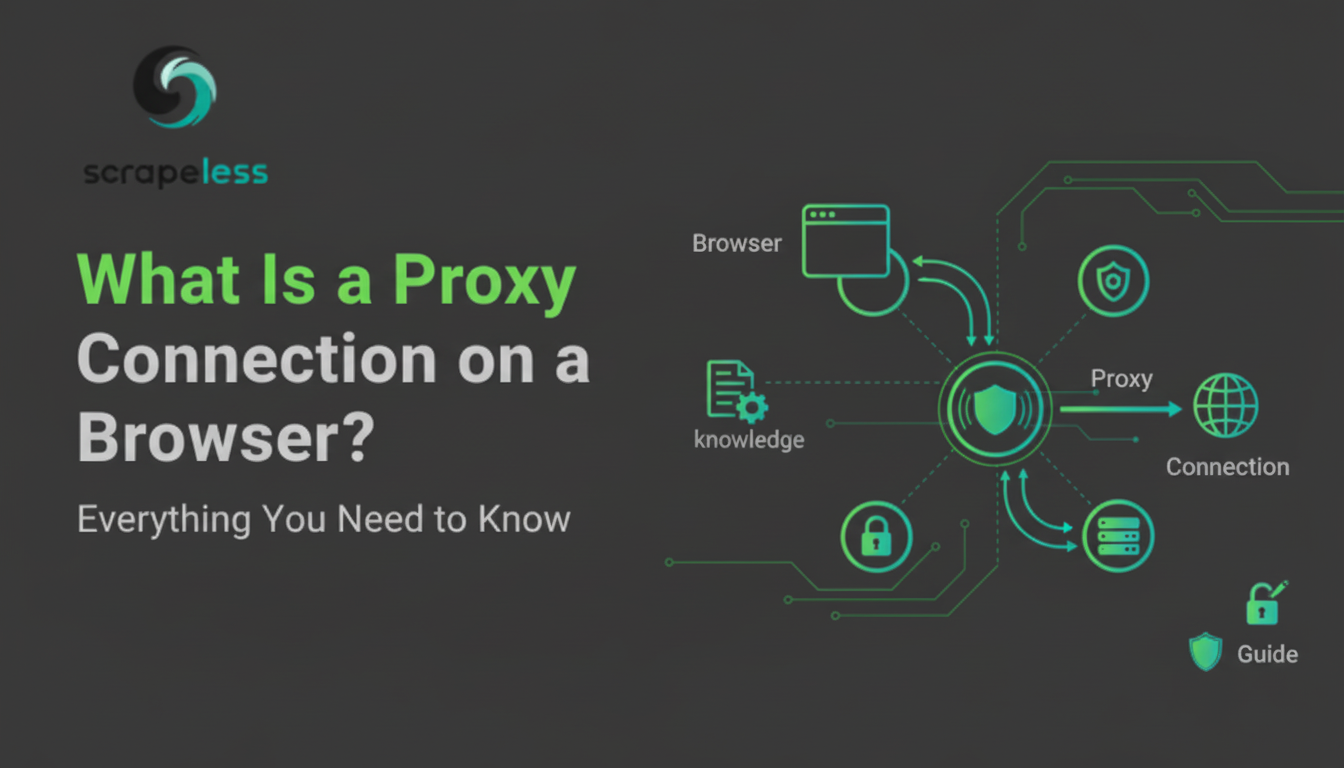
A proxy browser is simply a web browser whose internet traffic is routed through an intermediary server—a proxy server. This server acts as a gateway, retrieving content on your behalf and replacing your IP address with its own in the process. This fundamental mechanism is the key to shielding your identity and securing your online activities.
Understanding the Definition and Uses of Proxies on Browsers
The core function of a proxy server is to act as a middleman between your device and the internet. As defined by Fortinet, a proxy server is a system or router that provides a gateway between users and the internet, helping to prevent external threats from entering a private network Fortinet.
When used with a browser, this connection offers several critical advantages:
- Enhancing Online Privacy: By masking your true IP address, your online activities become much harder to trace back to your physical location.
- Bypassing Geo-Restrictions: A proxy server located in a different country allows you to access content that is restricted in your region.
- Improving Performance: Some proxies cache frequently accessed content, which can speed up page loading times for repeat visits.
- Security: Proxies can add a layer of security by filtering malicious traffic or, when paired with a VPN, encrypting your data.
Enhancing Anonymity with Proxies
The quest for anonymity online is a major driver for proxy use. A 2013 study by Pew Research found that a significant majority of internet users had already taken steps to mask their behavior or avoid being tracked online Pew Research. Proxies are a primary tool in this effort.
By replacing your IP, proxies make it nearly impossible for websites, advertisers, or malicious actors to track your activity. This is especially important when conducting sensitive operations, such as scraping Amazon product data for market analysis, where maintaining a low profile is crucial.
Furthermore, high-quality proxies, particularly those used in professional settings, remove any identifying headers or digital footprints that could reveal your true identity, offering a robust shield against tracking.
Different Types of Proxies for Browsers
Not all proxies offer the same level of anonymity or functionality. They are generally categorized based on how much information they reveal about the user and the connection:
| Proxy Type | Anonymity Level | Functionality | Best Use Case |
|---|---|---|---|
| Transparent Proxy | Low | Does not hide your IP and identifies itself as a proxy. | Content filtering and caching within a corporate network. |
| Anonymous Proxy | Medium | Hides your IP address but identifies itself as a proxy. | General anonymous browsing and bypassing simple geo-blocks. |
| High Anonymity Proxy | High | Hides your IP and does not identify itself as a proxy. | Professional web scraping, sensitive data collection, and maximum privacy. |
For professional tasks like Google Search scraping or large-scale data extraction, a high anonymity proxy is essential to ensure your requests are not flagged and blocked by target websites.
Advantages and Disadvantages of Using a Proxy Browser
Like any technology, proxy browsers come with a set of trade-offs that must be considered.
Advantages
- Privacy Protection: Masks your IP address, protecting your personal information from trackers.
- Access to Blocked Content: Allows you to bypass internet censorship and regional restrictions.
- Web Scraping Optimization: Enables IP rotation, which is a core strategy for avoiding IP bans during high-volume data collection, as detailed in web scraping best practices ScraperAPI.
Disadvantages
- Security Risks: Using an untrusted or free proxy provider can expose you to security risks, as the proxy owner can potentially monitor your traffic.
- Connection Speed: Depending on the proxy server's distance and capacity, your connection speed may be slower than a direct connection.
- Compatibility Issues: Some websites may not function correctly if they detect the use of a proxy, although this is becoming less common.
Setting Up a Proxy Browser
Setting up a proxy connection in a browser is typically a simple process, often involving the system-level network settings (as is the case with Microsoft Edge) or a dedicated browser extension.
For professional use, the best approach is often to use a dedicated tool like a specialized scraping browser or a browser extension provided by a reputable proxy service. This allows for fine-grained control over IP rotation and connection type, which is vital for tasks like scraping Google Trends.
- Choose a Provider: Select a trustworthy proxy provider that offers high-quality, dedicated proxies. Before configuring the proxy, it helps to Check IP address. Starting with flagged or overused IPs often leads to failed sessions.
- Configure Settings: Enter the proxy's IP address and port number into your browser's network settings or a dedicated extension.
- Authenticate: Provide your username and password if required by the proxy service.
The Scrapeless Solution: Dedicated Proxy Browsing
For serious web scraping, data collection, and automation, relying on a high-quality proxy service is non-negotiable. Scrapeless provides robust proxy solutions, including specialized tools like the best AI scraping browser, designed to handle the most challenging targets.
Scrapeless proxies ensure:
- High Success Rates: IPs are constantly monitored and rotated to maintain a high connection success rate.
- True Anonymity: Our high-anonymity proxies ensure your operations remain undetected.
- Scalability: Easily manage thousands of IPs for large-scale projects, such as scraping all of Amazon.
Take control of your data collection and ensure your browsing is secure and efficient.
Frequently Asked Questions (FAQ)
Q1: What is the difference between a proxy browser and a VPN?
A: A VPN (Virtual Private Network) encrypts all your internet traffic and routes it through a secure tunnel, affecting every application on your device. A proxy browser only routes the traffic from that specific browser through the proxy server, and it does not inherently encrypt the traffic unless configured to do so (e.g., using an HTTPS proxy). Proxies offer more granular control, while VPNs offer broader, system-wide security.
Q2: Are free proxy browsers safe to use?
A: Generally, no. Free proxies are often slow, unreliable, and pose significant security risks. The proxy operator can potentially monitor or log your activity, or even inject malware or ads into your browsing session. For any sensitive or professional work, always use a reputable, paid proxy service.
Q3: Can a proxy browser help me with web scraping?
A: Yes, absolutely. A proxy browser is an essential tool for professional web scraping. By rotating your IP address using a pool of proxies, you can distribute your requests and avoid being blocked or rate-limited by target websites, allowing for large-scale, sustained data collection.
Q4: How do I know if my proxy is working?
A: The simplest way is to visit a website that displays your IP address (e.g., "What is my IP address?"). If the displayed IP address matches the one provided by your proxy service, the proxy is working correctly.
Q5: What is a "High Anonymity" proxy?
A: A high anonymity proxy, also known as an elite proxy, is the most secure type. It hides your real IP address and, crucially, does not reveal that you are using a proxy at all. This makes it appear to the target website as if you are a regular user connecting directly, offering the highest level of privacy and block resistance.
At Scrapeless, we only access publicly available data while strictly complying with applicable laws, regulations, and website privacy policies. The content in this blog is for demonstration purposes only and does not involve any illegal or infringing activities. We make no guarantees and disclaim all liability for the use of information from this blog or third-party links. Before engaging in any scraping activities, consult your legal advisor and review the target website's terms of service or obtain the necessary permissions.