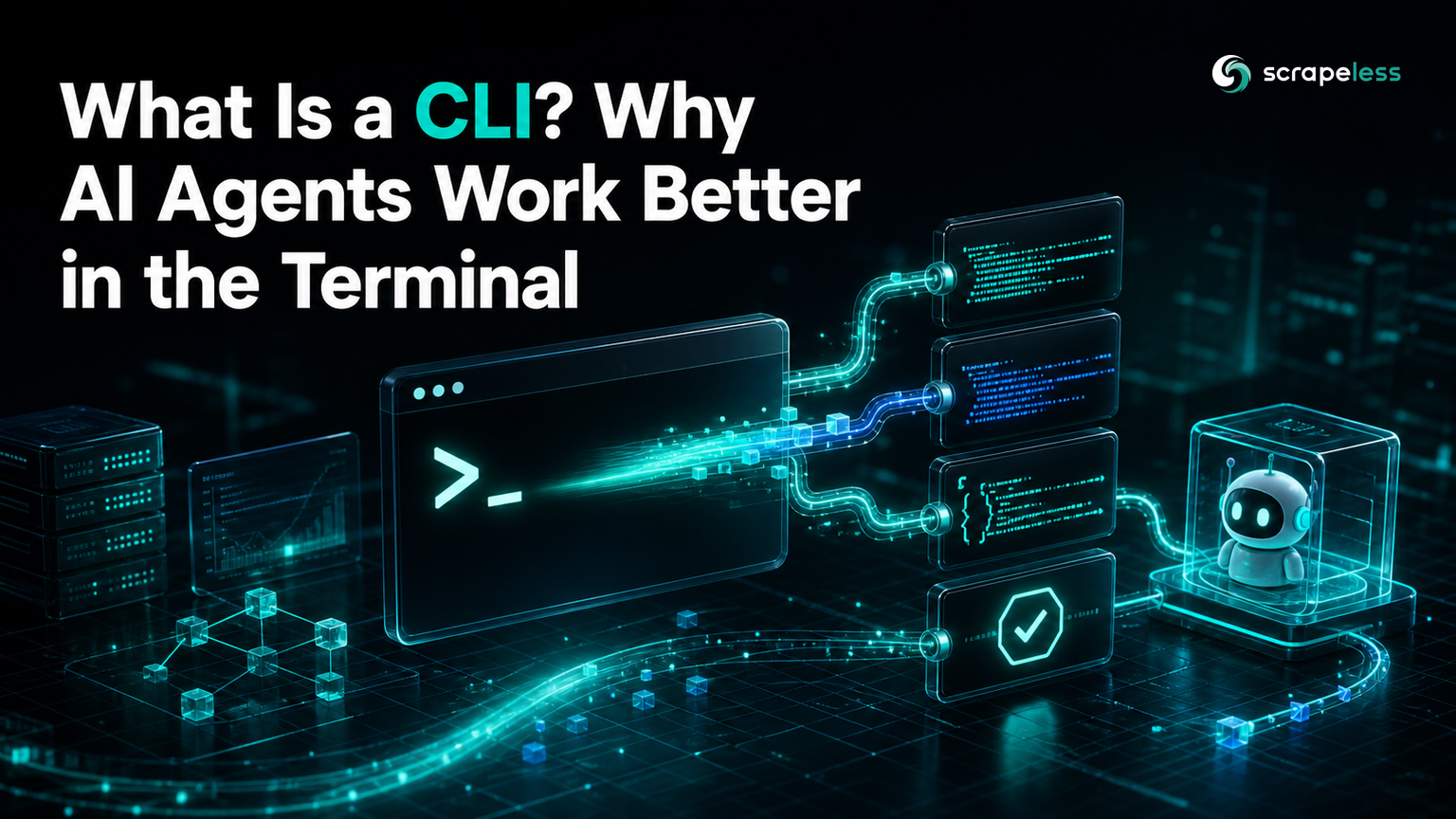
What Is a CLI? Why AI Agents Work Better in the Terminal

Senior Web Scraping Engineer
TL;DR:
- A CLI is a text contract: a command accepts arguments and input, then returns output, diagnostics, and an exit status.
- AI agents work well with CLIs because commands are discoverable, scriptable, composable, and easy to verify after execution.
- Structured output and bounded commands matter more to an agent than decorative terminal output.
- The current Scrapeless Scraping Browser CLI exposes browser actions, AI-readable snapshots, JSON output, and session controls from the terminal.
A graphical interface is built for eyes and hands. An API library is built for a particular programming language. A command-line interface sits between them: compact enough for a person to inspect, formal enough for a script—or an AI agent—to run.
That makes the terminal more than a nostalgic developer preference. For agents, it can be a stable action surface with inputs, outputs, permissions, and a checkable success signal.
What is a CLI?
A command-line interface, or CLI, is a text-based interface for invoking a program with a command name, arguments, options, and optional input. The program reports normal results through standard output, diagnostic information through standard error, and success or failure through an exit status.
Those channels are not trivia. The Open Group command specification separates standard output from diagnostic messages and defines status values for common execution failures. The Bash manual explains the central convention: zero means success and a non-zero status means failure.
The CLI contract an AI agent actually sees
An agent does not “see a terminal” in the human sense. Its harness gives it a tool that can start a process and return a record. That record commonly contains:
| Channel | What it carries | Why the agent needs it |
|---|---|---|
| Command and arguments | The requested operation and its parameters | Makes intent explicit and reviewable |
| Standard input | Data streamed into the process | Avoids temporary files for simple composition |
| Standard output | The primary result | Supplies the observation for the next decision |
| Standard error | Diagnostics | Keeps errors separate from machine-readable results |
| Exit status | Success or failure | Gives the harness a deterministic branch condition |
If a command prints a JSON object and exits successfully, the harness can parse it and continue. If it returns a non-zero status, the harness can stop, report the failure, or request help according to policy. The model does not have to infer success from cheerful prose.
Why AI agents work well in the terminal
Commands are discoverable
Good CLIs expose --help, subcommand help, and --version. An agent can inspect the installed surface before constructing a call. That is safer than relying on an old command from training data.
Calls are composable
Shells connect programs through files, pipes, and conditional execution. The Bash pipeline documentation describes how the output of one command becomes the input of another and how pipeline status is calculated. For agent workflows, composition allows a small tool to do one job well instead of forcing every operation into a large custom integration.
Execution is observable
The harness can record the exact command, working directory, output, duration, and exit status. A reviewer can replay a read-only command or compare two runs without decoding a series of mouse movements.
Permissions can be bounded
A terminal tool can be rooted to a workspace, restricted to an allowlist, or paused before external writes. A narrow CLI subcommand also makes approval specific: “open this public URL” is easier to evaluate than “let the agent control the computer.”
CLI, GUI, and SDK: which interface should an agent use?
| Interface | Best fit | Trade-off |
|---|---|---|
| CLI | Short, observable operations and cross-language automation | Requires careful argument and output design |
| GUI | Visual tasks and software with no automation surface | Interaction can be brittle and expensive to inspect |
| SDK | High-volume application logic in a chosen language | Couples the integration to a runtime and dependency tree |
| MCP server | Typed tools shared across agent clients | Adds a protocol server and connection lifecycle |
These interfaces can coexist. A CLI may wrap an SDK. An MCP server may call a CLI. The useful design question is where the cleanest, narrowest contract lives.
Start Scraping with Scrapeless
Power up your web scraping and automation workflow with Scrapeless!
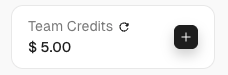
Sign up today and get $5 in free credit — no credit card required.Claim your free credit now in the Scrapeless Dashboard.
A concrete example: the Scrapeless Scraping Browser CLI
The Scrapeless Scraping Browser CLI exposes a cloud browser as terminal commands. The current package can be inspected without starting a browser session:
bash
npx --yes scrapeless-scraping-browser --version
npx --yes scrapeless-scraping-browser --help
The verified version command returned scrapeless-scraping-browser 0.1.1. Its help output groups operations for navigation, page interaction, snapshots, information retrieval, storage, tabs, debugging, session management, and configuration.
The useful agent pattern is observe, act, and check:
bash
scrapeless-scraping-browser open https://example.com
scrapeless-scraping-browser snapshot -i --json
scrapeless-scraping-browser click @e2
scrapeless-scraping-browser get title --json
Live browser commands require SCRAPELESS_API_KEY, so this sequence is a credential-gated example rather than a claimed live run here. The snapshot -i command returns interactive elements with references such as @e2; a later action can target the reference instead of inventing a fragile selector. The --json option gives an agent a structured result where the command supports it.
See the Scraping Browser CLI guide for the broader command surface and Scraping Browser for the underlying cloud browser runtime. CLI and SDK details should always be checked against Scrapeless documentation before pinning production automation.
What makes a CLI agent-friendly?
An agent-friendly CLI has more discipline than a colorful human-oriented terminal app.
- Stable grammar: subcommands and option names follow a consistent pattern.
- Machine-readable output: JSON is available for results that will be parsed.
- Useful exit statuses: failures do not masquerade as successful text output.
- Separated diagnostics: logs and warnings do not corrupt structured stdout.
- Idempotent reads: inspection commands can be repeated without changing state.
- Explicit state: session identifiers and targets are visible rather than hidden globally.
- Bounded side effects: destructive or external actions are distinct commands that can be approved.
- Discoverable schemas: help text explains required arguments, optional flags, and examples.
The research community has explored natural-language assistance for command lines for years. Project CLAI frames the shell as a practical environment where AI can help users compose and understand commands. Modern agents reverse part of that relationship: the agent becomes the caller, and the CLI becomes its dependable environment interface.
A safe execution pattern for terminal agents
Before giving an agent a CLI, define the contract around it:
- Pin the working directory and the allowed executable set.
- Require a help or version check when the installed surface is unknown.
- Prefer read-only inspection before state-changing commands.
- Request structured output when the next step depends on parsing.
- Preserve command, output, diagnostics, and exit status in the task trace.
- Put approvals immediately before external writes or irreversible actions.
- Close sessions and release resources when the completion condition is met.
Cost belongs in the same design review. The Scrapeless pricing page lets teams evaluate cloud browser usage separately from the agent model and orchestration layer.
Conclusion
A CLI gives an AI agent something it can reason about precisely: a named action, explicit parameters, inspectable output, diagnostics, and a status. The terminal is valuable not because it is text-only, but because it can make the action contract small and auditable.
Ready to Give Your Agent a Browser CLI?
Join our community to claim a free plan and connect with developers building terminal-driven browser workflows: Discord · Telegram.
Sign up at app.scrapeless.com and test a browser action surface designed for agents and developers.
FAQ
Q: What does CLI stand for?
CLI stands for command-line interface. It lets a person, script, or agent invoke a program through text commands and arguments.
Q: Why do AI agents prefer structured CLI output?
Structured output gives the harness predictable fields to parse and validate. It reduces ambiguity and keeps a model from having to infer facts from decorative terminal text.
Q: Are non-zero exit codes always errors?
They indicate that the command did not report normal success, but the exact meaning belongs to that program’s contract. The harness should read the documented status and diagnostics before deciding what happens next.
Q: Is a CLI safer than a GUI for an AI agent?
A CLI can be safer when its commands are narrow, permissions are scoped, and consequential actions require approval. Safety comes from the surrounding controls, not from text alone.
Q: Can the Scrapeless browser CLI run without an AI agent?
Yes. A developer or script can call the same commands directly. AI agents benefit from the help surface, JSON option, and interactive element references, but they are not required.
Q: Does the Scraping Browser CLI need a local browser?
No. The CLI controls Scrapeless cloud browser sessions. It needs a valid Scrapeless API key for live browser operations.
At Scrapeless, we only access publicly available data while strictly complying with applicable laws, regulations, and website privacy policies. The content in this blog is for demonstration purposes only and does not involve any illegal or infringing activities. We make no guarantees and disclaim all liability for the use of information from this blog or third-party links. Before engaging in any scraping activities, consult your legal advisor and review the target website's terms of service or obtain the necessary permissions.