What Is a Backconnect Proxy? A Complete Guide to IP Rotation and Anonymity

Expert Network Defense Engineer
Boost your anonymity and data collection with Scrapeless Proxies — the ultimate backconnect solution for seamless IP rotation and block avoidance.
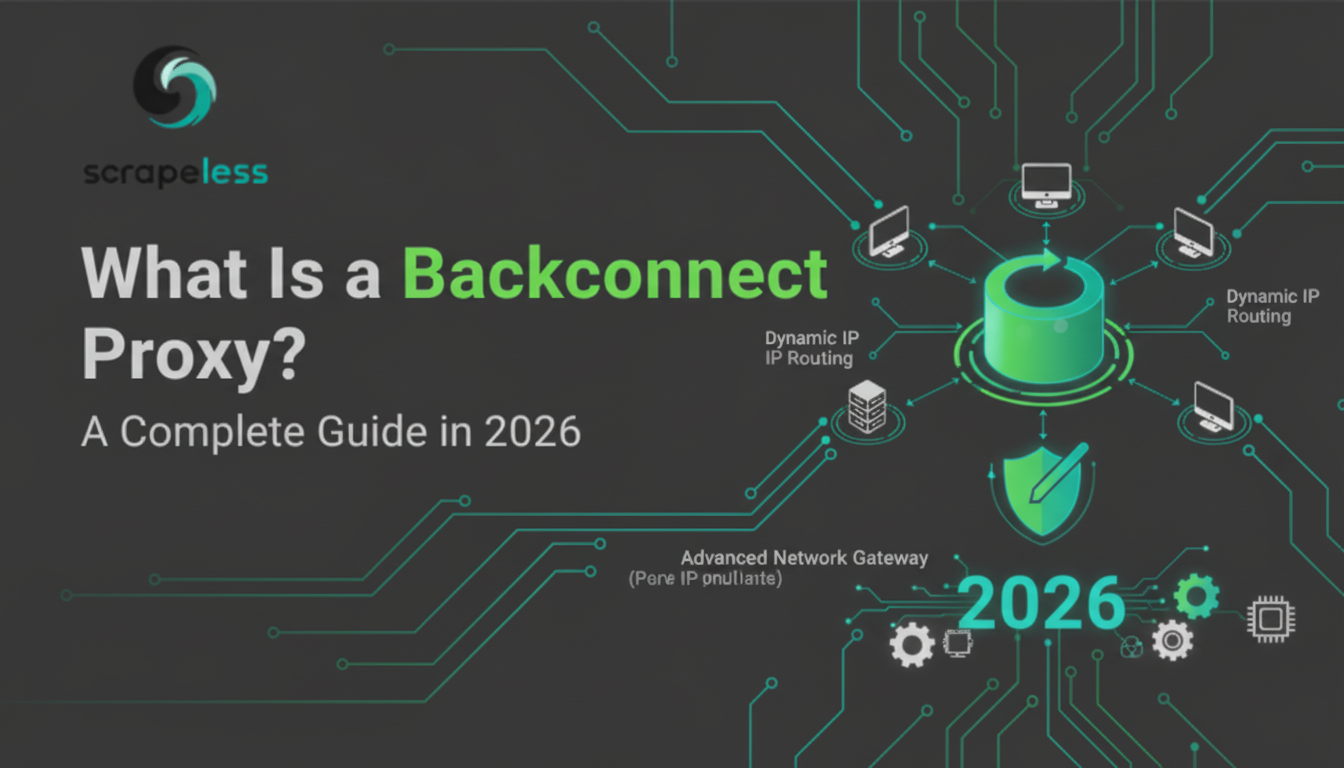
Whether you are a seasoned proxy user or just starting to leverage the power of proxies, understanding the mechanism of IP rotation is fundamental. A backconnect proxy, often synonymous with a rotating proxy, is a sophisticated type of proxy server that allows you to switch IP addresses with each request, or at user-defined intervals. This constant rotation is the key to maintaining anonymity and effectively bypassing anti-bot systems that rely on IP reputation.
Backconnect proxies are indispensable for individuals and companies engaged in large-scale web scraping, competitor monitoring, and navigating internet restrictions, as they ensure your original IP address remains hidden and your operations run smoothly.
How Backconnect Proxies Work
The core function of a backconnect proxy is to route your internet traffic through a vast network of proxy servers, each possessing its own unique IP address. This massive pool of IPs makes it nearly impossible for target websites to track your online activity or identify your location based on a single, repeated IP.
The process is simple yet powerful:
- User Sends a Request: Your application sends a request to the backconnect proxy server.
- IP Assignment: The backconnect server acts as a gateway, intelligently selecting a fresh IP address from its pool and assigning it to your request.
- Request Forwarding: The request is forwarded to the target website using the new, assigned IP.
- Response Handling: The target website returns the response to the proxy server.
- Response Delivery & Rotation: The proxy server delivers the content back to you. Crucially, a new IP is prepared for your next request, ensuring continuous anonymity and security [1].
This mechanism is vital for any operation requiring a high volume of requests, preventing IP bans and CAPTCHAs.
Types of Backconnect Proxies
The term "backconnect" refers to the rotation feature, which can be applied to various underlying proxy types. The choice of type depends on the target's sensitivity and your need for speed or trust.
| Proxy Type | IP Source & Trust Level | Best Use Cases |
|---|---|---|
| Residential Proxies | Real devices (mobile/desktop) from ISPs. Highest trust. | High-value, sensitive targets, geo-restricted content, and account management. |
| Static ISP Proxies | IPs hosted on a server but registered under an ISP. High trust, high speed. | Tasks requiring a static, high-trust IP for long sessions, such as account creation or management. |
| Datacenter Proxies | IPs hosted in commercial data centers. Lower trust, fastest speed. | High-volume, low-sensitivity scraping where speed and cost are the primary concerns. |
| Mobile Proxies | IPs from mobile carriers (3G/4G/5G). Highest trust for mobile targets. | Social media automation and targets with strict mobile-only policies. |
Key Use Cases for Backconnect Proxies
The ability to constantly rotate IPs makes backconnect proxies invaluable for a wide range of tasks:
- Voluminous Data Scraping: For projects that require extracting millions of data points, rotating IPs ensures you can complete your task without being rate-limited or blocked. This is a cornerstone of effective proxy solutions [2].
- SEO and SERP Monitoring: Businesses use them to monitor search engine results pages (SERPs) from different geographic locations, ensuring accurate, unbiased data for market research and SEO strategy.
- Social Media Automation: For managing multiple accounts or automating interactions on platforms, rotating IPs prevents the platform from linking the accounts to a single source, a common cause of bans. Explore our dedicated social media solutions for this.
- Ad Verification: Marketers use them to verify that their ads are being displayed correctly to the intended audience in various regions, a process that requires frequent IP changes.
- Purchasing Limited-Edition Items: For high-demand items like sneakers or tickets, rotating IPs allows users to submit multiple, concurrent purchase requests, bypassing limits imposed on single IP addresses.
Choosing the Right Provider: Scrapeless Backconnect Solutions
The effectiveness of your backconnect proxy network is entirely dependent on the quality and size of the IP pool provided by your vendor. An unreliable provider will offer slow connections and easily detected IPs, compromising your entire operation.
Scrapeless provides enterprise-grade proxy solutions built for maximum performance and reliability. Our backconnect network is powered by a massive, ethically sourced IP pool, ensuring a high success rate for even the most challenging targets.
Our key backconnect offerings include:
- Residential Proxies: Over 90 million ethical, real-user IPs across 195+ countries.
- IPv6 Proxies: Cost-effective and scalable for large-scale data collection.
- Static ISP Proxies: Combining the speed of datacenter with the trust of residential IPs.
All Scrapeless proxies support HTTP/HTTPS/SOCKS5 protocols and come with flexible rotation options and 24/7 developer support. We focus on providing a clean, filtered IP pool so you can focus on your data collection goals.
For the most complex scraping tasks, consider integrating our scraping API, which automatically handles proxy rotation, CAPTCHA solving, and browser fingerprinting, ensuring a near-perfect success rate. Before starting any large-scale project, it is advisable to review the legal terms of your proxy usage.
Conclusion
A backconnect proxy is an essential tool for modern web operations, providing the anonymity and scale necessary to overcome sophisticated anti-bot defenses. By constantly rotating your IP address, you ensure uninterrupted data flow and protect your identity. Choosing a high-quality provider like Scrapeless is the first step toward achieving your data freedom.
Frequently Asked Questions (FAQ)
Q: What is the difference between a backconnect proxy and a rotating proxy?
A: The terms are often used interchangeably. A "backconnect proxy" typically refers to the gateway server that manages the connection to a pool of IPs, while a "rotating proxy" describes the function of automatically switching the IP address for each request or session. They both achieve the same goal of IP rotation.
Q: How can I switch backconnect proxies?
A: With a service like Scrapeless, you don't manually switch IPs. You connect to a single gateway address, and the provider's system automatically handles the rotation for you, based on the rotation period you set (e.g., with every request, or every 1, 10, or 30 minutes).
Q: Are backconnect proxies only for web scraping?
A: No. While they are crucial for web scraping, they are also used for ad verification, brand protection, market research, and any task requiring high anonymity or the management of multiple accounts.
Q: How do I choose the best backconnect proxy provider?
A: Look for a provider with a large, ethically sourced IP pool, high uptime (Scrapeless offers 99.98%), flexible rotation options, and 24/7 customer support. Avoid free proxies, as they are often slow, unreliable, and pose a security risk [3].
References
[1] The Legal Landscape of Web Scraping, Quinn Emanuel Urquhart & Sullivan, LLP. Quinn Emanuel Urquhart & Sullivan, LLP
[2] Researching Real-World Web Use with Roxy, A Proxy-Based Data Collection Tool, ScholarWorks. ScholarWorks
[3] Is web scraping legal? Yes, if you know the rules, Apify. Apify Blog
[4] Web scraping or web crawling: State of art, techniques, approaches and application, I-CSRS. I-CSRS
[5] The Prevalence and Predictors of Digital Proxy Behavior in..., PMC. PMC
At Scrapeless, we only access publicly available data while strictly complying with applicable laws, regulations, and website privacy policies. The content in this blog is for demonstration purposes only and does not involve any illegal or infringing activities. We make no guarantees and disclaim all liability for the use of information from this blog or third-party links. Before engaging in any scraping activities, consult your legal advisor and review the target website's terms of service or obtain the necessary permissions.