The Ultimate Guide to Proxy IP Types: Selection Criteria for Data Collection

Specialist in Anti-Bot Strategies
Master the world of proxy types and boost your data extraction success with the all-in-one power of Scrapeless Browser.
In the complex landscape of web scraping and online anonymity, proxies are the essential tool for routing traffic and masking your identity. However, the term "proxy" is a broad umbrella covering several distinct types, each with unique characteristics, costs, and suitability for different tasks. Choosing the wrong type can lead to poor performance, high costs, and frequent blocks.
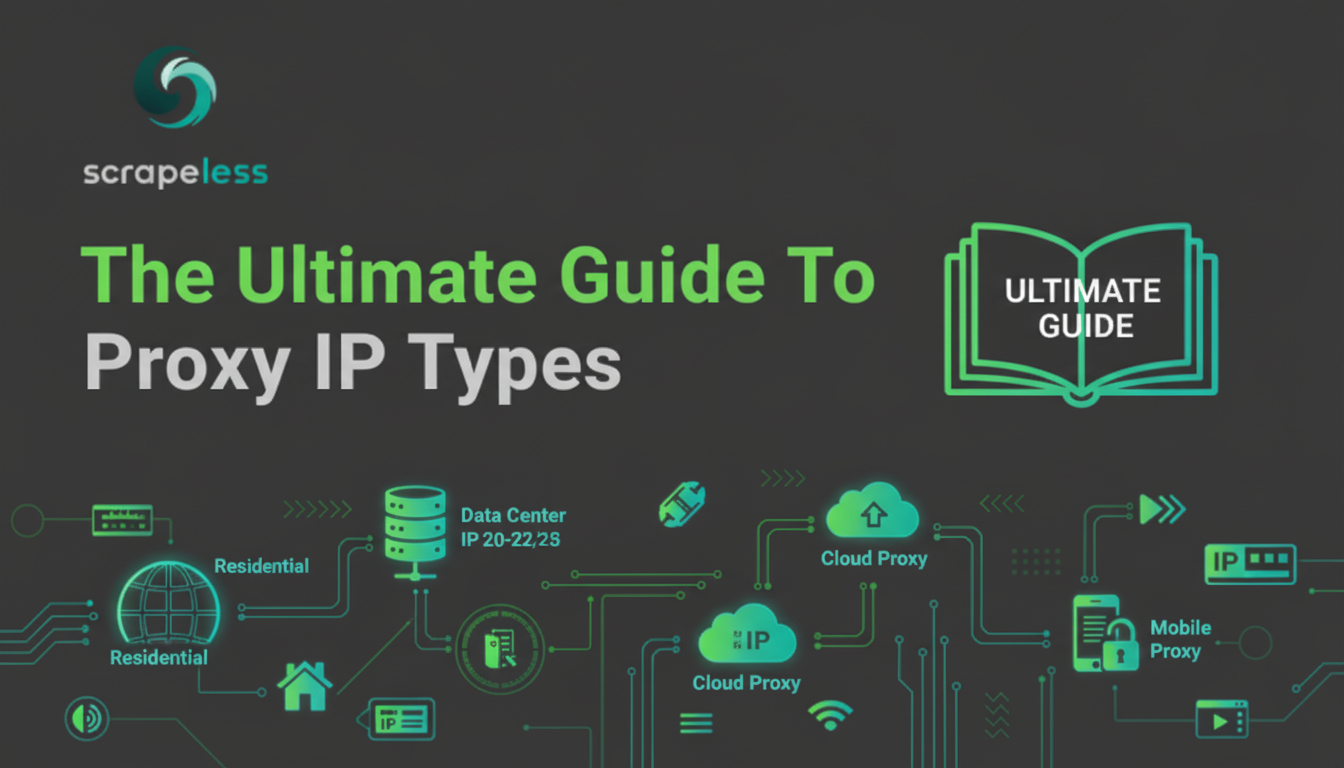
This ultimate guide breaks down the four primary proxy types—Datacenter, ISP, Residential, and Mobile—and introduces the next-generation solution: the Scrapeless Browser.
1. Understanding the Core Proxy Types
Proxies are generally categorized by the origin of their IP addresses. This origin determines the IP's trust level, speed, and cost.
1.1. Datacenter Proxies
Datacenter IPs are not affiliated with an Internet Service Provider (ISP) or a physical location. They are IPs hosted on servers in large data centers.
| Feature | Description | Use Case Suitability |
|---|---|---|
| Origin | Commercial data centers | Simple target sites, high-volume requests |
| Trust Level | Low (easily detectable) | Low-security websites, general anonymity |
| Speed | Very Fast | High-speed data transfer [1] |
| Cost | Low | Cost-sensitive projects |
| Pros | High speed, low cost, static IPs available. | |
| Cons | Easily detected and blocked, unsuitable for sophisticated anti-bot systems. |
Datacenter proxies are best for scraping websites that do not employ sophisticated anti-bot measures, where their speed and low cost provide a significant advantage.
1.2. Residential Proxies
Residential proxies use IP addresses assigned by an ISP to a real, physical home user. This makes them appear as legitimate visitors to target websites.
| Feature | Description | Use Case Suitability |
|---|---|---|
| Origin | Real home users (opt-in networks) | High-security websites, social media management |
| Trust Level | High (appear as regular users) | Bypassing geo-restrictions and advanced blocks |
| Speed | Moderate (slower than Datacenter) | Tasks requiring high anonymity and trust |
| Cost | High (often billed per GB) | Projects where success rate is paramount [2] |
| Pros | High anonymity, low block rate, can target specific geographies. | |
| Cons | Higher cost, speed can be inconsistent due to peer network. |
Residential proxies are the gold standard for web scraping due to their high trust score, making them ideal for accessing heavily protected sites.
1.3. ISP Proxies (Static Residential)
ISP proxies are a hybrid: they are hosted on servers in a data center, but the IP addresses themselves are registered under an ISP. They offer the speed of a datacenter proxy with the high trust of a residential IP.
They are often referred to as Static Residential Proxies because they provide a persistent, high-trust IP address [3]. This makes them excellent for tasks like account management or maintaining a session where the IP must remain constant.
1.4. Mobile Proxies
Mobile proxies use IP addresses assigned by mobile network operators (3G/4G/5G). These IPs are shared among many users and rotate frequently, making them extremely difficult to block.
Mobile proxies are highly effective for tasks that require the highest level of anonymity, such as ad verification, social media automation, and accessing mobile-specific content [4].
2. Rotating vs. Static Proxies
Beyond the origin, proxies are also classified by their rotation behavior:
- Rotating Proxies: The IP address changes with every request or after a set time interval. This is crucial for large-scale scraping to distribute requests and avoid rate limits. Residential and Mobile proxies are often used in a rotating fashion.
- Static Proxies: The IP address remains the same for the duration of the session. Datacenter and ISP proxies are typically static, which is necessary for tasks like account creation or checkout processes where IP consistency is required.
3. The Next Evolution: The Scrapeless Browser
While traditional proxies solve the IP masking problem, they do not address the increasing complexity of anti-bot systems. Modern websites use advanced techniques like browser fingerprinting, JavaScript challenges, and behavioral analysis to detect and block automated traffic, even from a high-trust residential IP.
The Scrapeless Browser is a specialized, all-in-one solution designed to bypass these modern defenses. It is not a proxy type, but a managed service that uses proxies and adds a layer of intelligence:
- Full Browser Emulation: It executes JavaScript and renders pages just like a real user's browser, eliminating common anti-bot flags.
- Anti-Detection Suite: It automatically handles browser fingerprinting, header management, and complex challenges like bypassing Cloudflare challenges [5].
- Integrated Proxy Management: It intelligently selects and rotates the best proxy type (Residential, Mobile, etc.) for the target site, abstracting away the complexity of managing multiple proxy pools.
- Developer-Friendly API: Instead of managing complex infrastructure, developers interact with a simple API, allowing them to focus on data extraction. This includes seamless integration with tools like Cursor [6] for a streamlined workflow.
For professional data extraction, the Scrapeless Browser offers a significant advantage by combining the anonymity of the best proxies with the necessary anti-detection technology.
4. Conclusion: Making the Right Choice
The choice of proxy type is a strategic decision that should align with your project's needs, budget, and the sophistication of your target websites [7].
| Project Need | Recommended Proxy Type | Best Modern Solution |
|---|---|---|
| Low-Security Targets | Datacenter Proxies | Scrapeless Browser (for speed and cost) |
| High-Security Targets | Residential Proxies | Scrapeless Browser (for anti-bot evasion) |
| Account Management | Static Residential (ISP) Proxies | Scrapeless Browser (for persistent sessions) |
| Mobile Content | Mobile Proxies | Scrapeless Browser (for mobile emulation) |
For those seeking comprehensive web scraping tools [8] and dedicated solutions for platforms like Shopee [9], or exploring new techniques like web scraping with Perplexity AI [10], the Scrapeless Browser provides the flexibility and power to handle any challenge.
References
[1] PyProxy: Residential Proxy vs. Data Center Proxy, Pros and Cons
[2] Oxylabs: Datacenter vs. Residential Proxies: Comparison Guide
[3] Scrapfly: The Complete Guide To Using Proxies For Web Scraping
[4] Proxidize: Mobile Proxy Use Cases
[5] ScraperAPI: Comparison of 8 Different Proxies and When to Use Them
At Scrapeless, we only access publicly available data while strictly complying with applicable laws, regulations, and website privacy policies. The content in this blog is for demonstration purposes only and does not involve any illegal or infringing activities. We make no guarantees and disclaim all liability for the use of information from this blog or third-party links. Before engaging in any scraping activities, consult your legal advisor and review the target website's terms of service or obtain the necessary permissions.