The State of Web Access in 2026: Why AI Agents Need Reliable Data

Senior Cybersecurity Analyst
TL;DR:
- Web access is becoming an agent infrastructure problem. Search, browsing, extraction, verification, and action now sit inside one machine-driven workflow.
- A successful request is not enough. Agents need content identity, provenance, freshness, and an acceptance decision with every result.
- Direct HTTP and browsers solve different jobs. Use the least expensive path that can produce the required public representation.
- Publisher controls remain part of the contract. Robots directives, authentication, terms, permissions, and traffic limits cannot be reduced to one technical signal.
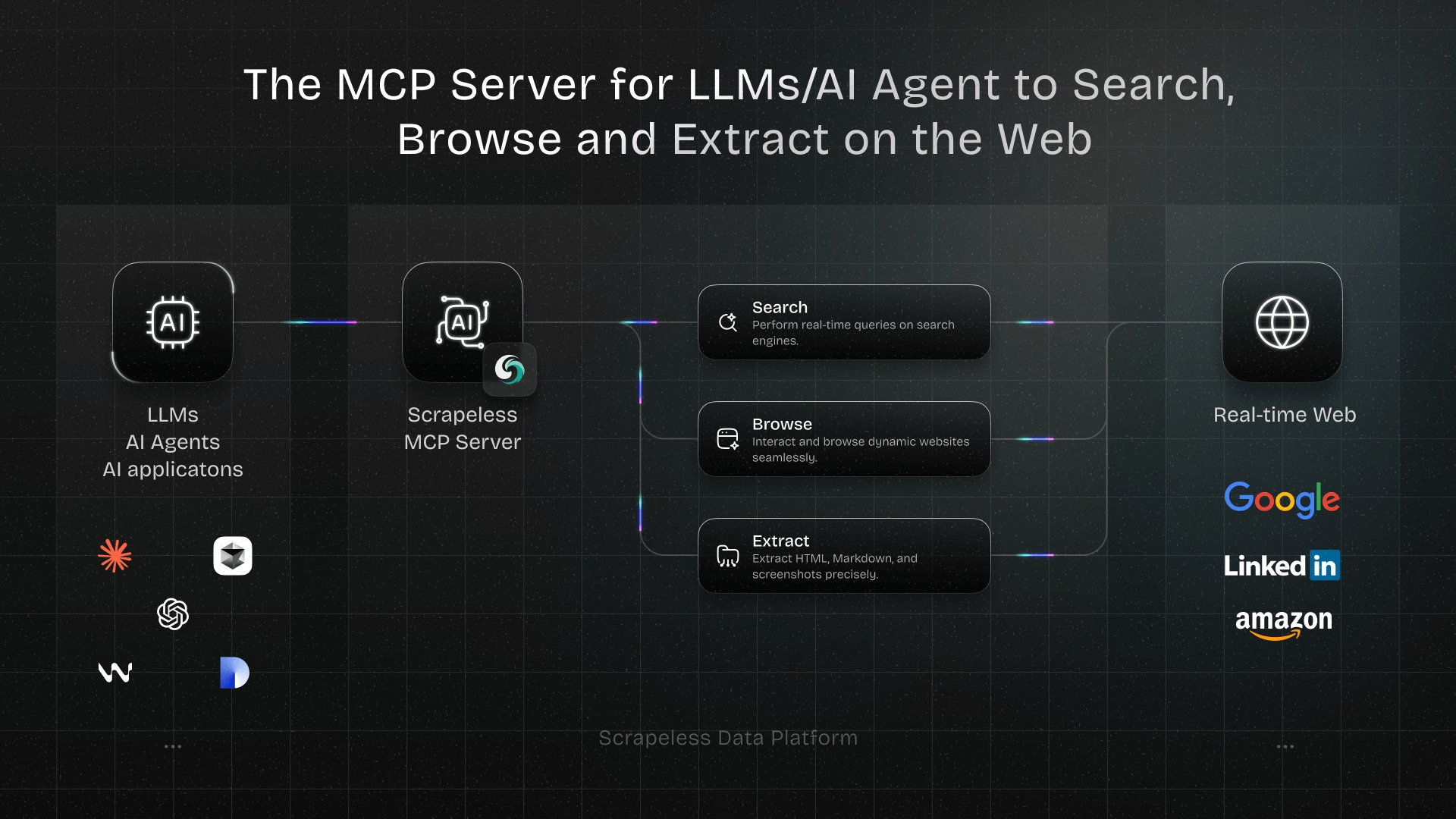
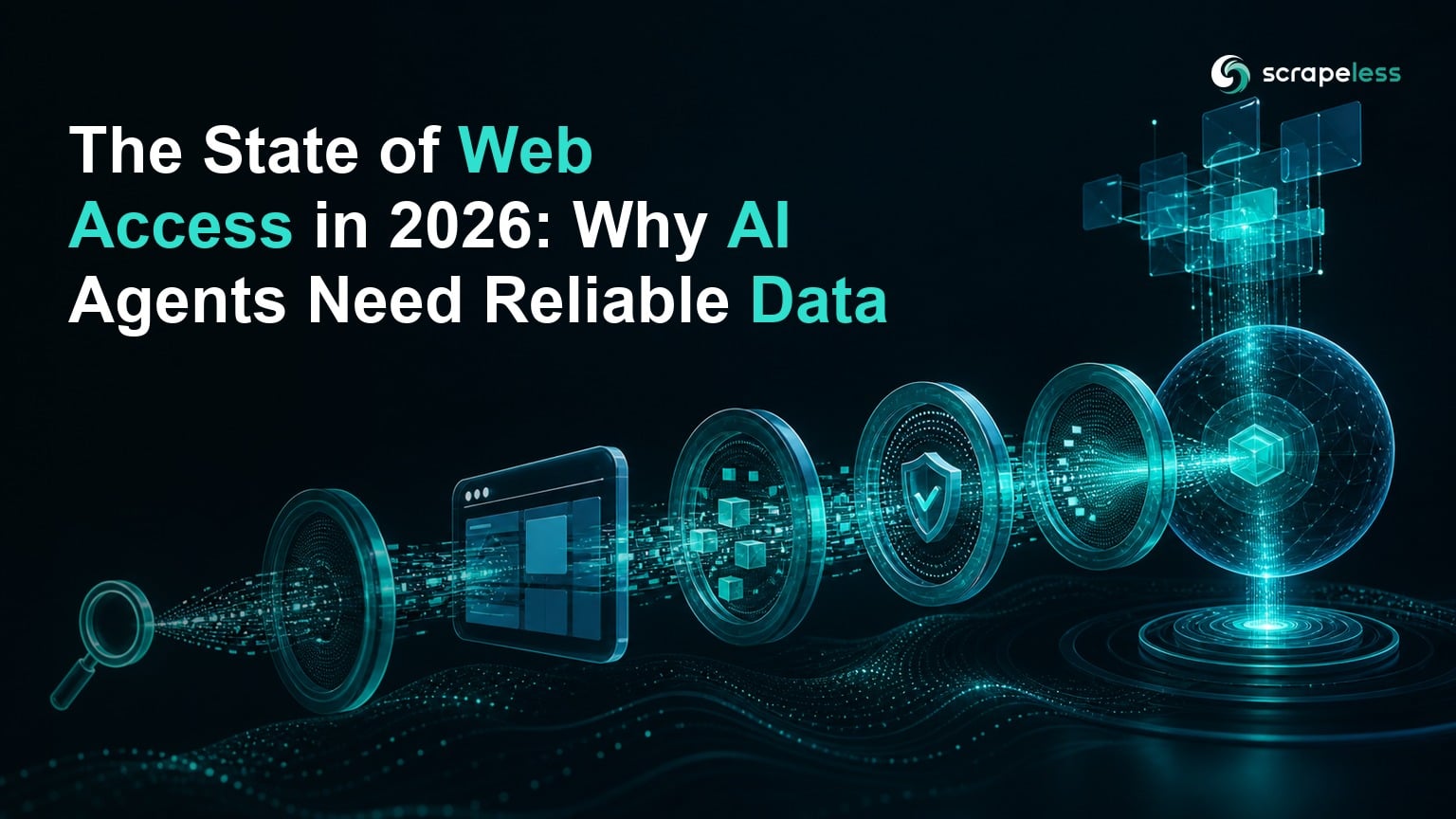
- Reliable web data needs layers. Search → browse → extract → verify → act is a clearer architecture than one generic web tool.
The web was designed for clients to request resources, not for autonomous systems to turn a vague goal into a chain of searches, page visits, data extraction, and external actions. AI agents are now placing that orchestration layer above a web that still changes page by page.
The result is a new web-access problem. The model may be capable of planning, yet the task still fails when search evidence is stale, a page needs JavaScript, a final URL points to the wrong representation, or a field loses its source.
Web Access Is No Longer One Request
Web access for an agent is a sequence of decisions.
An agent first chooses where to look. It then decides whether a search snippet is enough, whether to fetch a page directly, whether to render it, which fields to extract, and whether the result is trustworthy enough to support the next step.
The HTTP semantics standard provides a uniform request-response interface. That interface intentionally does not explain the application behind a resource. A client still has to interpret the representation and decide whether it satisfies the task.
For a human, a wrong landing page is visible. For an agent, it can become fluent but irrelevant context unless the data layer checks page identity.
Client Rendering Changed the Default Document
Many pages deliver navigation, an application shell, and script references before business records appear. Product cards, comments, availability, filters, and account-aware states can arrive through later requests or client-side rendering.
That means direct HTTP remains the right first option, but not the universal option. A reliable system asks:
- Does the initial response contain the required data?
- Does a stable public JSON source supply it more directly?
- Does the task require browser rendering?
- Does it require interaction or session state?
The decision should be recorded with the result. Otherwise the next maintainer sees only “web access failed” and cannot tell whether the problem belongs to search, transport, rendering, extraction, or validation.
Traffic Validation Is Part of the Environment
Sites use traffic validation to manage abuse, capacity, and business policy. Responses can vary by network, geography, session history, browser signals, and request behavior.
An agent data layer needs to recognize challenge pages and incomplete representations instead of accepting them as normal content. It also needs conservative request limits and explicit boundaries around what may be accessed.
The Robots Exclusion Protocol standardizes directives that crawlers are requested to honor. The same specification makes clear that robots rules are not access authorization. Authentication, contractual terms, permissions, and applicable law remain separate controls.
AI Agents Raise the Cost of Bad Evidence
A conventional scraper can put a malformed row in a queue. An agent can summarize that row, combine it with other evidence, make a recommendation, and trigger a downstream action.
The risk grows with agency. The OWASP excessive-agency guidance connects harmful outcomes to excessive functionality, permissions, and autonomy. Web content also introduces untrusted instructions that must never override the agent's tool policy.
Reliable web access therefore needs both data validation and action control:
- retrieved text is untrusted input;
- tools have narrow permissions;
- write actions require a separate policy path;
- high-impact actions need explicit approval;
- every accepted fact retains a source and collection context.
The Agent Web Data Stack
The most useful architecture separates five layers.
Search
Search finds candidate sources and supplies rank, result type, query, locale, and URL. It is discovery evidence, not final truth.
Deep SerpApi fits this layer by returning structured search-result data for supported scenarios.
Browse
Browsing acquires the representation that a human or application would use. Direct HTTP is the default for static content. Browser rendering is reserved for JavaScript-dependent state, navigation, or interaction.
Scrapeless Scraping Browser fits interactive browser work, while Universal Scraping API fits managed page acquisition and rendered responses.
Extract
Extraction turns a page or actor response into business fields. The schema must define required fields, nullable fields, identifiers, and provenance.
Scraping API supplies structured actor outputs for supported public-data tasks.
Start Scraping with Scrapeless
Power up your web scraping and automation workflow with Scrapeless!
Sign up today and get $5 in free credit — no credit card required.Claim your free credit now in the Scrapeless Dashboard.
Verify
Verification asks whether the data is current, complete, and consistent enough for the task. It can compare independent sources, assert page identity, check business keys, and label uncertainty.
Model confidence is not retrieval confidence. A fluent synthesis cannot repair a missing source URL or an acquisition step that returned the wrong page.
Act
Action belongs behind a separate permission boundary. Read-only research, drafting, publishing, purchasing, and account changes should not share one tool policy.
The NIST AI Risk Management Framework frames trustworthy deployment around governance, mapping, measurement, and management. That lifecycle view is a good fit for agent actions whose effects extend beyond the model response.
MCP Makes the Boundary Visible
Model Context Protocol gives compatible agent applications a standard way to discover external tools and their schemas. The MCP architecture separates the host, client, and server roles and distinguishes tools from resources and prompts.
That separation is useful for web access. The agent builder can own planning and approval while a web-data server owns search and acquisition contracts. The application can change models or orchestration without turning every web capability into custom glue.
MCP does not guarantee data quality or safe behavior. Tool descriptions, input schemas, output validation, permissions, and operator controls still determine whether the integration is trustworthy.
Reliability Means Proving the Result
A reliable acquisition layer returns enough metadata to prove what happened:
- requested URL and final URL;
- collection time and locale;
- response type and content identity;
- required-field validation;
- source record for every extracted field;
- explicit uncertainty or rejection reason.
This evidence should survive beyond the model context window. Store raw responses or durable hashes where policy allows, normalized records, validation outcomes, and the model's use of those records as separate artifacts.
Economics Favor Routing, Not One Universal Tool
Browser execution costs more than direct HTTP because it maintains a browser process and runs page scripts. Structured actors can be cheaper downstream because they remove extraction work. Search APIs can reduce browsing by narrowing candidate pages before acquisition.
The architecture should route each step to the least expensive tool that can satisfy the acceptance rule:
- search before browsing a wide topic;
- direct fetch before rendering a static page;
- internal public JSON before parsing a visual layout;
- rendered HTML before full interaction;
- browser interaction only when the task truly requires it.
This is not only a cost optimization. Smaller, more specific tools are easier to validate and grant narrowly.
Publisher and Agent Interests Need a Clearer Contract
Publishers need control over access, attribution, rate, and commercial use. Agent builders need stable machine-readable signals and predictable ways to request public resources. Users need current answers with traceable evidence.
The existing web offers pieces of that contract through HTTP, robots directives, authentication, structured data, and terms. Agent systems should respect those controls now rather than wait for one universal machine-access standard.
The future data layer will likely combine open standards with service-specific capabilities. Reliability will come from explicit contracts and verification, not from pretending every page is a static document.
The Takeaway
The state of web access in 2026 is defined by orchestration. AI agents must search, choose an acquisition path, extract structured fields, verify evidence, and act within policy.
Scrapeless maps those jobs to distinct products and exposes them to agent workflows through consistent tool boundaries. The important design choice is still local: use the narrowest tool, preserve provenance, validate the result, and separate reading from action.
Build an Agent Data Layer With Evidence
Explore the Scrapeless AI Agent surface, compare current pricing, and read how GEO changes search strategy. Create a Scrapeless account and join Discord or Telegram.
FAQ
Q: What does web access mean for an AI agent?
Web access means the agent can discover sources, acquire the correct public representation, extract data, verify evidence, and use the result within a defined policy.
Q: Why can an agent not rely on model memory for current web data?
Model memory is not a dependable source for changing prices, availability, search results, documentation, or events; current tasks need live retrieval with provenance.
Q: Should every agent use a browser?
No. Direct HTTP or a structured endpoint is preferable when it can produce the required result; browser execution belongs to JavaScript-dependent or interactive work.
Q: How should agents handle website instructions found on a page?
Treat page content as untrusted data, keep tool policy outside the page, grant narrow permissions, and require approval before high-impact actions.
Q: Does robots.txt authorize web scraping?
No. Robots directives communicate crawler preferences; authorization, access controls, site terms, and applicable law remain separate.
At Scrapeless, we only access publicly available data while strictly complying with applicable laws, regulations, and website privacy policies. The content in this blog is for demonstration purposes only and does not involve any illegal or infringing activities. We make no guarantees and disclaim all liability for the use of information from this blog or third-party links. Before engaging in any scraping activities, consult your legal advisor and review the target website's terms of service or obtain the necessary permissions.