Selenium vs Playwright vs Puppeteer: A Web Automation Decision Guide

Scraping and Proxy Management Expert
TL;DR:
- Choose by protocol and operating model, not by syntax. Selenium centers on WebDriver, while Playwright and Puppeteer offer higher-level browser APIs with strong Chromium tooling.
- Playwright is the most complete default for modern end-to-end testing. Its auto-waiting, browser projects, traces, and multi-language clients reduce test plumbing.
- Puppeteer is the cleanest fit for focused JavaScript automation. It is especially natural when a project controls Chrome or connects to a remote CDP endpoint.
- Selenium remains the safest choice for established multi-language WebDriver estates. Its ecosystem and Grid model matter more than fashionable API ergonomics.
- Scrapeless Agent Browser is the execution layer, not a fourth library. Puppeteer and Chromium-based Playwright clients can connect over CDP; do not assume a Selenium WebDriver endpoint unless the current Scrapeless documentation explicitly provides one.
Selenium vs Playwright vs Puppeteer at a Glance
All three tools can click a button. The useful distinction is which protocol, browser matrix, language, waiting model, and infrastructure responsibility fit the project.
| Decision | Selenium | Playwright | Puppeteer |
|---|---|---|---|
| Primary control model | W3C WebDriver, with growing WebDriver BiDi support | High-level API over browser-specific transports | High-level API over CDP and WebDriver BiDi surfaces |
| Best fit | Existing enterprise test suites and mixed-language teams | Modern cross-browser application testing | Focused JavaScript automation and CDP workflows |
| Languages | Broad official bindings | JavaScript/TypeScript, Python, Java, .NET | JavaScript/TypeScript |
| Browser reach | Vendor WebDriver implementations across major browsers | Chromium, Firefox, and WebKit builds | Chrome and Firefox |
| Waiting style | Explicit or implicit waits chosen by the test | Locator actionability and polling assertions | Explicit waits plus locator and navigation APIs |
| Debugging | Driver logs, screenshots, Grid tooling, ecosystem integrations | Trace Viewer, screenshots, video, inspector | DevTools-oriented debugging, screenshots, tracing |
| Remote execution | Selenium Grid or a WebDriver provider | Local browser or compatible remote connection | Local browser or remote CDP connection |
The Protocol Layer Explains Most Differences
Selenium implements the W3C WebDriver standard. A client sends commands to a browser-specific driver, which controls the browser through a standardized remote interface. This separation supports many languages and browser vendors, but it also means behavior can depend on the driver and browser combination.
Puppeteer grew around the Chrome DevTools Protocol, or CDP. CDP exposes detailed Chromium inspection and control domains. Puppeteer now documents both Chrome and Firefox support, but JavaScript remains its native development environment.
Playwright wraps browser automation in a consistent API and ships browser builds that match the library release. It supports Chromium, Firefox, and WebKit projects. CDP is available for Chromium-specific connections, while the Playwright API remains the application-facing abstraction.
WebDriver BiDi is narrowing part of the historical gap. The WebDriver BiDi specification adds bidirectional events and commands to the WebDriver family. It is worth watching, but a future protocol direction does not erase today's library, debugging, and deployment differences.
Browser and Language Support
Selenium wins when language breadth is non-negotiable. A Java test platform, a Python data team, and a C# quality team can remain inside one standards-based ecosystem. Existing Grid operations and page-object libraries can be more valuable than a newer API.
Playwright is the broadest browser-engine choice in a new test project. Its official browser guide covers Chromium, Firefox, and WebKit projects, including branded Chrome and Edge channels. The Playwright language guide documents JavaScript/TypeScript, Python, Java, and .NET clients, although the surrounding test integrations differ by language.
Puppeteer is deliberately narrower. Its official browser page documents stable Chrome and Firefox support. That makes it a strong fit for Node.js services, PDF or screenshot jobs, focused browser scripts, and remote CDP sessions. It is a less natural choice when one suite must exercise WebKit or when the team is not using JavaScript or TypeScript.
Waiting and Reliability
Timing bugs usually come from waiting for the wrong state, not from a slow browser.
Playwright locators perform actionability checks before an action. For a click, the target must resolve correctly and be visible, stable, enabled, and able to receive events. The official auto-waiting reference also documents assertions that keep checking until their condition is met. This removes many hand-written sleeps, but it does not decide when business data has finished loading.
Selenium gives the author more explicit control. A robust Selenium suite normally uses explicit waits tied to a meaningful condition. Implicit waits can hide timing assumptions when mixed with other mechanisms, so mature suites tend to standardize one waiting policy.
Puppeteer supplies navigation, selector, network, and locator-oriented waiting primitives. It is concise, but the author still needs to define completion for client-rendered data. domcontentloaded can be enough for a static control page and insufficient for a catalogue that hydrates after an API call.
The reliable pattern is shared across all three: wait for the state that proves the task is complete, keep the timeout bounded, and preserve a diagnostic artifact when the condition fails.
Same Public-Page Task in All Three Tools
The examples below open https://example.com, read the H1, and close cleanly. They demonstrate equivalent intent, not a performance benchmark.
Selenium
javascript
const { Builder, By } = require('selenium-webdriver');

(async () => {
  const driver = await new Builder().forBrowser('chrome').build();
  try {
    await driver.get('https://example.com');
    console.log(await driver.findElement(By.css('h1')).getText());
  } finally {
    await driver.quit();
  }
})();
Playwright
javascript
const { chromium } = require('playwright');

(async () => {
  const browser = await chromium.launch({ channel: 'chrome', headless: true });
  const page = await browser.newPage();
  await page.goto('https://example.com', { waitUntil: 'domcontentloaded' });
  console.log(await page.locator('h1').textContent());
  await browser.close();
})();
Puppeteer
javascript
const puppeteer = require('puppeteer');

(async () => {
  const browser = await puppeteer.launch({ headless: true });
  const page = await browser.newPage();
  await page.goto('https://example.com', { waitUntil: 'domcontentloaded' });
  console.log(await page.$eval('h1', element => element.textContent));
  await browser.close();
})();
The code looks different, but the operational questions are identical: who installs Chrome, who patches it, how sessions are isolated, what network path they use, and how failures are observed.
Debugging Experience
Playwright has the most integrated debugging story for a new test suite. Trace Viewer can preserve actions, DOM snapshots, network activity, console messages, and attachments. The test runner can capture screenshots and video under a consistent failure-evidence policy.
Puppeteer pairs naturally with Chrome DevTools concepts. Screenshots, protocol events, performance traces, and browser console messages are easy to wire into a Node.js job. That flexibility is useful, although the project must decide how artifacts are stored and correlated.
Selenium debugging quality depends on the surrounding stack. Grid observability, vendor dashboards, browser logs, screenshots, and test reporters can be excellent in an established platform. A bare script has less integrated evidence than a configured test system.
From a Local Library to Scrapeless Agent Browser
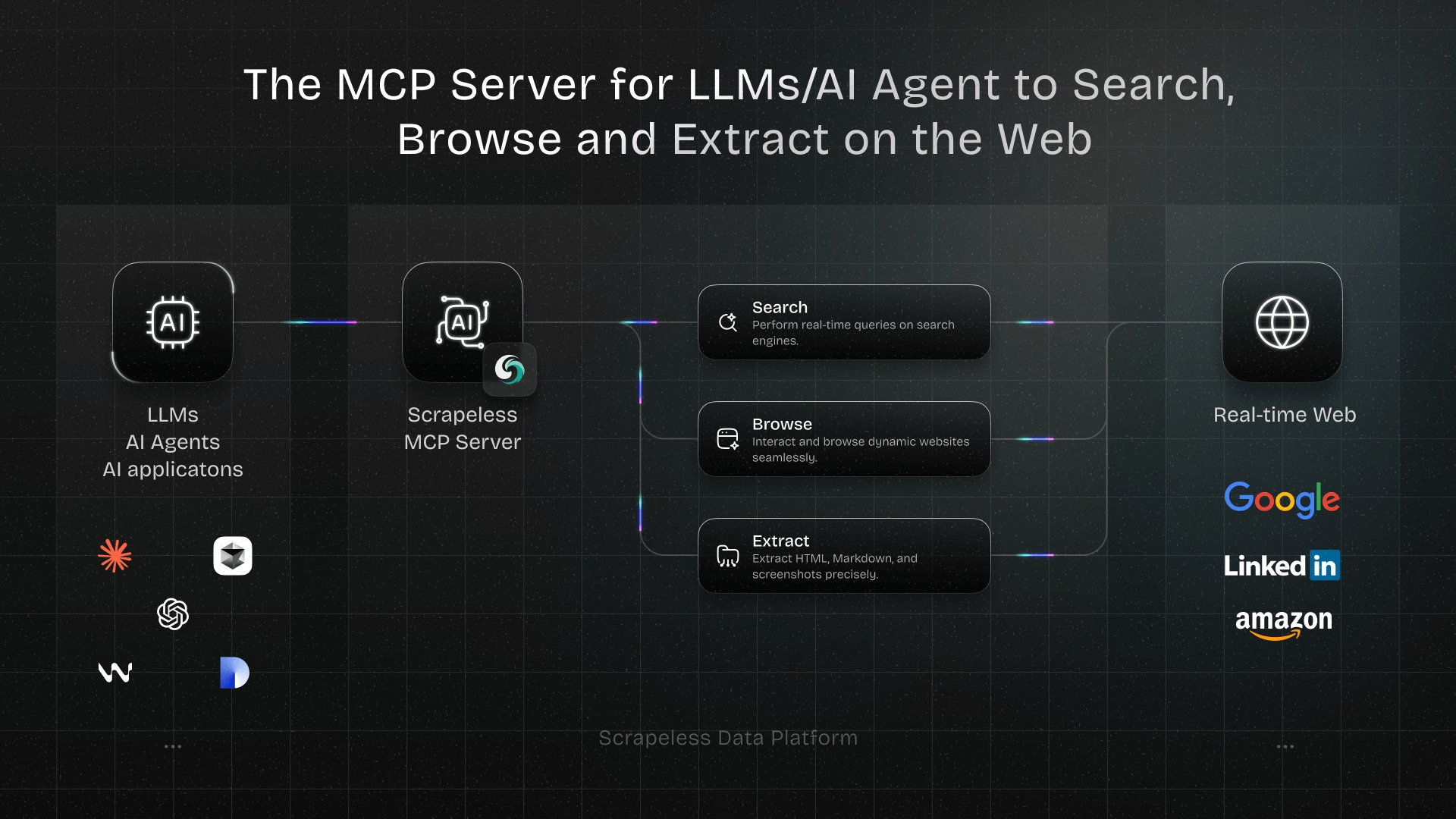
A browser library controls a session. Scrapeless Agent Browser operates the browser infrastructure and exposes a standard CDP WebSocket endpoint.
That distinction matters. Puppeteer can replace launch() with connect() and point at the Agent Browser endpoint. Chromium-based Playwright code can use a CDP connection where the workflow is compatible. The platform then handles the remote browser process, proxy settings, session lifetime, and observability features described in the Agent Browser documentation.
Selenium uses WebDriver, not CDP as its primary remote contract. The current Scrapeless Agent Browser public connection examples document Puppeteer and Playwright over CDP. Do not point a Selenium RemoteWebDriver at that WebSocket URL and expect it to work. Keep Selenium on a verified WebDriver/Grid endpoint, or move the specific remote job to a CDP-compatible client.
This is an infrastructure choice, not a declaration that one library replaces the others. A team can keep Playwright for application tests, use Puppeteer for a compact data job, and retain Selenium for a mature regression suite.
Start Scraping with Scrapeless
Power up your web scraping and automation workflow with Scrapeless!
Sign up today and get $5 in free credit — no credit card required.Claim your free credit now in the Scrapeless Dashboard.
Decision Tree
Use these questions in order.
- Is this primarily application testing? Choose Playwright for a new multi-browser suite. Keep Selenium when an existing WebDriver estate, language mix, or Grid investment is central.
- Is the project a focused Node.js automation service? Choose Puppeteer when Chrome/Firefox coverage and a compact CDP-friendly API are enough.
- Must the same suite use several programming languages? Selenium has the strongest fit.
- Must the suite cover WebKit? Playwright is the direct option among these three.
- Does the team want to operate browsers itself? If not, pair a compatible library with a managed runtime such as Agent Browser.
- Is the remote endpoint WebDriver or CDP? Match the client to the documented protocol. A WebSocket URL alone does not imply Selenium compatibility.
Conclusion
The Selenium vs Playwright vs Puppeteer choice is a protocol and operations decision disguised as an API comparison. Playwright is the strongest default for a new cross-browser test suite, Puppeteer is excellent for focused JavaScript and CDP automation, and Selenium remains the right answer for many standards-based, mixed-language organizations.
When browser operations become the bottleneck, keep the client logic and move compatible workloads to a managed execution layer. Review Scrapeless pricing and the browser automation tools guide before changing a working stack.
Build a Browser Stack You Can Debug
Join the Scrapeless community to compare reliable browser automation patterns: Discord · Telegram.
Create a free account at app.scrapeless.com and test a bounded public-page workflow before moving production traffic.
FAQ
Q: Is Playwright better than Selenium?
Playwright is usually easier for a new modern web test suite, especially when auto-waiting, traces, and Chromium/Firefox/WebKit projects matter. Selenium is often better for existing multi-language WebDriver suites and Grid infrastructure.
Q: Is Puppeteer faster than Playwright?
There is no honest universal answer. Launch mode, browser build, target page, waiting condition, tracing, network, and workload shape can dominate small library overheads. Benchmark the exact task with the same completion rule.
Q: Can Playwright and Puppeteer connect to Scrapeless Agent Browser?
Yes for compatible Chromium CDP workflows. Use the current documented WebSocket endpoint and connection examples, keep the API key outside source code, and verify the target features with a small smoke test.
Q: Can Selenium connect directly to Scrapeless Agent Browser?
Do not assume so. Selenium expects a WebDriver endpoint, while the current Agent Browser public examples expose CDP connections for Puppeteer and Playwright. Use only a WebDriver endpoint explicitly documented by the provider.
Q: Which tool is best for web scraping?
Puppeteer is a compact JavaScript choice, Playwright provides strong browser and debugging coverage, and Selenium fits established WebDriver systems. For production scraping, browser infrastructure, proxies, session isolation, observability, and crawl orchestration matter as much as the client library.
At Scrapeless, we only access publicly available data while strictly complying with applicable laws, regulations, and website privacy policies. The content in this blog is for demonstration purposes only and does not involve any illegal or infringing activities. We make no guarantees and disclaim all liability for the use of information from this blog or third-party links. Before engaging in any scraping activities, consult your legal advisor and review the target website's terms of service or obtain the necessary permissions.