6 Best ChatGPT Scraper Tools in 2026: Scale Your AI Visibility & Data Extraction

Web Data Collection Specialist
Key Takeaways
- AI Search Optimization (GEO) is the new SEO. Brands must monitor their visibility inside LLM responses.
- Official APIs are sanitized and often miss the real-time "Web Search" context and "Shopping Graph" modules.
- Professional Scrapers like Scrapeless provide high-fidelity data by rendering the full JavaScript environment.
- Success Rates in 2026 depend on bypassing advanced anti-bot layers like Cloudflare Turnstile and Akamai.
- Automation-ready tools like OpenClaw are essential for building scalable AI Agent workflows.
Introduction
The search landscape in 2026 has undergone a fundamental shift. Traditional "blue links" are being replaced by direct, synthesized answers from generative engines. For developers and data engineers, this transition means that simply ranking on Google is no longer enough. You must ensure your brand is cited, synthesized, and recommended within the ChatGPT ecosystem.
This blog is written for AI developers and growth engineers to provide a comprehensive guide on selecting the best ChatGPT scraper tools for brand visibility monitoring and synthetic data generation. We will analyze why standard APIs often fall short and evaluate the top 6 professional solutions that power the most successful AI-driven enterprises today.
What Is a ChatGPT Scraper and How It Works?
A ChatGPT scraper is a specialized data extraction tool designed to interact with the ChatGPT web interface to capture responses, citations, and dynamic UI elements. Unlike traditional web scrapers that target static HTML, a ChatGPT scraper must handle a highly dynamic, JavaScript-heavy environment where content is streamed in real-time.
At its core, the scraping process involves three main steps:
- Session Simulation: The tool initiates a browser session that mimics a high-reputation human user, managing cookies, headers, and TLS handshakes.
- Prompt Interaction: It programmatically inputs queries into the chat interface, often managing complex conversational states.
- Data Extraction: As the LLM generates its response, the scraper captures the text, structured markdown, and metadata (such as source links and shopping cards) that are often omitted from official API outputs.
In 2026, the most advanced scrapers utilize "Stealth Browser" technology to remain undetected by OpenAI's sophisticated security layers.
Why Use a Dedicated ChatGPT Scraper Instead of Official APIs?
Many technical teams initially attempt to use the official OpenAI API for monitoring. However, for Brand AI Visibility Monitoring and GEO (Generative Engine Optimization), direct API calls often result in a significant "Information Gap."
The Sanitization Problem
Official APIs return "clean" model outputs. They do not include the real-time Web Search context, citations, or the Shopping Graph modules that a real user sees on the web interface. If your goal is to see how ChatGPT recommends products to a human user, the API simply won't show you the full picture.
Cost and Rate Limits
Scaling monitoring across thousands of queries daily is prohibitively expensive through high-tier LLM APIs. Professional scrapers offer a more cost-effective way to gather large-scale data without hitting the restrictive rate limits of official endpoints.
Real-world Fidelity
AI responses are hyper-localized. A query in London will yield different citations than the same query in New York. Professional scrapers allow for Country-level Geolocation, ensuring your monitoring reflects the actual experience of users in specific markets—a feature often limited or unavailable in standard API tiers.
Key Challenges in ChatGPT Scraping (Anti-Bot, CAPTCHA, JS Rendering)
Scraping ChatGPT in 2026 is a battle of technical attrition. OpenAI employs some of the world's most advanced defensive technologies to prevent automated access.
1. Advanced Anti-Bot Layers
Platforms like Cloudflare Turnstile and Akamai use behavioral analysis to detect bots. They monitor mouse movements, typing speed, and even the "honesty" of the browser's hardware reports. A successful scraper must use Fingerprint Isolation to ensure every request looks like a unique, legitimate device.
2. The CAPTCHA Wall
Modern CAPTCHAs are no longer just about clicking fire hydrants. They are invisible challenges that run in the background. Tools that lack automated CAPTCHA Solving capabilities will see their success rates plummet below 20% within hours of deployment.
3. Heavy JavaScript Rendering
ChatGPT is a Single Page Application (SPA). The content is not in the initial HTML; it is rendered by JavaScript as it streams from the server. This requires a scraper with full JS Rendering capabilities, essentially running a headless browser in the cloud to "see" the content as it appears.
The Best 6 ChatGPT Scrapers in 2026: Comparison Summary
| Tool | Type | Best For | Success Rate | Speed | Free Trial |
|---|---|---|---|---|---|
| Scrapeless | Cloud API / Skill | Enterprise GEO & AI Agents | 👍👍👍👍👍 | Real-time | Yes (3k Requests) |
| Bright Data | Scraping Browser | High-volume E-commerce | 👍👍👍👍 | Fast | Yes |
| Zyte | API / Proxy | Complex Anti-bot Bypass | 👍👍👍👍 | Moderate | No |
| Apify | Actor / Cloud | Community Workflows | 👍👍👍 | Moderate | Yes |
| Oxylabs | Web Scraper API | Large-scale Data Mining | 👍👍👍👍 | Fast | No |
| ZenRows | API | Simple Integration | 👍👍👍 | Fast | Yes |
1. Scrapeless (The Enterprise Leader)
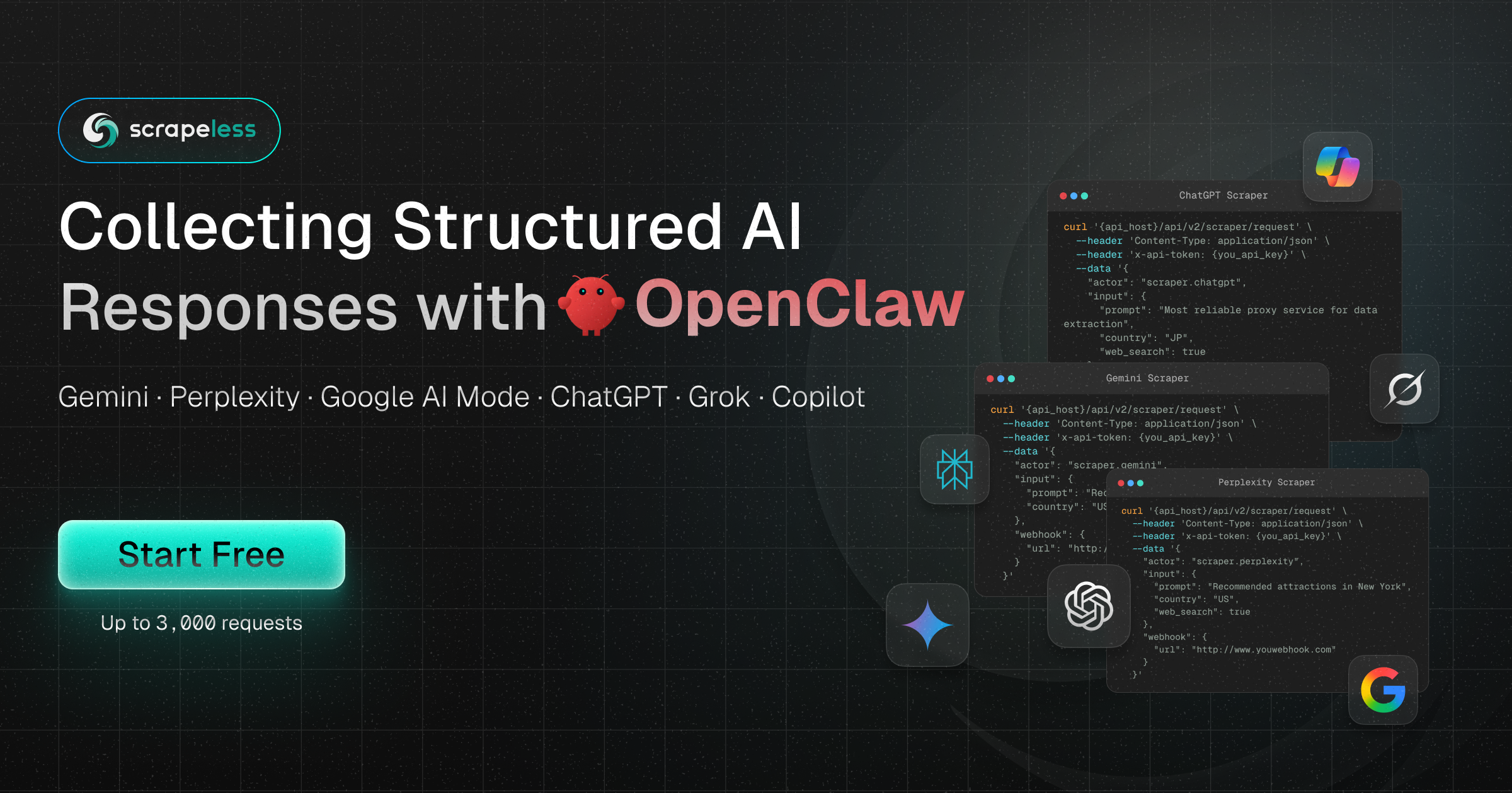
Scrapeless has emerged as the premier choice for AI Search Monitoring and Brand Intelligence. Unlike traditional scrapers, Scrapeless offers a dedicated LLM Scraper Skill that is natively integrated into the OpenClaw ecosystem.
Key Features:
- High-Fidelity Data Extraction: Captures the full "Shopping Graph" and real-time citations that official APIs miss.
- Stealth Browser Technology: Automatically manages TLS handshakes, canvas fingerprinting, and Cloudflare bypass.
- Global IP Geolocation: Access residential proxies in over 195 countries for localized AI response monitoring.
Pros:
- Highest success rate in the industry (99.9%).
- Structured Markdown output ready for AI Agent analysis.
- Zero infrastructure management; scalable cloud-based "Browser Ops."
Cons:
- Requires a technical background to leverage the full OpenClaw integration.
2. Bright Data (The Infrastructure Giant)
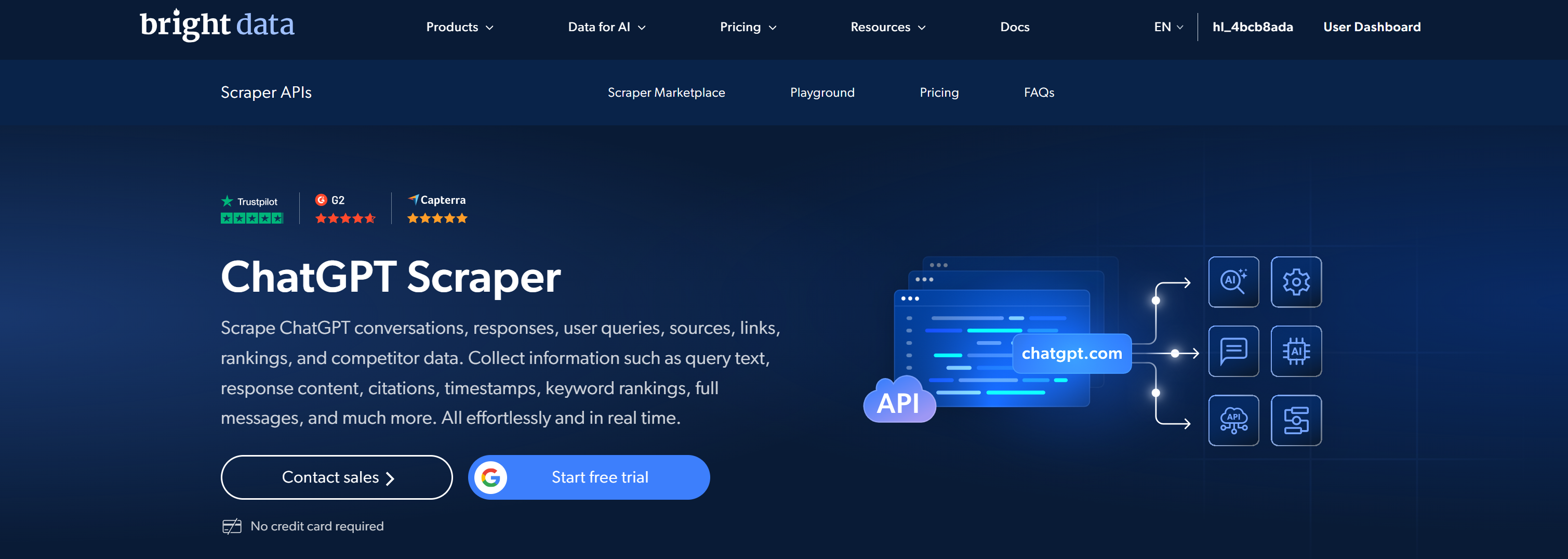
Bright Data remains a heavyweight in the market, primarily through its Scraping Browser product. It is ideal for teams that want to use their own Puppeteer or Playwright scripts while offloading the proxy and anti-bot management.
Key Features:
- Massive Proxy Network: Access to over 72 million residential IPs.
- Browser-as-a-Service: Runs the browser on their servers, saving you local CPU/RAM.
Pros:
- Excellent for high-volume data mining.
- Highly customizable scripting environment.
Cons:
- Complex pricing structure that can become expensive at scale.
- Lacks the specialized "LLM-first" features found in Scrapeless.
3. Zyte (The Anti-Bot Specialist)
Formerly Scrapinghub, Zyte is known for its API-first approach to bypassing the most difficult bot detections. Their "Smart Proxy Manager" is a staple for engineers facing aggressive blocking.
Key Features:
- Automatic Retries: Handles failed requests intelligently without manual intervention.
- Fingerprint Management: Sophisticated rotation of browser headers and signatures.
Pros:
- Very reliable for bypassing Cloudflare and Akamai.
- Solid technical support for enterprise clients.
Cons:
- No free trial for high-tier features.
- Latency can be higher due to the multiple layers of proxy rotation.
4. Apify (The Community-Driven Platform)
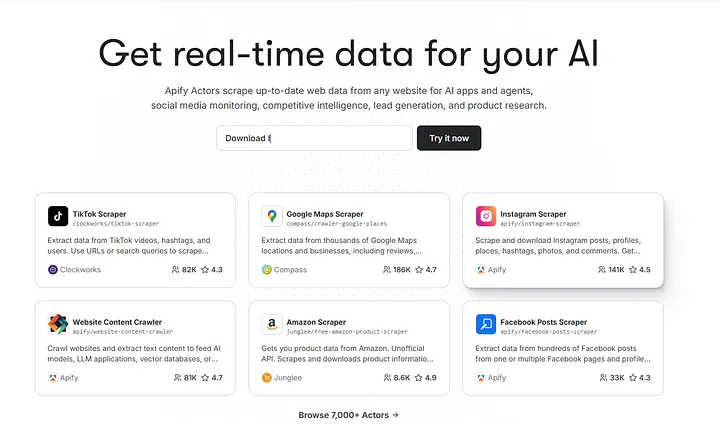
Apify operates as a marketplace for "Actors"—pre-built scraping scripts. It is a fantastic choice for developers who want a "plug-and-play" solution for ChatGPT.
Key Features:
- Pre-built ChatGPT Actors: Community-maintained scripts that are updated frequently.
- Easy Integration: Connects seamlessly with Zapier, Make, and other automation platforms.
Pros:
- Low barrier to entry for non-coders.
- Great for small to medium-scale automation tasks.
Cons:
- Success rates depend on the quality of the specific community Actor.
- Can be slower than dedicated API solutions.
5. Oxylabs (The Data Mining Powerhouse)
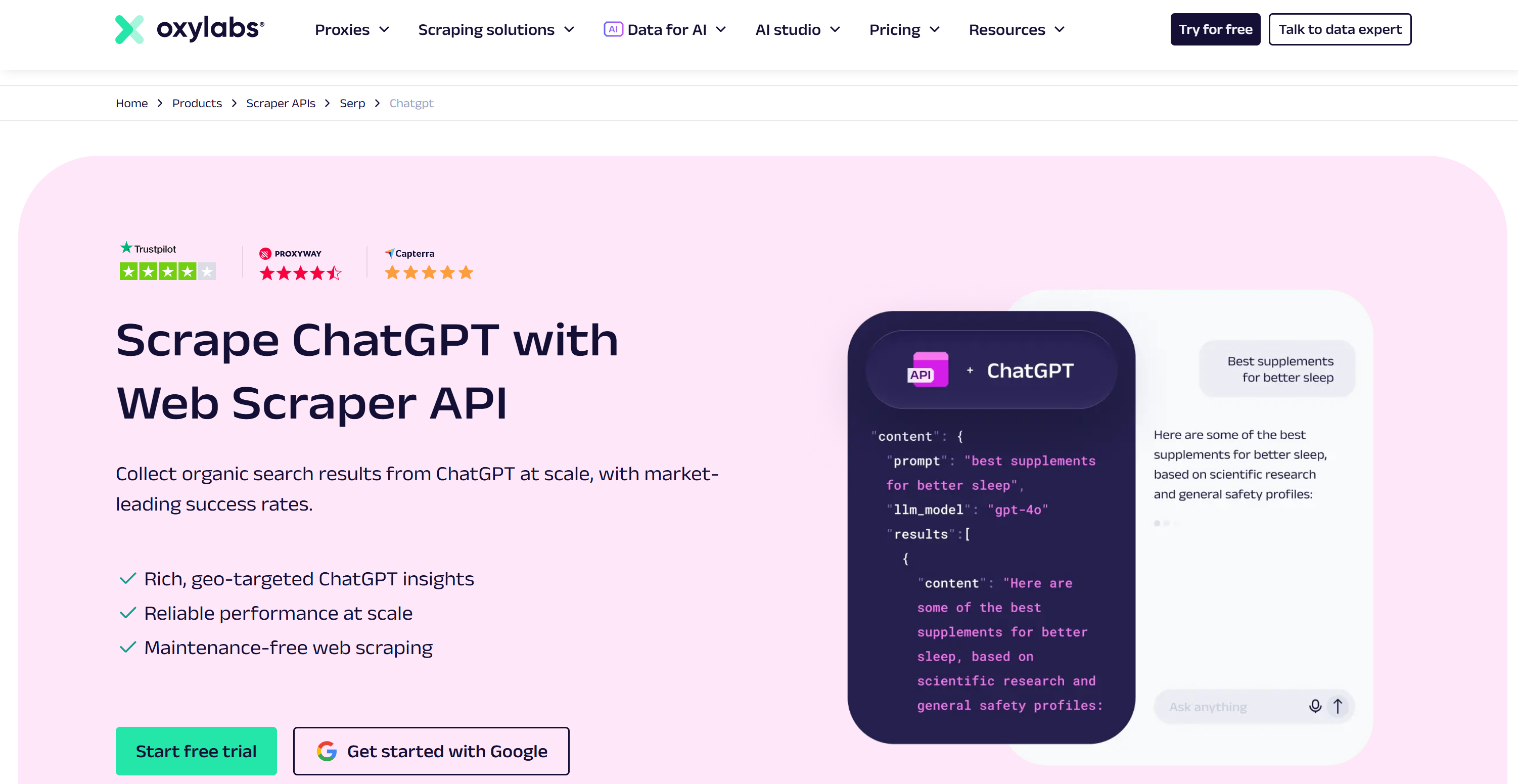
Oxylabs is a direct competitor to Bright Data, offering robust Web Scraper APIs that handle the heavy lifting of data collection.
Key Features:
- Next-Gen Proxies: AI-driven proxy selection to maximize success rates.
- Large-scale Scalability: Built for enterprise-grade data pipelines.
Pros:
- Very fast response times.
- High-quality residential IP pool.
Cons:
- Pricing is geared toward large enterprises.
- Lacks a dedicated "Skill" or "Agent" interface for AI-specific tasks.
6. ZenRows (The Simple Integration Choice)
ZenRows focuses on simplicity. Their API allows you to scrape ChatGPT with a single GET request, handling the headless browser and proxies behind the scenes.
Key Features:
- One-click Bypass: Simple parameters to enable JS rendering and anti-bot features.
- Developer-Friendly: Easy to integrate into Python, Node.js, or Go projects.
Pros:
- Easiest to implement for simple use cases.
- Transparent, credit-based pricing.
Cons:
- Success rates on highly aggressive platforms like ChatGPT can be lower than specialized tools.
- Limited advanced customization for complex AI Agent workflows.
Use Cases for ChatGPT Scraping in 2026
1. GEO & AI SEO Monitoring
Brands use ChatGPT scrapers to track their AI Visibility. By simulating thousands of queries, they can see how often they are recommended and which competitors are being cited. This data is essential for adjusting content strategies to win in the generative search era.
2. Synthetic Data Generation
AI Labs and Research institutions scrape ChatGPT to generate high-quality Synthetic Data. This data is used to train smaller, specialized models or to evaluate the performance of different LLM versions.
3. AI Agent Automation
Developers build AI Agents that can "browse" the web like a human. By using a tool like the Scrapeless OpenClaw Skill, these agents can navigate complex chat interfaces, extract data, and perform actions across multiple platforms automatically.
Start with Scrapeless in 2026
While all the tools mentioned have their merits, Scrapeless stands out for its focus on the AI Agent Ecosystem. As we move deeper into 2026, the demand is shifting from "raw data" to "actionable intelligence."
Scrapeless provides the most robust infrastructure for AI Search Monitoring and Brand Intelligence. It solves the "Data Acquisition Trilemma" by offering high-fidelity data, scalable cloud infrastructure, and native integration with tools like OpenClaw.
Special Offer for New Users:
Scrapeless offers a Free Trial with up to 3,000 requests for new users. This allows you to test our bypass success rates on ChatGPT without any upfront commitment.
- Start Your Trial: Scrapeless Dashboard
- Join the Community: Discord | Telegram
- Official Website: Scrapeless.com
Conclusion
The era of "Blue Links" is over. In 2026, your brand's survival depends on its visibility within the AI-generated answers of ChatGPT and other generative engines. Monitoring this visibility requires more than just a standard API—it requires a high-performance, scalable ChatGPT Scraper.
By choosing a professional solution like Scrapeless, you ensure that your team has access to the most accurate, real-time data while avoiding the maintenance nightmares of in-house scripts. Future-proof your data strategy today and start winning in the GEO era.
FAQ
Q1: Is scraping ChatGPT legal?
A: Scraping public data for monitoring purposes is generally legal, but you should always comply with local regulations and the platform's terms of service. For commercial use, ensure you are following ethical data practices.
Q2: Can I use Puppeteer to scrape ChatGPT?
A: Yes, but you will likely face immediate blocking without a professional proxy and anti-bot bypass layer like Scrapeless.
Q3: What is the difference between an official API and a Scraper?
A: The official API provides a structured, sanitized data feed. A scraper interacts with the web interface to capture the "human-viewable" state, including citations and interactive modules.
Q4: How do I get started with Scrapeless?
A: Simply sign up on our dashboard and claim your free trial credits. You can start making requests via our Cloud API or OpenClaw Skill immediately.
Blogs You May Also Interested In:
At Scrapeless, we only access publicly available data while strictly complying with applicable laws, regulations, and website privacy policies. The content in this blog is for demonstration purposes only and does not involve any illegal or infringing activities. We make no guarantees and disclaim all liability for the use of information from this blog or third-party links. Before engaging in any scraping activities, consult your legal advisor and review the target website's terms of service or obtain the necessary permissions.