n8n Google Search API: Choose a Search Workflow Strategy

Advanced Data Extraction Specialist
TL;DR:
- An n8n Google Search API workflow needs a decision owner before it needs more nodes. Start with the action a fresh search observation can change.
- Search acquisition and workflow orchestration have different responsibilities. Scrapeless supplies structured search data; your application decides which records qualify for reports and actions.
- A reusable workflow requires a defined search context. Market, language, observation window and approved query scope belong in the operating brief.
- A spreadsheet destination does not establish evidence quality. Preserve observation identity and interpretation rules before distributing rows to stakeholders.
Introduction: Start With the Report Someone Must Defend
An SEO agency has to explain why a client should change a page, investigate a competitor or leave a campaign alone. A search result can support that conversation, but only when the observation answers a defined question. Automating collection before agreeing on the question produces more records without making the recommendation easier to defend.
An n8n Google Search API workflow is useful when recurring search research must reach another business system. The workflow might support an account review, supply a content planning queue or prepare evidence for an analyst. Those destinations have different requirements. A client report values comparability; a discovery queue values relevant new candidates; an investigation values traceable context.
Scrapeless Google Search API provides structured Google search results that can become the acquisition layer of that workflow. This article develops a buying and design brief for that choice. The proposed controls are application decisions, rather than a claim that a particular n8n integration has been executed or that a supplier automatically enforces your reporting policy.
Define the Action That Makes Collection Worthwhile
A search workflow deserves funding when an observation can change an approved action. Write that action as a short sentence before selecting software. An agency might want an analyst to review newly visible publishers for a client topic. An in-house team might want a category manager to inspect changes in the pages occupying a commercial query set.
These examples need different evidence. Publisher discovery can tolerate a broad candidate set because a human narrows it later. A performance statement to a paying client needs a stable observation basis and a known comparison window. Using the same collection settings for both purposes can obscure what the workflow was purchased to do.
Ask the future reader what would make a result unusable. A result from the wrong market may be unsuitable for a regional report. An old observation may still help a discovery exercise while failing a current visibility review. A record without its query context may be impossible to interpret even when the title and URL look relevant.
Turn those answers into a service brief. Identify the reader, decision, evidence horizon, destination and review owner. Keep the brief separate from a visual canvas so a node rearrangement cannot silently change the business promise. The SEO search solution is a useful starting point for connecting collection requirements to organic visibility work.
Choose Between a Human Check, a Workflow and a Dedicated Application
Workflow automation is appropriate when the process repeats and the team can define its boundaries. An occasional exploratory question may be faster to answer manually. A product serving many customers may eventually need an application with stronger tenancy, storage and release controls than the team wants to express in a visual workflow.
Choose a human check when the question changes substantially each time. The analyst can adjust wording, inspect unfamiliar result types and decide which follow-up sources matter. Automating that exploration too early can harden provisional assumptions into recurring expense.
Choose a workflow when inputs and handoffs are familiar. A maintained query register, a clear reporting interval and an assigned reviewer make orchestration valuable. The visual process should represent decisions that are already understood, rather than conceal uncertainty behind connected boxes.
Choose a dedicated application when the search experience itself becomes a customer-facing product. Customer isolation, contractual reporting requirements and historical evidence management may justify a separate engineering investment. An n8n prototype can still clarify requirements, but a prototype's convenient export is not a commitment to the final architecture.
The practical purchasing question is therefore about organizational fit. Can the team own the query register, maintain the destination and investigate disputed observations? A managed search acquisition service removes collection work from that responsibility set, while interpretation and accountability remain with the buyer.
Separate Supplier Responsibilities From Agency Responsibilities
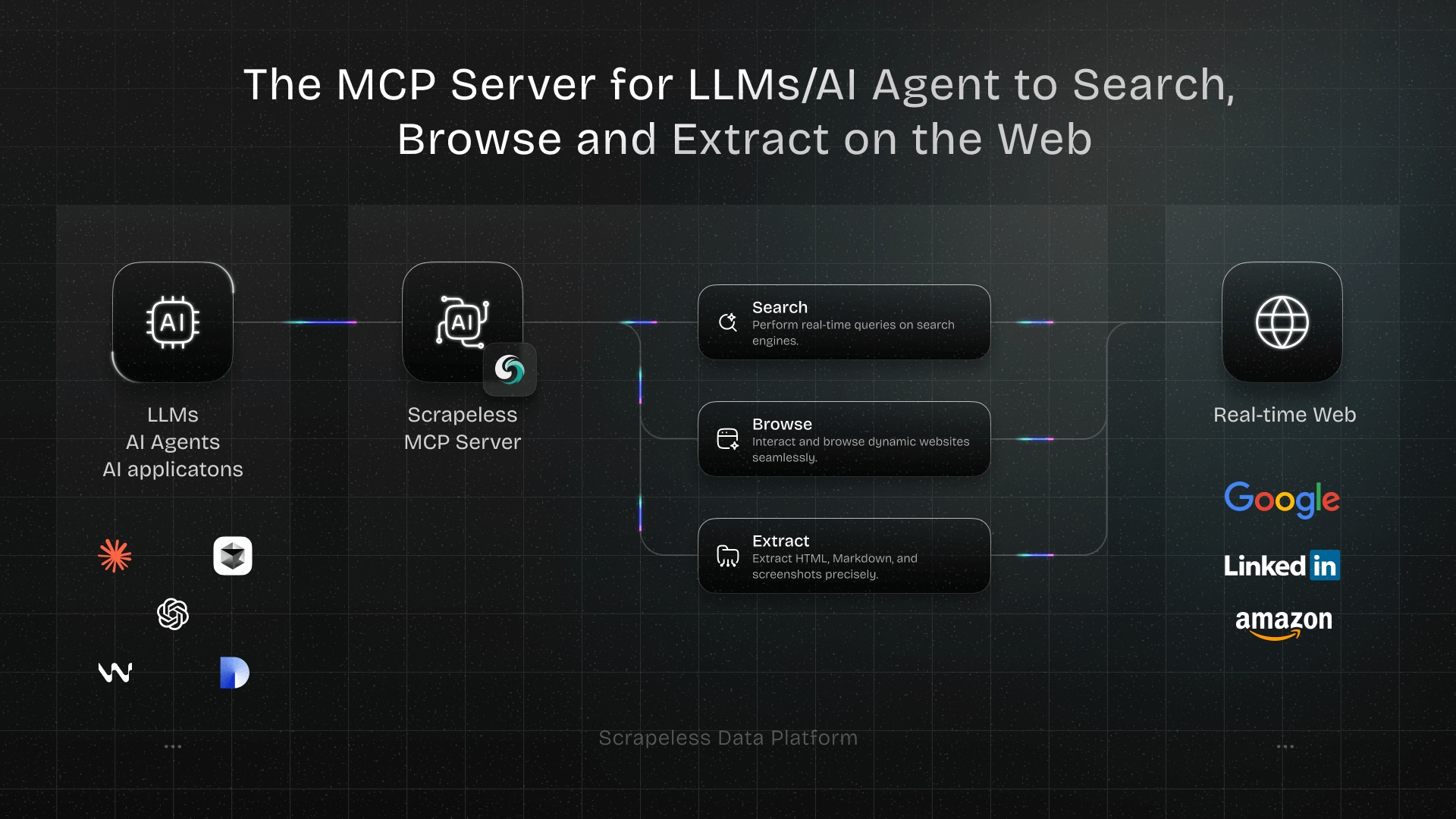
A managed API is most useful when its boundary is explicit. Scrapeless Google Search API supplies structured search acquisition, including organic listing information and search context. Your workflow must still decide whether an observation is suitable for a particular customer promise.
The HTTP Request node supports requests to REST services and provides response handling options. That gives an orchestration route to evaluate. It does not establish that every community search node uses the same authentication, accepts the same payload or exposes a configurable supplier address.
Prefer a clear interface boundary over a hidden dependency. During procurement, ask which part of the proposed workflow is generic transport, which part maps supplier output and which part expresses your own reporting rules. A supplier change should require reviewing those boundaries, rather than searching through unexplained expressions throughout a large canvas.
The HTTP semantics specification defines protocol meaning; your reporting policy determines business acceptance. Document ownership of each boundary. The workflow maintainer owns orchestration configuration. The analyst owns interpretation policy. The service account owner controls credentials. The customer lead approves reporting language. A small team may assign several roles to one person, but the responsibilities should remain visible.
A broader managed search acquisition overview can help explain why data collection belongs behind a defined interface. For this scenario, the selected surface remains Google Search API; additional data sources should enter the brief only when the business decision requires them.
Make Query Scope a Commercial Agreement
An approved query register is a purchasing control because every recurring query represents an ongoing commitment. Record why each query exists, who needs it and what event would justify retiring it. A register with no retirement rule tends to accumulate inherited work that nobody reviews.
Search context belongs beside the query. A regional service business and an international publisher can use similar wording while addressing different audiences. Separate the business market from the query text so reviewers can see whether a collection plan matches the reporting promise.
Define a policy for related queries as well. Suggestions discovered during research should enter a candidate list instead of immediately joining a recurring schedule. A reviewer can assess whether a proposed addition covers a new customer question or simply repeats an existing intent.
The scope agreement should name excluded uses. Search observations alone do not establish customer demand, conversion performance or a page's business value. Those judgments need other evidence. This limitation is useful commercially: it prevents a buyer from expecting a search acquisition service to answer questions that belong to analytics, customer research or financial reporting.
When the scope changes, preserve the reason. A new market, changed customer objective or revised reporting interval can justify additional collection. Treat those changes as explicit operating decisions so a later reviewer can understand why spending or coverage moved.
Start Scraping with Scrapeless
Power up your web scraping and automation workflow with Scrapeless!
Sign up today and get $5 in free credit — no credit card required.Claim your free credit now in the Scrapeless Dashboard.
Design the Handoff Before Selecting a Spreadsheet Layout
The destination should preserve the distinctions the reader needs to make a decision. A spreadsheet can be a convenient review surface, but a tidy row does not reveal whether the underlying observation is fresh, comparable or approved for customer use.
Separate observation records from recommendations. An observation describes what was collected under a stated context. A recommendation explains what an analyst thinks the business should do. Mixing both in one unqualified status column makes it difficult to revisit a judgment without overwriting evidence.
Use the provenance model as a conceptual reference for the relationship between evidence, processing and responsibility. The business need is straightforward: a reviewer should be able to trace a recommendation back to the observation and the transformation that produced it.
Plan for disagreement. An account manager may challenge a result because the client sees a different page. The workflow should retain enough context to compare those observations without declaring either one universally correct. A search snapshot represents a particular observation, not every user's experience.
Decide who may edit each destination. Analysts can annotate interpretation while source observations remain protected from casual replacement. If a stakeholder corrects a business mapping, preserve the correction as a new decision rather than silently rewriting the historical search record. This keeps the report useful after the original maintainer moves on.
Buy for Reviewability Rather Than an Attractive Canvas
A supplier evaluation should examine whether the proposed workflow makes important decisions visible. A polished demonstration can show data moving quickly while leaving the buyer unsure how an incorrect market, unexpected response or missing observation will affect a customer report.
Ask the implementation owner to explain an ordinary record from input to destination. The explanation should cover why the query was approved, how search context was chosen, which evidence was retained and what qualified the observation for reporting. The buyer does not need to inspect every technical detail to assess whether the operating story is coherent.
Then discuss an unsuitable observation. The correct business behavior may be to hold a report, route a review task or preserve an explicit gap. Turning every unsuitable record into a blank spreadsheet cell makes the destination appear simpler while transferring ambiguity to the reader.
The data quality vocabulary distinguishes quality information from the underlying dataset. That distinction supports a useful procurement requirement: evidence and its fitness assessment should travel together without becoming the same thing.
Commercial review should follow the same discipline. Consult current pricing, define the proposed workload and identify assumptions that could change consumption. Avoid a savings claim until the team has a comparable scope and a real commercial basis. A clearer operating model is valuable even when a cost comparison is still unresolved.
Protect Search Inputs and Business Context
A search workflow should collect only inputs that the organization is entitled to process. Query text can contain confidential project names, customer details or information copied from internal systems. A public search destination does not make those inputs appropriate to disclose.
Agree on input review before connecting a customer-facing form or internal document source. The operator should know which categories of text are allowed and how an unsuitable request is handled. Avoid putting secrets or personal information into query fields merely because doing so is technically possible.
The data minimization principles offer a useful basis for limiting stored inputs and access. Retain the context necessary to explain the business decision, with an approved retention policy and access appropriate to each destination.
Credentials require their own ownership. A business approver needs to know who controls service access and who will maintain it when personnel change. That responsibility belongs in the handoff brief, not in an informal message held by the workflow's original author.
A reviewable design gives the organization a reason to trust automation. Reviewers can see what information enters the process, which decisions it supports and where human judgment remains necessary. These controls are requirements for your operating model, rather than additional capabilities attributed to the acquisition API.
Conclusion: Approve the Workflow Promise First
A useful n8n Google Search API strategy starts with a reporting promise that the team can explain and maintain. Choose the decision, define approved search scope, assign responsibility and design the destination around evidence interpretation. Then evaluate whether the orchestration and acquisition choices serve that promise.
Scrapeless Google Search API offers a managed structured search layer for that plan. The wider Google Search solution connects the acquisition choice to business scenarios; your team's scope agreement turns the scenario into an accountable workflow. Begin with a bounded use case and expand when the evidence has a clear reader and an approved purpose.
Ready to Plan Your Search Workflow?
Discuss search workflow decisions with developers in Discord and Telegram.
Plan your search acquisition with Scrapeless around a defined customer decision and approved query scope.
FAQ
Q: When should an agency choose an n8n Google Search API workflow?
Choose the workflow when recurring search research has stable inputs, an assigned reviewer and a defined destination. A one-off exploratory question may still be better handled by an analyst.
Q: Does a successful workflow execution prove the report is correct?
A successful execution does not prove that search observations are fit for a customer report. The application must assess context, freshness and interpretation separately from transport completion.
Q: Is a custom search node required to evaluate Scrapeless?
A custom search node is not the only orchestration route. n8n's generic HTTP Request capability provides a transport option to assess against current Scrapeless documentation and your requirements.
Q: Can search results measure conversion performance?
Search results alone cannot measure conversion performance. Use appropriate business analytics for conversions and use search observations to describe the visible search context.
Q: What should procurement approve before recurring collection begins?
Procurement should approve query scope, expected consumption, access ownership, reporting requirements and responsibility for unsuitable evidence. Those decisions make a supplier proposal commercially meaningful.
At Scrapeless, we only access publicly available data while strictly complying with applicable laws, regulations, and website privacy policies. The content in this blog is for demonstration purposes only and does not involve any illegal or infringing activities. We make no guarantees and disclaim all liability for the use of information from this blog or third-party links. Before engaging in any scraping activities, consult your legal advisor and review the target website's terms of service or obtain the necessary permissions.