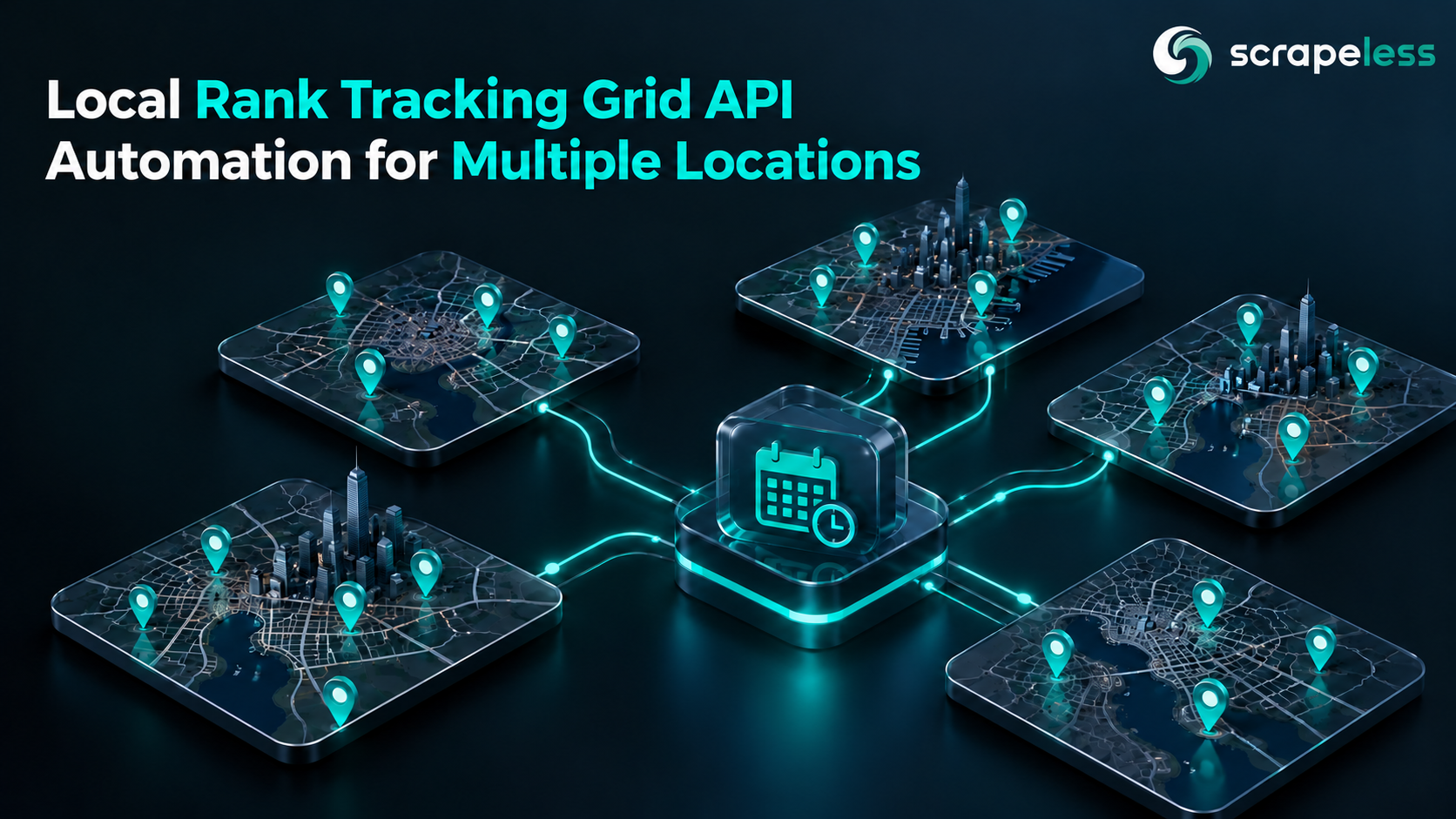
Local Rank Tracking Grid API Automation for Multiple Locations

Web Data Collection Specialist
TL;DR:
- Local rank tracking grid API automation needs branch-level ownership. Every recurring report should support a specific local decision.
- Territory and query choices drive the collection workload. Expand coverage when the additional sample supports an action.
- Shared searches should preserve separate branch evaluations. Matching and client permissions remain application responsibilities.
- Scrapeless Google Search API is the localized collection layer. Your workflow schedules observations, reviews identity, and delivers the report.
Introduction: More Branches Create More Reporting Decisions
A chain's local SEO workload grows with the service areas and queries it needs to understand. Adding locations to a dashboard also creates work for matching listings, investigating changes, and deciding who should act.
Local rank tracking grid API automation should scale those responsibilities together. A useful rollout makes the collection workload predictable and gives every branch a report it can interpret.
Choose the Service Boundary
A multi-location monitoring service should define which tasks belong to the collection provider and which belong to your product. Scrapeless Google Search API provides localized structured Google search data; your application schedules observations and connects them to branch records.
A packaged local reporting tool fits teams whose needs match a standard grid and dashboard. An API fits franchise systems, custom reporting products, and teams joining local observations to internal territory records. Building a collector internally also adds access and parser maintenance to the team's ownership.
Use the local SEO and rankings workflow for branch-level visibility and the wider Google Search API solutions scenarios when planning shared search infrastructure. Keep the local report contract specific even if several products use the same collection service.
Create a Branch and Territory Inventory
A branch inventory should identify the location, reporting owner, territory, and reviewed business identity before collection begins. Keep temporary closures and branch changes visible so a reporting rule does not treat every business change as an SEO issue.
Use service coverage to select the initial sample area. Google's local relevance, distance, and prominence factors explain why location context belongs in the monitoring plan, but they do not provide a causal diagnosis for an individual ranking movement.
| Branch group | Operational need | Rollout choice |
|---|---|---|
| Newly opened locations | Establish a baseline | Begin with a focused service query set |
| Active local campaigns | Follow the targeted territory | Tie the observation window to campaign reviews |
| Stable portfolio | Maintain comparable reports | Use the normal agreed collection cadence |
| Unresolved business identity | Establish the correct listing | Complete matching review before publishing metrics |
Version the territory and query list. A larger grid creates a different measurement set, so a changed sampling plan should be explained before the trend is compared.
Share Jobs at the Search Configuration Level
A shared collection job should represent one query, location configuration, and observation window. Branches evaluated against that job can keep separate matching rules and reporting permissions.
Overlapping service areas may share some observations. Do not deduplicate jobs merely because their city names look similar; preserve the exact requested context. Confirm supported location resolution before promising precise grid-point sampling to a customer.
Keep the scheduling record separate from the result record. An observation that was planned but never validly collected should remain visible as incomplete work. That separation makes it possible to reconcile workload and report delivery without inventing a ranking.
Start Scraping with Scrapeless
Power up your web scraping and automation workflow with Scrapeless!
Sign up today and get $5 in free credit — no credit card required.Claim your free credit now in the Scrapeless Dashboard.
Review Listing Identity Before Branch Alerts
A branch alert needs a trustworthy business match as well as a valid observation. Names, addresses, and available identifiers should agree with the reviewed branch record, or the application should flag the match for human review.
The structured local search results workflow describes how local listing attributes can vary. Preserve the raw listing evidence, treat missing identifiers or coordinates as unresolved where they matter, and avoid turning a weak match into a confident branch-level conclusion.
Use the JSON data model to define how null, empty, and omitted fields map to application states. The report should distinguish a target absent within valid coverage, an unresolved match, and an invalid capture.
Estimate Workload Across Territories
A local monitoring budget should count unique query-location configurations over the reporting period. Multiply those configurations by the collection windows and the requests needed for the chosen coverage, then reconcile shared jobs before translating the plan into cost.
This is a planning model, not a recorded week of usage or a customer invoice. More branches do not automatically mean proportionally more search requests if territories share observations; more granular territories can also increase workload without adding branches.
Bring that estimate to Scrapeless pricing and confirm the plan's billable unit and coverage terms. Add storage, matching review, client reporting, and support to the service budget. Expand the grid when the new observations answer a business question that the current sample cannot answer.
Deliver Reports With an Action Owner
A multi-location report should identify which branch needs attention and why the evidence supports that review. Include the sampling-plan version, reporting window, valid coverage, matching confidence, and observed visibility changes.
Compare web search performance separately through Search Console monitoring. Local search visibility, website traffic, and branch sales are different evidence sources. A report can connect them for investigation without claiming that one observation proves another outcome.
Give unresolved data issues to the operations owner and valid visibility changes to the local marketing owner. The distinction reduces the chance that a collection problem becomes an unnecessary branch campaign.
Conclusion
Scale the service around a reviewed branch inventory and an explicit sampling contract. Scrapeless handles localized search collection; your workflow makes the resulting evidence usable for the people responsible for each location.
Ready to Build Your Search Workflow?
Join developers building search products in Discord and Telegram. Bring a focused query set and clear reporting requirements to the team.
Create your Scrapeless account and choose the Google Search API workflow that fits your reporting needs.
FAQ
Q: What should a multi-location grid rollout include first?
A multi-location grid rollout should first include a reviewed branch inventory, a focused query set, and an agreed territory. Those records establish what each recurring report is intended to measure.
Q: Can overlapping branches share observations?
Overlapping branches can share observations when the query, location configuration, and collection window match. Branch identity evaluation and permissions remain separate.
Q: What drives the cost of local grid automation?
The collection workload depends on unique query-location configurations, observation windows, and chosen result coverage. Matching review, storage, and reporting also contribute to service cost.
Q: Who should review a sudden local visibility change?
The operational owner should review incomplete evidence and uncertain identity matches. The local marketing owner should review valid visibility changes against the branch’s business context.
At Scrapeless, we only access publicly available data while strictly complying with applicable laws, regulations, and website privacy policies. The content in this blog is for demonstration purposes only and does not involve any illegal or infringing activities. We make no guarantees and disclaim all liability for the use of information from this blog or third-party links. Before engaging in any scraping activities, consult your legal advisor and review the target website's terms of service or obtain the necessary permissions.