Google AI Mode API Automation: Set Service Boundaries

Advanced Data Extraction Specialist
TL;DR:
- Google AI Mode API automation needs a defined service boundary. Decide which observations the program promises to deliver and which interpretations remain human responsibilities.
- Collection frequency should follow decision deadlines. More observations are useful only when somebody can review and act on the additional evidence.
- Separate operating capacity from purchased capacity. Storage, quality review, and report preparation can become constraints before collection volume does.
- Use dedicated AI Mode evidence alongside ordinary search context. Keep the two product surfaces visible in the buying plan and service description.
Introduction: A Monitoring Promise Creates an Operating Obligation
A recurring visibility report creates expectations about scope, timeliness, and explanation. Once stakeholders depend on that report, changing the question portfolio or omitting a market becomes a service decision. Buying collection capacity without defining those obligations leaves the team responsible for a promise it has never priced or staffed.
Google ai mode api automation should therefore begin with an operating description. State who receives the evidence, when it is needed, what qualifies for comparison, and how incomplete coverage will be disclosed. These decisions establish what the organization needs from a provider and what its internal team must supply.
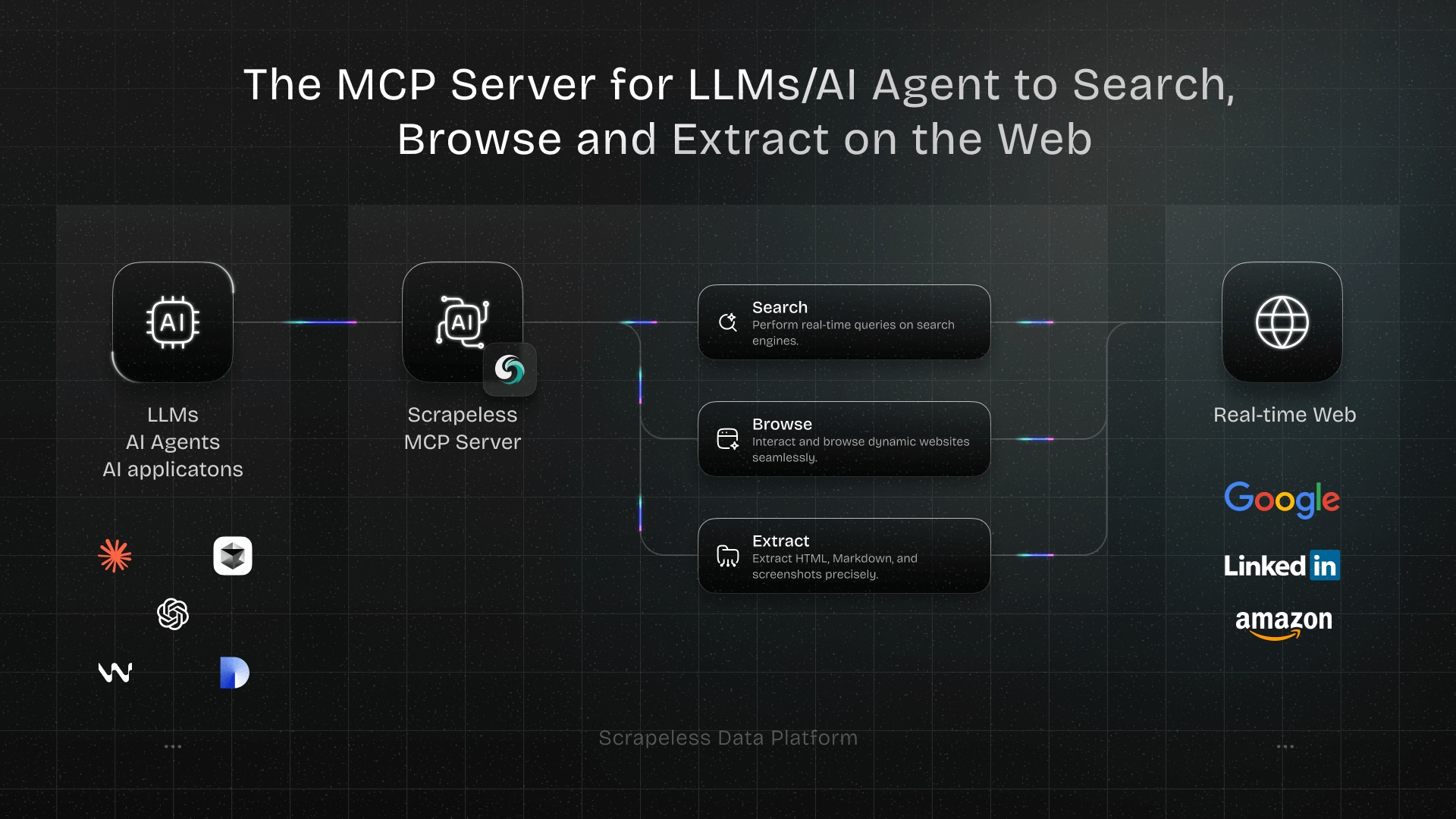
The Google Search API supports ordinary search context within a search data solution. The GEO visibility scenario describes the dedicated generated-answer path, including AI Mode coverage. Keep those surfaces distinct when planning procurement. The examples below are hypothetical service choices rather than production measurements or claims about account availability.
Specify the Deliverable Before the Collection Schedule
The deliverable should describe what a recipient can inspect and decide, rather than merely name a dashboard.
A product marketing lead might need evidence of inaccurate capability descriptions before a launch review. An agency client might need a periodic explanation of citation changes within an agreed topic set. A research team might want a retained collection for later analysis. These deliverables differ in timeliness, retention, and interpretation even when they begin with similar questions.
Write the service promise in observable terms. Define the approved question portfolio, market context, delivery window, evidence retained, and responsible reviewer. Include a description of what the report will say when evidence is incomplete. A recipient should not have to infer whether a blank cell means no mention, no answer, or an observation that has not yet been reviewed.
Keep optional investigations outside the recurring promise until somebody approves their inclusion. An executive request about an unfamiliar topic may be useful, but it should not silently expand the monitored population. A service that continually accepts unpriced scope becomes difficult to sustain and difficult to compare across reporting periods.
Divide the Portfolio by Decision Urgency
Collection frequency should reflect how quickly a decision could change and how quickly the organization can respond.
A launch-related representation question may justify a closer observation window than a stable category definition. A regional expansion review may need a concentrated collection period followed by a lower maintenance cadence. Assign the purpose before choosing a schedule so the program does not treat every question as equally urgent.
Separate recurring coverage from temporary campaigns. Give each campaign an owner, an intended decision date, and an end condition. A temporary portfolio can then expire or enter a deliberate maintenance review. Without an end condition, the collection footprint grows through forgotten projects rather than current business needs.
Review the schedule with the people who consume the report. If nobody can assess new evidence between planning meetings, a high-frequency feed may create a queue without improving decisions. The right schedule supports the reporting obligation and leaves room for investigation, rather than maximizing the number of records collected.
Define Normal Completion and Incomplete Delivery
A service boundary needs explicit states for completed, excluded, and incomplete observations.
Completed collection is only the beginning of a useful report. Evidence may still require identity resolution or source ownership review. Decide whether the promised deliverable consists of raw observations, reviewed classifications, or an interpreted narrative. These are different levels of service and require different acceptance criteria.
An incomplete observation should carry a reason that the recipient can understand. Avoid replacing unavailable evidence with the previous answer without labeling that substitution. An older observation can provide historical context, but presenting it as current hides a material limitation of the reporting window.
The W3C Data Quality Vocabulary provides a conceptual framework for describing data quality and related assessments. Apply the underlying principle by retaining quality states alongside the evidence. A report should communicate coverage and uncertainty without requiring the reader to inspect collection logs.
Keep the Dedicated Answer Surface Visible in Procurement
A procurement specification should name the evidence surface needed for each part of the service.
AI Mode answer content and associated sources belong to the dedicated generated-answer path. Ordinary organic results belong to Google Search API. A service description that simply says Google data can conceal this distinction and encourage assumptions about what a purchased product will return.
Ask the provider to confirm the intended account access, context controls, output representation, and applicable charging terms. Treat those as evaluation questions until confirmed for the proposed service. Avoid making the budget depend on an undocumented assumption that all search and answer products share identical request behavior or commercial conditions.
The generated-answer architecture helps explain why organic search context and AI answer evidence should remain separate. That separation also makes future service changes easier to evaluate. Adding a new evidence surface should have a stated purpose, an acceptance check, and a visible effect on the operating plan.
Budget for the Work After Collection
The cost of an operating program includes review, retention, and reporting work as well as purchased requests.
Estimate the footprint from the approved portfolio and intended schedule. Then identify the work generated by each additional market or question family. Ambiguous product names may increase review time. A broader source landscape may increase ownership classification. A richer executive report may require more editorial synthesis even if collection volume remains stable.
Maintain a planning worksheet that separates provider charges from internal operating effort. Use current commercial terms when discussing Scrapeless pricing, and label any internal assumptions as planning inputs. A hypothetical budget model should never be described as an observed invoice or a benchmark of actual service costs.
Reserve room for correction work. A revised alias map, source ownership rule, or question classification may require historical reports to be explained or recomputed. Those changes are part of maintaining an evidence service. A plan that only funds initial collection can become expensive to interpret once stakeholders begin asking comparison questions.
Start Scraping with Scrapeless
Power up your web scraping and automation workflow with Scrapeless!
Sign up today and get $5 in free credit — no credit card required.Claim your free credit now in the Scrapeless Dashboard.
Set Ownership at the Boundary Between Collection and Analysis
Collection ownership and analytical ownership should remain explicit even when the same team performs both roles.
The collection owner maintains the approved scope and ensures observations carry the required context. The analysis owner maintains classification rules and explains how evidence becomes a business measure. A report owner decides what is released to recipients and how limitations are communicated. Combining these responsibilities is possible, but leaving them unnamed is costly.
Document the handoff between roles. An analyst should receive the observation context and preserved evidence, not merely a count. A report owner should receive coverage notes and unresolved issues, not just a completed chart. This makes it possible to identify whether a disputed result concerns collection, classification, or communication.
The W3C provenance ontology describes relationships among entities, activities, and responsible agents. Use that as a practical reminder to keep evidence and processing decisions attributable. You do not need an elaborate semantic system to record who approved a rule and which report used it.
Make Scope Changes Reviewable
A change in monitoring scope should identify its purpose and its effect on comparability.
Require a short request for a new market, product family, or question group. The request should name the business decision, intended duration, expected reviewer, and reporting destination. This gives the program owner enough information to decide whether the change belongs in recurring coverage or a temporary investigation.
Record changes before the next release. Retained change records benefit from the consistent time representation defined by the Internet timestamp standard. If a report includes newly added questions, identify that expansion rather than allowing recipients to interpret the larger count as improved visibility on the previous portfolio. A stable comparison set and an expansion set can coexist without forcing a misleading combined trend.
Review scope reductions with the same care. Retiring an obsolete product question may be sensible, but deleting it from historical comparisons can change the interpretation of prior periods. Preserve a record of the retirement and state whether the series remains available for historical reference. Predictable change management makes the service easier to trust.
Treat Retention as a Product Decision
Retention should preserve enough evidence for the promised review and correction process.
A short-lived operational alert may need a different retention period from a quarterly research archive. Decide which records need original answer evidence, which need derived classifications, and which can be removed after the review obligation ends. Keeping everything indefinitely can increase storage and access responsibilities without improving the service.
Use approved public questions and minimize private information in observation inputs. The privacy principles for data handling provide a useful foundation for collecting only what the workflow needs. A monitoring question should not become a vehicle for storing confidential customer details in a broadly accessible archive.
Also decide what happens when a client or internal team leaves the program. Define export expectations, deletion responsibilities, and the treatment of derived reports. The W3C data publishing practices address metadata, versioning, and data access as related concerns. These are service design questions that should be settled while the scope is manageable, rather than during an urgent handover with unclear ownership.
Evaluate the Service With Acceptance Cases
Acceptance cases should test whether the proposed operating design supports the promised recipient experience.
Use hypothetical cases that expose different boundaries: an answer without a brand mention, an ambiguous product name, an unavailable observation, and a new source requiring ownership review. Ask how each case enters the report and who resolves the uncertainty. These cases evaluate the service design without inventing a live result.
Include a scope-change case. Add a market partway through the reporting window and ask the report owner to explain how it affects the comparison. Include a correction case where a classification rule changes after release. A clear explanation is evidence that the service has a usable operating model.
During a Scrapeless evaluation, confirm the appropriate collection products and the evidence handoff required by those cases. Then size the recurring purchase around the scope the organization can operate. Additional capacity should support an approved decision or service commitment, rather than compensate for an undefined portfolio.
Review the Program When Its Purpose Changes
An automation program should be reassessed when the business decisions it serves change.
A portfolio built for launch readiness may become unsuitable for ongoing category research. A client reporting service may need different review ownership after expanding into additional markets. Schedule a purpose review alongside major changes in audience, product coverage, or reporting obligations so the collection plan remains tied to current work.
Use the review to retire evidence that nobody consumes and clarify measures that recipients repeatedly misunderstand. Ask which decisions the latest reports supported, which questions remained unanswered, and where manual investigation was necessary. These observations can guide the next scope decision without turning the review into a search for higher collection totals.
Keep the final service description short enough for a new operator to use. The operator should understand what is promised, what counts as complete, where uncertainty goes, and who approves changes. That operational clarity is a stronger foundation for automation than a large undocumented schedule.
Conclusion: Purchase a Service the Team Can Operate
Google ai mode api automation works best when the collection promise matches review capacity and reporting responsibilities. Define the deliverable, preserve quality states, separate dedicated answer evidence from ordinary search context, and make scope changes explicit. Evaluate Scrapeless against those requirements, then expand capacity when an approved business purpose justifies the additional operating obligation.
Ready to Build Your Search Evidence Workflow?
Discuss search data with developers in Discord and Telegram.
Start your Scrapeless evaluation with the evidence requirements and decision owners your team needs.
FAQ
Q: Should every monitored question run on the same schedule?
Monitored questions should follow schedules tied to decision urgency and review capacity. Stable research topics and temporary launch investigations can have different operating needs.
Q: Does an API purchase include a complete reporting service?
An API purchase should not be assumed to include your analytical classifications or finished reporting process. Confirm the supplied evidence and assign internal responsibilities explicitly.
Q: How should incomplete observations appear in reports?
Incomplete observations should retain a visible quality state and an understandable reason. Do not silently replace current missing evidence with an older answer.
Q: When should collection capacity expand?
Collection capacity should expand when an approved scope change supports a decision and the team can operate the resulting workload. Additional volume alone is not a service outcome.
At Scrapeless, we only access publicly available data while strictly complying with applicable laws, regulations, and website privacy policies. The content in this blog is for demonstration purposes only and does not involve any illegal or infringing activities. We make no guarantees and disclaim all liability for the use of information from this blog or third-party links. Before engaging in any scraping activities, consult your legal advisor and review the target website's terms of service or obtain the necessary permissions.