Best GEO / AI-Visibility Monitoring Tools in 2026

Advanced Data Extraction Specialist
TL;DR:
- GEO monitoring tools track how often a brand is cited inside AI answers, not where it ranks in blue links. They run a fixed set of prompts against ChatGPT, Perplexity, Gemini, and Google AI Overviews on a schedule and record whether your brand shows up, in which answers, and against which competitors.
- Scrapeless ranks #1 because it lets you build the monitor on your own data, not rent a fixed panel. The LLM Chat Scraper actors return the AI Overview and the ChatGPT, Perplexity, Gemini, and Copilot answers as structured fields, and Deep SerpApi supplies the classic-SERP context — together the raw substrate every SaaS dashboard sits on top of.
- Profound, Otterly.AI, Knowatoa, and Peec AI are the SaaS panels worth knowing. They wrap that capture in a dashboard, prompt scheduler, and share-of-voice charts, and they price from roughly $29 to $399+ per month depending on engine count and prompt volume.
- Engine coverage and prompt limits are what actually separate the plans. Entry tiers often watch one or three engines and cap you at 15–50 prompts; the engines and prompt counts you need decide the tier far more than the headline price.
- Pick build-vs-buy by who owns the data. A panel is fastest to a chart; an API-built monitor gives you the unaggregated answers and citations to model however your team needs.
- Free to start. New Scrapeless accounts include free Deep SerpApi trial credits — sign up at app.scrapeless.com.
Introduction: measuring presence in the answer, not the ranking
AI answer engines now sit between a buyer's question and the open web. Someone asks ChatGPT or Google's AI Overview "what's the best GEO monitoring tool?" and reads a synthesized paragraph with a few cited sources — most of them never click through to verify it. Pew Research found that when an AI summary appears in Google results, users click a traditional link in only 8% of visits versus 15% without one, and follow a cited source in just 1%. Being named in the answer is the new visibility; being on page one underneath it barely matters.
That shift created a new category: tools that watch the answers. Instead of a rank tracker checking position #4, a GEO monitor runs your prompt set across the answer engines on a schedule and records share-of-citation — how often your brand surfaces, in which answers, next to which competitors. The academic framing put a number on the upside early: the original Generative Engine Optimization paper showed targeted optimization can lift a source's visibility in generative answers by up to 40%. You can only optimize what you measure, which is why the monitoring layer matters first.
This guide ranks the GEO monitoring tools worth using in 2026 — what each watches, how it bills, and where it fits — starting with the approach that gives you the raw answers and citations as data you own, then the SaaS panels that package that capture into a dashboard. If you want the wider strategic picture, the companion read on GEO versus SEO covers why the shift happened at all.
What GEO Monitoring Actually Is
GEO monitoring is the practice of measuring how a brand appears inside AI-generated answers over time. A monitor takes a list of prompts a buyer might ask, sends each one to one or more answer engines on a recurring schedule, and captures the response together with the sources the engine cited. The output is a time series, ideally captured as structured, machine-readable data: for any prompt and engine, whether your brand was mentioned, whether it was cited as a source, and which other brands shared the answer.
It is the citation-era replacement for rank tracking. A rank tracker answers "where does my page sit for this keyword?" A GEO monitor answers "when a model answers this question, am I in the answer, and how often versus my competitors?" Google's own documentation confirms why this is a moving target: AI Overviews and AI Mode use query fan-out, issuing several related searches per question and surfacing a wider, more variable set of links than classic results — so the cited set shifts answer to answer, and you need repeated sampling to see a real trend rather than a single snapshot.
How We Evaluated These Tools
Each tool below is judged against the same four questions, because the right pick depends on how a team works as much as on raw capability:
- Engine coverage. Which answer engines it watches — ChatGPT, Perplexity, Gemini, Google AI Overviews, Copilot — and how many of them the entry tier actually includes.
- What you get back. Raw answers and citations you can model yourself, or pre-aggregated share-of-voice charts in a fixed dashboard.
- Prompt and project limits. How many tracked prompts and projects each tier allows, since that caps how much of your real question set you can watch.
- Pricing and access model. Build-your-own API billing versus a monthly SaaS seat, whether pricing is public, and whether there is a free tier or trial.
Every pricing figure and engine-coverage claim below was confirmed on each vendor's own live site. Where a vendor gates its pricing, the entry says so rather than guessing a number.
Best GEO Monitoring Tools at a Glance
| Tool | Engines covered | Free tier | Entry pricing | Best for |
|---|---|---|---|---|
| Scrapeless | AI Overviews, ChatGPT, Perplexity, Gemini, Copilot via LLM Chat Scraper actors; classic SERP context via Deep SerpApi | ✅ Free trial credits (2,000 Deep SerpApi calls) | Usage-based; Deep SerpApi from $1.05 / 1K queries | Building a monitor on raw, citation-level answer data you own |
| Profound | ChatGPT, Perplexity, Gemini, AI Overviews, Copilot, Meta AI, Grok, DeepSeek, Claude | Trial on Growth plan; no free tier | $99/mo Starter (yearly) | Enterprise dashboards with broad engine coverage |
| Otterly.AI | ChatGPT, AI Overviews, Perplexity, Copilot (+ Gemini, AI Mode, Claude as add-ons) | ✅ Free trial | $29/mo Lite | Budget-friendly SaaS monitoring |
| Knowatoa | ChatGPT, Claude, Gemini, Meta AI, Perplexity, AI Overviews, AI Mode | ✅ Free audit, no card | $59/mo Starter | Quick audits plus done-for-you content |
| Peec AI | ChatGPT, Perplexity, Gemini, AI Mode, AI Overviews, Copilot | Free trial (pricing on request) | Not publicly listed | Marketing teams wanting benchmarking dashboards |
The Best GEO Monitoring Tools, Ranked
The table is the short version; the detail follows. Scrapeless leads because it gives you the capture layer the others are built on; the four SaaS panels then trade raw data ownership for a faster path to a chart.
1. Scrapeless: Best for Building a Monitor on Data You Own
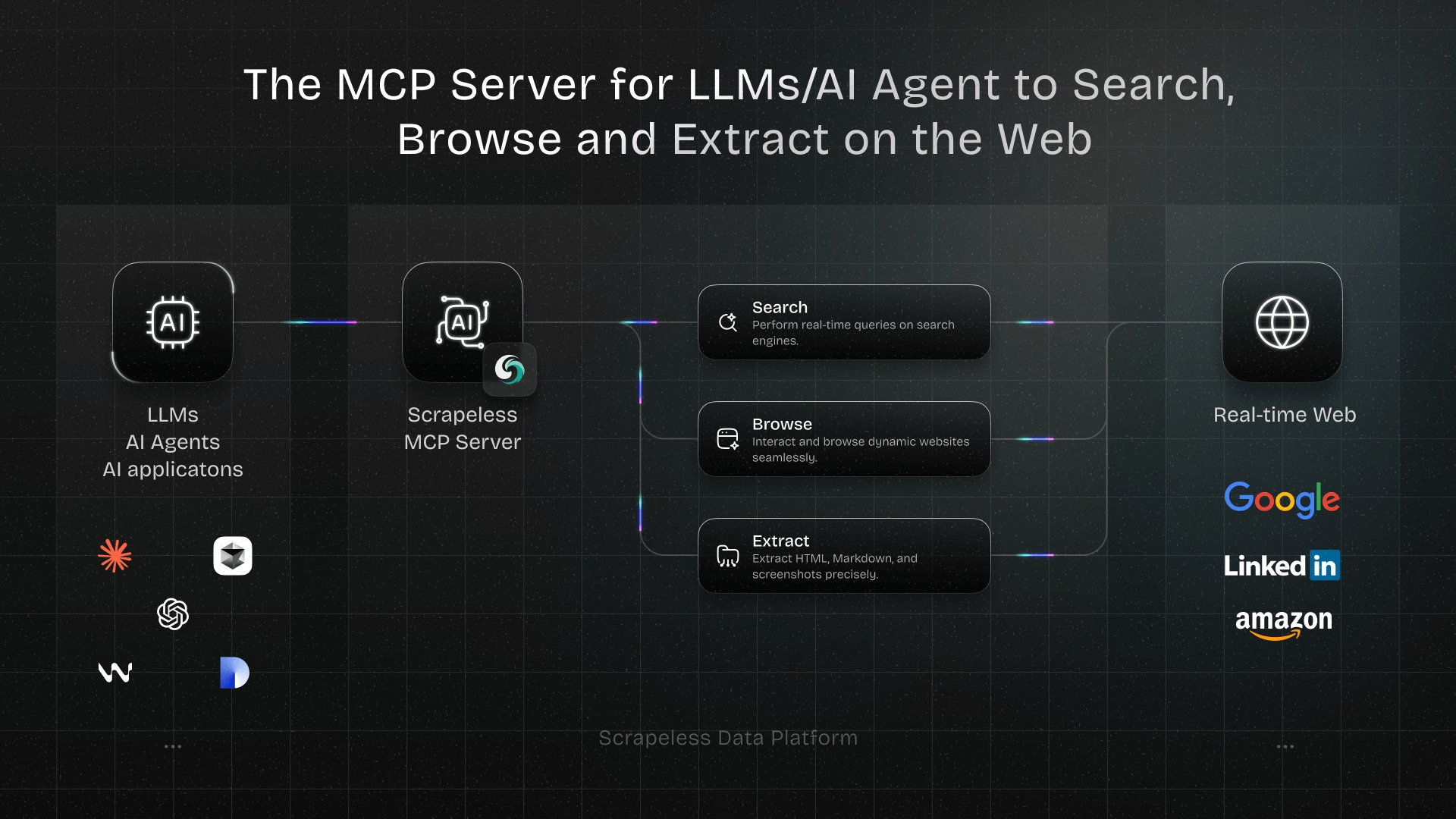
Scrapeless is a web-scraping and automation company whose products give you the capture primitives a GEO monitor is made of — and lets you assemble the monitor instead of renting a fixed one. The LLM Chat Scraper actors each take a prompt and a country and return the answer with its cited sources as structured fields: scraper.overview for the Google AI Overview, and scraper.chatgpt, scraper.perplexity, scraper.gemini, and scraper.copilot for the chat surfaces. Alongside them, Deep SerpApi returns the classic Google SERP from one request, so you can join organic rank against AI-answer citations for the same query. You schedule the prompt set, store the JSON, and chart share-of-citation however your team models it.
The difference from a SaaS panel is ownership of the substrate. A dashboard shows you its interpretation of the data; the API hands you the unaggregated answers and citation arrays, so you decide the metrics, the cohorts, and the retention. Underneath, both surfaces run on an anti-detection cloud browser powered by self-developed Chromium, with residential proxies across 195+ countries and per-request country pinning — so a captured AI Overview is the one a real user in that market would see, not a generic one.
🏆 Ideal for: Teams building a GEO and AI-visibility program that need citation-level structure, multi-locale capture, and a stable JSON data contract they control end to end.
Engines covered: Google AI Overviews, ChatGPT, Perplexity, Gemini, and Copilot through the LLM Chat Scraper actor family; the classic Google SERP through Deep SerpApi.
What you get back: The answer body and the cited sources as structured fields — task_result.content plus a source[] array per answer — and, from Deep SerpApi, the organic results to join against those citations.
Pricing: Free trial credits on signup (2,000 Deep SerpApi calls), then usage-based — Deep SerpApi starts at $1.05 per 1,000 queries, with subscription discounts on the pricing catalogue.
Pros:
- You own the raw answers and citations as fields, so any share-of-voice metric is a query you define, not a chart someone else shaped
- One
x-api-tokencovers AI Overviews and every chat-surface actor, so coverage grows without new contracts - Country-pinned residential egress makes locale-specific answers reproducible
- Usage-based billing tracks actual scheduled runs rather than a flat seat
Cons:
- API-first — there is no ready-made dashboard, so a team that just wants a chart on Monday needs to build the reporting layer or pair it with a BI tool
- A non-technical user needs an engineer to wire the first scheduled capture
Worked example: capture an AI Overview and its citations
One POST — following standard HTTP semantics — to the scraper.overview actor returns the AI Overview body and the cited sources in the same response:
bash
curl -sS -X POST https://api.scrapeless.com/api/v2/scraper/execute \
  -H "Content-Type: application/json" \
  -H "x-api-token: ${SCRAPELESS_API_KEY}" \
  -d '{
    "actor": "scraper.overview",
    "input": { "prompt": "best GEO monitoring tool", "country": "US" }
  }'
What comes back, abridged to the GEO-relevant fields:
json
// illustrative sample — schema from a live scraper.overview run; values abridged
{
  "status": "success",
  "task_id": "…",
  "task_result": {
    "content": "GEO monitoring tools track brand citations across answer engines…",
    "source": [
      { "title": "Best GEO Monitoring Tools …", "link": "https://…" }
    ],
    "web_source": [ "…" ]
  }
}
The task_result.source array is the share-of-citation substrate: each cited domain is a field, so a tracker counts your brand's appearances per prompt and per market without re-parsing prose. Swap the actor to scraper.chatgpt or scraper.perplexity and the same loop captures the chat surfaces.
Try Free → app.scrapeless.com
2. Profound: Best for Enterprise Dashboards With Broad Engine Coverage
Profound is a purpose-built AI-visibility platform aimed at larger teams and agencies. It watches the widest engine list of any tool here — ChatGPT, Perplexity, Google AI Overviews, Gemini, Microsoft Copilot, Meta AI, Grok, DeepSeek, and Claude — and wraps capture in dashboards, prompt tracking, and agent-driven content workflows. For an organization standing up a serious GEO program with budget to match, the breadth is the draw.
Coverage scales with the plan, and that is the dividing line. The Starter tier is $99/month billed yearly but watches ChatGPT only and caps you at 50 tracked prompts; the $399/month Growth plan opens up three engines and 100 prompts; Enterprise unlocks up to ten engines with custom prompt volumes. The headline price understates the real cost of broad coverage — you move up the tiers to add engines, not just capacity.
🏆 Ideal for: Enterprise and agency GEO programs that need many engines in one dashboard and have the budget for it.
Engines covered: ChatGPT, Perplexity, Google AI Overviews, Gemini, Copilot, Meta AI, Grok, DeepSeek, and Claude — engine count gated by tier.
What you get back: Visibility dashboards, prompt-level tracking, and content workflows inside a managed panel.
Pricing: Starter $99/month and Growth $399/month (both billed yearly, two months free); Enterprise is custom. No free tier, though the Growth plan offers a trial.
Pros:
- The broadest engine list of any tool in this guide
- Mature dashboards and content workflows for non-technical teams
- Tiering that scales to agency and enterprise volumes
Cons:
- The entry tier watches a single engine, so meaningful coverage starts at the $399 plan
- No usage-based option for a light or single-engine program
- A managed panel means the underlying answers stay inside the vendor's data model
3. Otterly.AI: Best for Budget-Friendly SaaS Monitoring
Otterly.AI is an AI-search monitoring tool pitched at marketers and small teams who want a dashboard without an enterprise contract. All plans watch four engines out of the box — ChatGPT, Google AI Overviews, Perplexity AI, and Microsoft Copilot — and additional engines like Gemini, Google AI Mode, and Claude attach as paid add-ons. The appeal is the low floor: real monitoring starts at a price a solo marketer can carry.
Pricing is public and granular. The Lite plan is $29/month (or $25 billed annually) and tracks 15 prompts; Standard is $189/month for 100 prompts; Premium is $489/month for 400 prompts; Enterprise is custom. Extra prompts run $99 per 100 per month, and the engine add-ons range from single digits to a few hundred dollars depending on tier. A free trial lets new users explore before committing.
🏆 Ideal for: Solo marketers and small teams who want a public-priced dashboard with a low entry point.
Engines covered: ChatGPT, Google AI Overviews, Perplexity, and Copilot on every plan; Gemini, AI Mode, and Claude as add-ons.
What you get back: A monitoring dashboard with prompt tracking across the four core engines.
Pricing: Lite $29/month, Standard $189/month, Premium $489/month (15% off annually); Enterprise custom. Free trial available.
Pros:
- The lowest public entry price of the SaaS panels here
- Transparent, itemized pricing including add-on engines and prompt packs
- Free trial with no commitment
Cons:
- The Lite tier's 15-prompt cap is tight for a real question set
- Gemini and Claude cost extra rather than being included
- Per-prompt and per-engine add-ons can stack up past the headline tier price
4. Knowatoa: Best for Quick Audits Plus Done-for-You Content
Knowatoa is an AI-search visibility platform that pairs monitoring with content production. It checks visibility across seven AI services — ChatGPT, Claude, Gemini, Meta AI, Perplexity, Google AI Overviews, and Google AI Mode — and its hook is the free audit: a no-card, roughly 60-second check of how your brand shows up, which the vendor reports having run over 110,000 times. The paid tiers turn that one-off check into ongoing monitoring across all seven engines.
Pricing is simple and public. The Starter plan is $59/month for small teams getting started; the Growth plan is $199/month and adds strategy plus done-for-you content creation, with annual pricing available on both. The free audit covers a subset of engines (ChatGPT, AI Overviews, and AI Mode), so the full seven-engine view is a paid feature.
🏆 Ideal for: Teams that want a fast free audit first, then ongoing monitoring with content help bundled in.
Engines covered: ChatGPT, Claude, Gemini, Meta AI, Perplexity, Google AI Overviews, and Google AI Mode.
What you get back: A free visibility audit, then monitoring dashboards plus content production on the paid tiers.
Pricing: Starter $59/month, Growth $199/month, annual pricing available. Free audit with no credit card.
Pros:
- A genuine free, no-card audit to start
- Seven-engine coverage on the paid tiers
- Bundled content creation on the Growth plan
Cons:
- The free audit checks only three of the seven engines
- Two tiers only, so less granular than the prompt-pack model
- Content bundling is more than a pure-monitoring team needs
5. Peec AI: Best for Marketing Teams Wanting Benchmarking Dashboards
Peec AI is an AI-search analytics platform built for marketing teams that want to track visibility, benchmark competitors, and optimize their presence across answer engines. It covers ChatGPT, Perplexity, Gemini, Google AI Mode, Google AI Overviews, and Microsoft Copilot, with additional models like Qwen, DeepSeek, Claude Sonnet, and GPT-5 Search reserved for Enterprise. The product leans into competitive benchmarking — seeing your share of voice next to named rivals rather than just your own trend.
Plans run from Starter through Pro and Advanced to Enterprise, but Peec does not publish prices on its pricing page; the tiers are described by audience rather than cost, and a concrete number requires starting a trial or talking to sales. A free trial is offered from the homepage. Because the pricing is gated, this entry states what the vendor publicly lists and no invented figure.
🏆 Ideal for: Marketing teams that prioritize competitor benchmarking and are comfortable with quote-based pricing.
Engines covered: ChatGPT, Perplexity, Gemini, Google AI Mode, Google AI Overviews, and Copilot; more models on Enterprise.
What you get back: Visibility and competitor-benchmarking dashboards across the covered engines.
Pricing: Four tiers (Starter, Pro, Advanced, Enterprise) with no public prices; a free trial is offered and a concrete quote requires contacting sales.
Pros:
- Strong competitor-benchmarking framing for marketing teams
- Broad engine coverage including AI Mode and AI Overviews
- Free trial to evaluate before committing
Cons:
- No public pricing, so budgeting needs a sales conversation
- Free-tier limits are not published
- Benchmarking focus is more than a single-brand monitor needs
How to Pick the Right GEO Monitoring Tool
The choice usually comes down to three questions.
Do you want the data or the dashboard? A SaaS panel — Profound, Otterly, Knowatoa, Peec — is the fastest path to a share-of-voice chart your team can read on day one, and it needs no engineering. An API-built monitor on Scrapeless gives you the raw answers and citation arrays to model however you want, with retention and metrics you control. Build when the data itself is the asset; buy when the chart is the deliverable.
How many engines do you actually need to watch? Entry tiers can be deceptive — several start at one or three engines, so the engines you must cover often decide the tier more than the headline price. If you need ChatGPT, Perplexity, Gemini, and AI Overviews together, price the plan that includes all four, not the cheapest one.
Is the pricing public and does it fit your run cadence? Always-on monitoring that re-runs a fixed prompt set across markets every day favors usage-based billing that tracks real calls — the Scrapeless shape — or a public per-prompt SaaS tier you can forecast. Where pricing is gated, factor the sales cycle into the decision.
For most teams standing up a GEO program in 2026, start by deciding build-versus-buy: reach for Scrapeless when you want to own the citation-level data, and pick the SaaS panel whose engine coverage and prompt limits match your question set when you want a dashboard out of the box.
Conclusion
AI answers have become a surface where buyers form opinions before they reach a website, and the only way to manage presence there is to monitor the answers over time. The field splits cleanly: SaaS panels — Profound for broad enterprise coverage, Otterly for a budget entry, Knowatoa for audits-plus-content, Peec for competitor benchmarking — package capture into a dashboard, while Scrapeless gives you the capture layer itself.
For a program where the data is the asset, Scrapeless ranks #1 — the LLM Chat Scraper actors for the AI Overview and the chat surfaces, Deep SerpApi for the classic-SERP context, one x-api-token, citations returned as structured fields, and country-pinned residential egress so the answers you record are the ones real users see. Start there when you want to own the monitor, and reach for a packaged panel when a ready-made chart is the priority. Either way, the companion guide on tracking a brand across answer engines walks the build end to end.
Ready to Build Your Brand-AI-Visibility Program?
Join our community to claim a free plan and connect with developers building AI-answer monitoring pipelines: Discord · Telegram.
Sign up at app.scrapeless.com for free Deep SerpApi trial credits, and adapt the patterns above to the prompts, brands, and regions your AI-search program needs. The companion read on GEO and Google AI Overviews shows how share-of-citation programs come together in practice.
FAQ
Q: What is a GEO monitoring tool?
A GEO monitoring tool measures how a brand appears inside AI-generated answers over time. It runs a set of prompts against answer engines like ChatGPT, Perplexity, Gemini, and Google AI Overviews on a schedule, then records whether the brand was mentioned, whether it was cited as a source, and which competitors shared the answer. It is the citation-era successor to rank tracking.
Q: Which AI engines should a GEO monitor cover?
At minimum the ones your buyers actually use — for most teams that means ChatGPT, Perplexity, Google AI Overviews, and Gemini, with Copilot and Grok added where relevant. Entry tiers of many tools watch only one or three engines, so confirm the engines you need are included before choosing a plan rather than assuming the cheapest tier covers them.
Q: Can I build my own GEO monitor instead of buying a SaaS panel?
Yes, and it is the path that gives you the most control. Pair a SERP API that returns Google AI Overviews with an LLM-answer scraper for the chat surfaces, schedule your prompt set, and store each answer with its citations as structured fields. With Scrapeless, the LLM Chat Scraper actors cover the AI Overview (scraper.overview) plus ChatGPT, Perplexity, Gemini, and Copilot, and Deep SerpApi adds the classic SERP — all under one API token, so you own the underlying data and define your own share-of-voice metrics.
Q: Is monitoring AI answers legal?
These tools collect publicly visible AI responses rather than private account data, which is generally treated like other public-data collection under norms such as the Robots Exclusion Protocol. Rules differ by jurisdiction and by each platform's terms of service, so review the relevant ToS and consult counsel for your specific use case before running at scale.
Q: How often should I run a GEO monitor?
Frequently enough to see a trend rather than a snapshot. Because AI engines use query fan-out and vary their cited sources answer to answer, a single capture is noisy — a daily or weekly schedule across your prompt set smooths that variance and turns share-of-citation into a real time series you can act on.
Q: Do these tools need an AI agent to run?
No. Every option here is driven by a regular script, scheduler, or SaaS dashboard against an API — no AI agent is required. An agent is simply one convenient way to call the capture layer among many.
At Scrapeless, we only access publicly available data while strictly complying with applicable laws, regulations, and website privacy policies. The content in this blog is for demonstration purposes only and does not involve any illegal or infringing activities. We make no guarantees and disclaim all liability for the use of information from this blog or third-party links. Before engaging in any scraping activities, consult your legal advisor and review the target website's terms of service or obtain the necessary permissions.