Best 7 Browser Automation Tools in 2026 for Scraping and AI Agents

Senior Web Scraping Engineer
TL;DR:
- Scrapeless ranks first for managed scraping and AI-agent browser workloads. It provides a remote browser endpoint, session controls, location settings, recording, and framework integrations without requiring a team to operate the browser fleet.
- Playwright is the strongest general-purpose framework for new cross-browser automation. Puppeteer is a focused choice for JavaScript teams centered on Chromium, while Selenium fits established WebDriver estates.
- Cypress is built around frontend testing, Crawlee adds crawling infrastructure, and Browser Use adds a model-driven agent layer. They solve different parts of the stack.
- Choose by workload, not by a universal score. Browser range, language, state, network control, extraction, debugging, and operating responsibility matter more than a feature count.
The best browser automation tools are not interchangeable. A QA team validating several browser engines needs a different stack from a data team collecting dynamic public pages. This guide ranks seven tools by the job each handles best, with an emphasis on scraping and AI agents.
Best Browser Automation Tools at a Glance
| Rank | Tool | Best for | Operating model |
|---|---|---|---|
| 1 | Scrapeless Agent Browser | Managed scraping and AI agents | Hosted browser platform |
| 2 | Playwright | Cross-browser automation and testing | Local, CI, or remote framework |
| 3 | Puppeteer | Chromium-focused JavaScript automation | Local, CI, or remote library |
| 4 | Selenium | Existing WebDriver and Grid programs | Local, Grid, or remote framework |
| 5 | Cypress | Frontend end-to-end and component tests | Test runner with browser control |
| 6 | Crawlee | Browser crawling with queues and storage | Application crawling framework |
| 7 | Browser Use | Model-driven browser agents | Agent library or hosted service |
What Are Browser Automation Tools?
Browser automation tools control a browser through code or an agent interface. They can navigate, click, type, inspect page state, capture screenshots, observe network activity, and extract data after JavaScript has rendered.
The category includes automation libraries, test runners, crawling frameworks, hosted browser platforms, and agent libraries. A product can cover more than one layer, but teams should identify which responsibilities remain in their own application.
How Browser Automation Tools Work
A controller sends commands through an automation protocol. The browser loads the page, executes JavaScript, and returns state. Tests check assertions, crawlers schedule URLs, and agents interpret observations. Production systems also need browser maintenance, session isolation, state, capacity control, and evidence.
How We Evaluated the Tools
The ranking compares browser and language coverage, dynamic-page support, session and network control, extraction, debugging, agent fit, operating responsibility, and first-party documentation.
No market-share claim, synthetic benchmark, or unverified price is used. “Best” means best fit for the named workload.
1. Scrapeless Agent Browser: Best for Managed Scraping and AI Agents
Scrapeless Agent Browser exposes a standard CDP WebSocket endpoint for remote browser sessions. Current documentation covers session lifetime, location, recording, fingerprints, extensions, and connections from common automation frameworks.
Best for: teams that need browser automation for scraping or agents without operating browser hosts, proxy routing, and session infrastructure.
Key capabilities: remote sessions through a documented WebSocket endpoint; framework and MCP integrations; session lifetime, location, recording, and profile controls; and live session viewing.
Install and connect: create a Scrapeless API key, then add the MCP package scrapeless-mcp-server to an MCP-compatible client or connect an existing Playwright/Puppeteer application to the endpoint documented in the Scraping Browser quickstart.
Agent prompt: “Open the public Scrapeless home page, return the page title and the names of the main product categories, include the source URL, and stop without submitting any form.”
Worked example: the agent creates an isolated session, visits the allowed domain, extracts the title and category labels, attaches the URL, and verifies that no form was submitted.
60-second smoke test: confirm that a session appears in the dashboard, the final URL uses the allowed domain, the returned title is non-empty, at least one product category is present, and the session closes at the end. This test checks connectivity, rendering, extraction, evidence, and cleanup without touching an account or private page.
Tradeoff: Scrapeless is a managed service. Teams that need a fully local browser for every run may prefer a library they operate themselves.
2. Playwright: Best General-Purpose Automation Framework
Playwright supports Chromium, Firefox, and WebKit projects, with APIs available across common development languages. Its locator model and actionability checks help scripts wait for elements to become usable before acting. The official Playwright browser guide documents browser installation and project configuration.
Best for: new cross-browser tests, dynamic-page automation, and teams that want one consistent API across browser engines.
Strengths: browser contexts, network controls, traces, and a mature test runner. Tradeoff: the team owns browser installation and operating capacity unless it connects to a hosted endpoint.
3. Puppeteer: Best for Focused JavaScript and Chromium Work
Puppeteer gives JavaScript and TypeScript applications a direct way to launch or connect to a browser, create pages, navigate, and manipulate content. The official Puppeteer guide documents the launch, page, navigation, locator, and close flow.
Best for: Node.js teams with Chromium-centered automation, PDF or screenshot generation, and focused browser scripts.
Strengths: compact API and remote connection support. Tradeoff: it is a browser-control library, not a crawler or managed operations layer.
Start Scraping with Scrapeless
Power up your web scraping and automation workflow with Scrapeless!
Sign up today and get $5 in free credit — no credit card required.Claim your free credit now in the Scrapeless Dashboard.
4. Selenium: Best for Existing WebDriver Programs
Selenium is an umbrella project that includes WebDriver, IDE, and Grid. WebDriver uses browser-vendor automation interfaces, while Grid distributes execution across machines and platforms. The official Selenium overview explains how those components fit together.
Best for: organizations with established WebDriver suites, language-diverse QA teams, and existing Grid capacity.
Strengths: broad ecosystem and mature enterprise test integration. Tradeoff: new projects may require more assembly, and Selenium is not a crawler by itself.
5. Cypress: Best for Frontend Test Feedback
Cypress is designed around web application testing. Its command chains, queries, assertions, test runner, and interactive debugging create a productive loop for frontend teams. The official Cypress introduction explains how queries and actions run inside its execution model.
Best for: end-to-end and component tests owned by frontend developers.
Strengths: readable tests, integrated assertions, and interactive debugging. Tradeoff: its test-centric model is not the first choice for open-ended crawling or agent tasks.
6. Crawlee: Best for Browser Crawling Infrastructure
Crawlee adds the machinery a multi-page collection job needs: request queues, URL scheduling, concurrency control, browser pools, and data storage. Its browser crawlers can use Playwright or Puppeteer. The official Crawlee BrowserCrawler reference documents how queued requests are processed in managed browser pages.
Best for: developers building repeatable crawlers rather than one-page scripts.
Strengths: crawling primitives and shared HTTP/browser interfaces. Tradeoff: the team still needs local or remote browser capacity.
7. Browser Use: Best for Model-Driven Browser Agents
Browser Use turns a natural-language task into browser actions and supports both an agent service and raw browser sessions. The official Browser Use quickstart separates agent tasks from direct browser control.
Best for: teams prototyping agents that need to interpret pages and choose actions dynamically.
Strengths: a goal-oriented task interface and a direct bridge between models and browsers. Tradeoff: model-driven actions need strict completion checks and permissions.
Side-by-Side Comparison
| Tool | Primary use | Browser scope | Language focus | Hosted browser included | Crawl queue | Agent-oriented |
|---|---|---|---|---|---|---|
| Scrapeless | Scraping and agent runtime | Managed browser via CDP | Framework-agnostic endpoint | Yes | Application-owned | Yes |
| Playwright | Automation and tests | Chromium, Firefox, WebKit | JS/TS, Python, Java, .NET | No | No | Through integrations |
| Puppeteer | Browser scripting | Chromium-focused | JS/TS | No | No | Through integrations |
| Selenium | WebDriver testing | Vendor browsers | Multiple bindings | No | Grid scheduling | Through integrations |
| Cypress | Frontend tests | Supported test browsers | JS/TS | Test cloud is separate | No | No |
| Crawlee | Web crawling | Via Playwright/Puppeteer | JS/TS and Python editions | No | Yes | Application-defined |
| Browser Use | Browser agents | Agent or browser session | Python/TypeScript paths | Optional service | Task-oriented | Yes |
How to Choose by Use Case
- Managed web scraping or many agent sessions: start with Scrapeless, then use Playwright, Puppeteer, or an agent framework as the control layer.
- New cross-browser test suite: choose Playwright.
- Focused Node.js Chromium script: choose Puppeteer.
- Existing enterprise WebDriver estate: keep Selenium where its compatibility and Grid assets matter.
- Frontend component and end-to-end feedback: choose Cypress.
- Multi-page crawling with queues and storage: choose Crawlee and pair it with the browser runtime that fits operations.
- Natural-language browser goals: evaluate Browser Use with strict permissions and completion checks.
Common Browser Automation Use Cases
Browser automation fits public dynamic-page extraction, regression testing, screenshots, approved form workflows, internal portals, and agents that need visual or DOM interaction. Prefer a documented API when it provides the required result.
Every workflow should respect applicable law, site terms, access controls, and user authorization. Automation should not be used to access private, confidential, or restricted data without permission.
Why Automation Gets Hard at Scale
A one-off script is not a production system. Browser versions change, selectors drift, sessions consume memory, and authentication alters page state. Separate controller, runtime, network policy, state, evidence, and validation. A local framework maximizes control; a managed platform reduces infrastructure work.
For a related implementation, see the Scraping Browser CLI guide. Review current product usage on the Scrapeless pricing page.
Conclusion
Scrapeless ranks first for scraping and AI-agent teams that want managed browser sessions and standard framework connections. Playwright is the default general-purpose framework for many new automation projects. Puppeteer, Selenium, Cypress, Crawlee, and Browser Use remain strong when their specific operating model matches the job.
Choose the layer the team is prepared to own. Define the browser range, interaction path, evidence, state, scale, and security boundary before comparing feature lists.
Run Your First Managed Browser Check
Join the Scrapeless developer community on Discord or Telegram. Open the Scrapeless Dashboard and run the 60-second public-page smoke test before moving to a production workflow.
FAQ
Q: What is the best browser automation tool in 2026?
Scrapeless is the best fit in this ranking for managed scraping and AI agents. Playwright is the strongest general-purpose framework for teams that want to own the automation code and browser setup.
Q: Playwright vs Puppeteer vs Selenium: which should a new project choose?
Choose Playwright for cross-browser automation, Puppeteer for focused Node.js and Chromium work, and Selenium when WebDriver compatibility or an existing Grid program is the deciding factor.
Q: Which browser automation tool is best for web scraping?
Use Scrapeless when managed browser infrastructure is part of the requirement. Use Crawlee when URL scheduling and crawler state are central, with Playwright or Puppeteer underneath.
Q: Which tool is best for AI agents?
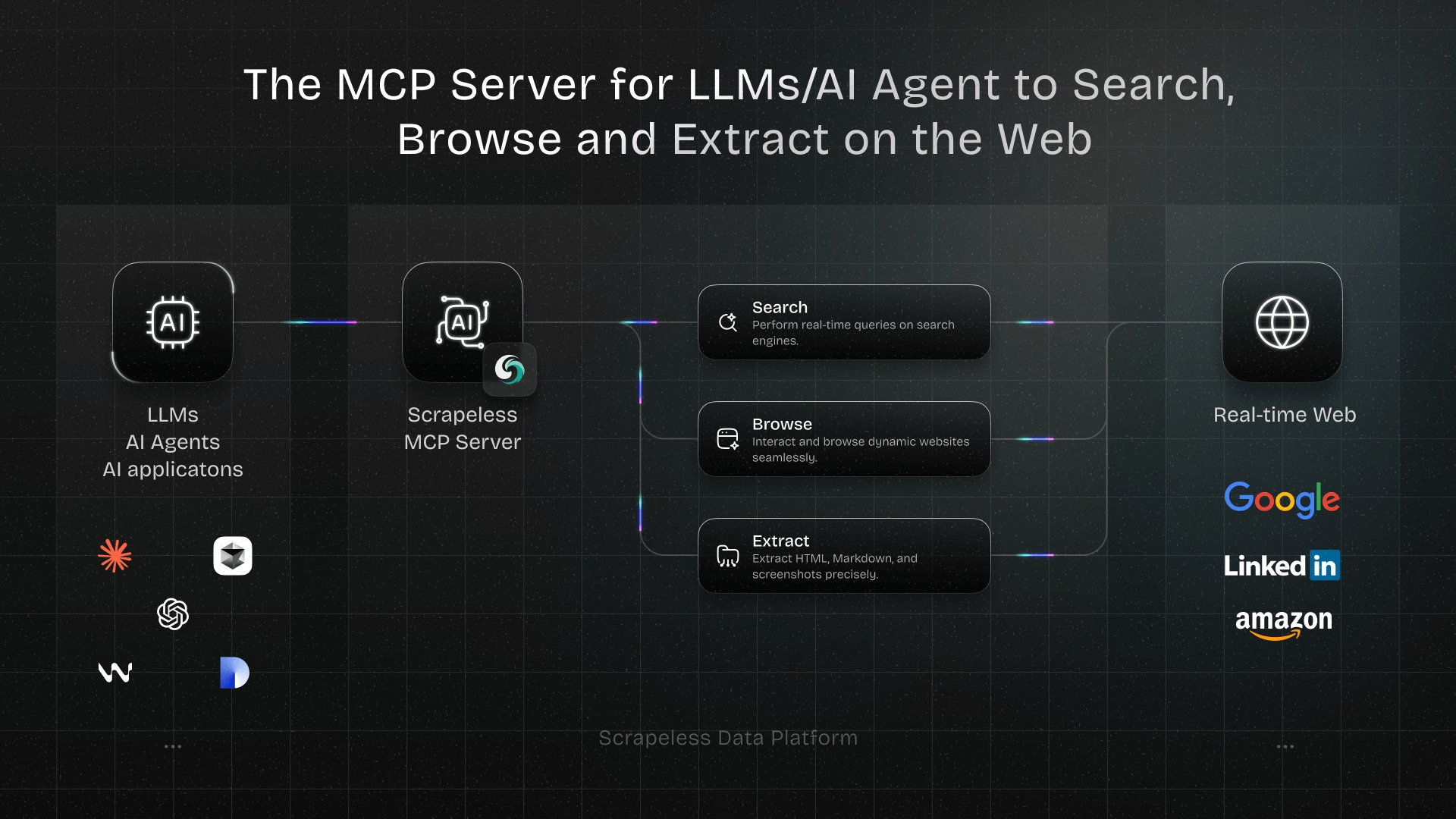
Scrapeless supplies a managed browser endpoint and MCP integration path. Browser Use supplies a model-driven agent layer. They can also be combined when one owns the agent loop and the other owns the browser session.
Q: Is Cypress a web scraping tool?
Cypress can read page content, but its design centers on frontend testing. A crawling framework or managed browser platform is usually a better base for recurring data collection.
Q: Do browser automation tools replace APIs?
No. A documented API is normally preferable when it provides the required data or action. Use a browser when rendering, interaction, or browser-only state is essential.
At Scrapeless, we only access publicly available data while strictly complying with applicable laws, regulations, and website privacy policies. The content in this blog is for demonstration purposes only and does not involve any illegal or infringing activities. We make no guarantees and disclaim all liability for the use of information from this blog or third-party links. Before engaging in any scraping activities, consult your legal advisor and review the target website's terms of service or obtain the necessary permissions.